We’re discussing portable power for construction sites, and it’s a coincidence how critical clean sine-wave power and robust grounding align with our safety goals. We’ll balance centralized stations, portable gensets, inverters, and modular batteries to meet tools, lights, and sensors while prioritizing runtimes and downtime reduction. Let’s outline how to track loads, manage duty cycles, and scale for future jobs—with a practical plan that keeps everything safe, weatherproof, and cost-conscious, yet ready for the next site.
Key Takeaways
- Assess job-site loads and runtimes to size centralized portable-power stations and modular battery packs effectively.
- Use a mix of generators, inverters, and battery systems with proper safety, grounding, and GFCI protection for damp areas.
- Implement centralized stations with smart meters, status indicators, and routine audits to prevent bottlenecks.
- Prioritize critical tools and ensure safe wiring, proper overcurrent protection, and clean sine-wave power for sensitive electronics.
- Plan for weatherproofing, rugged environments, and scalable cooling to maintain reliability in harsh job-site conditions.
Identify Job-Site Power Needs: Tools, Lights, and Sensors
Identifying job-site power needs starts with a concrete inventory of what tools, lights, and sensors will run, for how long, and under what conditions. We map duty cycles, voltage requirements, and runtime variability to prevent overloading circuits and to ensure stable operation. We prioritize critical loads first, then marginal loads, and document contingencies for outages. Our approach emphasizes job site safety by sizing protections, outlets, and switching devices to reduce tripping hazards and accidental energization. We also assess tool ergonomics, seeking configurations that minimize extension cord length and awkward reach, lowering user fatigue and error potential. With these data, we select scalable, modular power plans that support future equipment without overprovisioning, enabling disciplined maintenance, predictable performance, and safer, more efficient workstreams.
Portable Power Options: Generators, Inverters, and Battery Systems
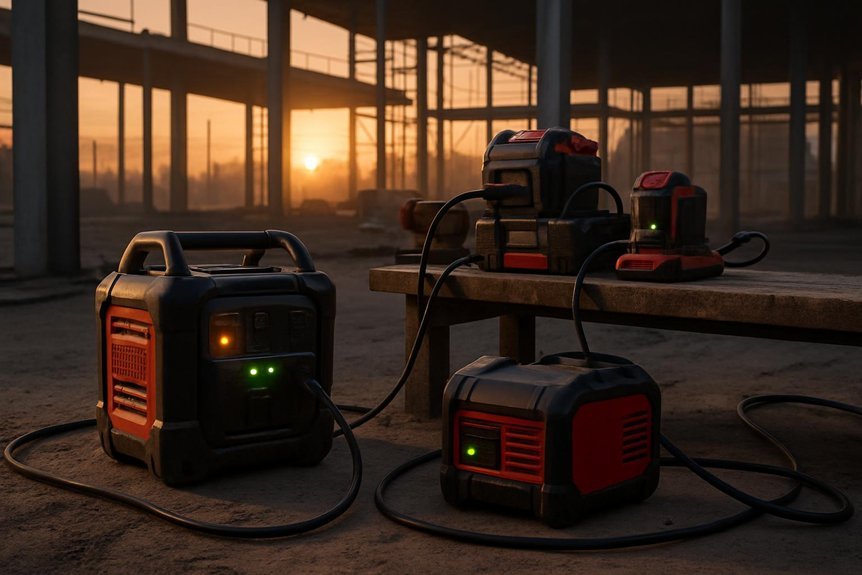
What portable power option best fits a job site’s mix of tools, lights, and sensors: generators, inverters, or battery systems? We compare reliability, runtime, and safety to guide a practical choice. Generators deliver high surge capacity for heavy tools but need fuel planning and noise controls. Inverters excel with battery support, quiet operation, and clean power for sensitive electronics, yet require charging cycles and capacity budgeting. Battery systems offer modular scalability, reduced maintenance, and lower emissions, but depend on storage health and environmental conditions. Our portable power budgeting weighs load profiles, run-time goals, and recharging cadence to minimize downtime. We emphasize tool electrical safety, ensuring compatible voltage, clean sine wave output, and appropriate overcurrent protection to prevent nuisance trips and equipment damage.
Safe Wiring, Grounding, and Fire Prevention on Site
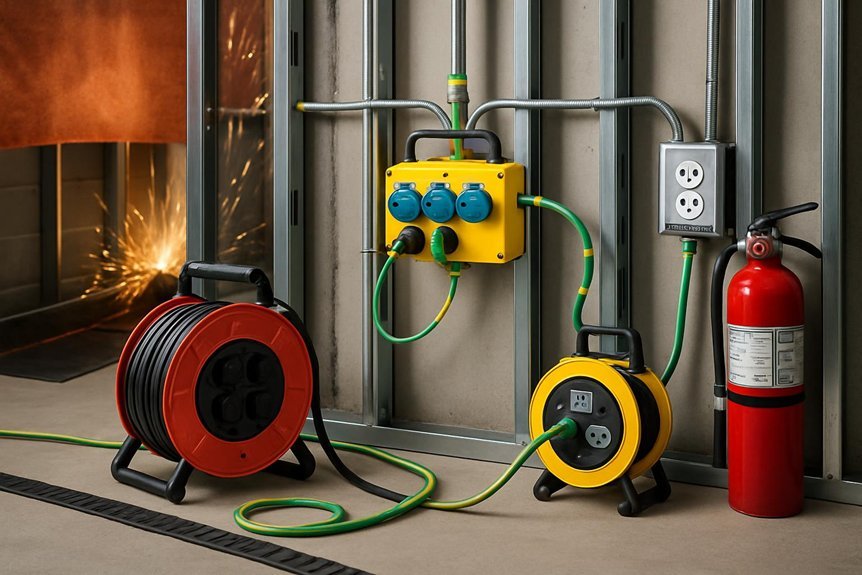
We’ll establish clear grounding practices and verify all connections before energizing any equipment. We’ll implement fire prevention measures that address both wiring fault potential and overheating risks, with routine inspections and prompt correction of violations. If we spot gaps in grounding or safeguards, we’ll pause work, assess root causes, and apply targeted fixes to keep everyone on site safe.
Grounding Best Practices
Grounding on a job site isn’t optional—it’s essential for safety and equipment reliability. We’ll outline practical grounding practices that reduce shock risk and equipment faults while staying compliant with code expectations. First, verify the integrity of outlets, cords, and panels, and replace damaged components immediately. Use three-prong plugs with proper grounding conductors and avoid adapters that defeat protection. Establish a single, low-impedance grounding path for all electrics to prevent stray currents from harming personnel or tools. Implement clear labeling and accessible test points so workers confirm grounding at start of each shift. Maintain ongoing records of inspections, tests, and corrective actions as part of your safety protocols. Regularly review procedures with crew to reinforce best practices and minimize interruption.
Fire Prevention Measures
Fire prevention on the job site starts with safe wiring and solid grounding, so we address both together to reduce fire risk and protect personnel and equipment. We identify fire hazards early by inspecting cords, plugs, and overloads, then eliminate faults before work starts. Our plan emphasizes rated equipment, proper enclosure, and unobstructed clearances to minimize heat buildup and ignition potential. We implement electrical compliance through regular testing, tagging, and documentation, ensuring live circuits are de-energized during maintenance and locked out when needed. We separate temporary power from permanent circuits, use GFCIs in damp areas, and maintain dry, clean workspaces to reduce ignition sources. Finally, we train crews on reporting hazards promptly, reinforcing a proactive safety culture.
Plan for Runtime: Refueling, Battery Care, and Maintenance
We’ll establish clear refueling protocols, ensuring fuels and charging methods align with equipment specs and site safety rules. We’ll cover battery care essentials—inspection, cleaning, and storage—to prevent degradation and extend runtimes. Finally, we’ll implement a routine maintenance plan that tracks intervals, documents issues, and minimizes downtime.
Refueling Protocols
Refueling protocols for portable power on job sites prioritize safety, efficiency, and uptime. We outline practical steps that keep operations moving while reducing risk.
1) Verify fuel type and container integrity before use.
2) Schedule fueling during low-load periods to minimize downtime.
3) Ground and discharge static, then connect approved fueling equipment.
4) Inspect lines, seals, and vents after each refuel to prevent leaks.
We emphasize fueling safety by maintaining clean work areas, using spill kits, and keeping ignition sources away. If a spill occurs, isolate the area and follow your site’s containment procedures. Never top off a hot unit; allow cooling first and document any anomalies for maintenance review. Our goal is repeatable, safe refueling that preserves battery life and system reliability. Always comply with manufacturer guidelines and local regulations.
Battery Care Essentials
Battery care essentials start with planning for runtime and ensuring reliable power when it’s needed most. We approach battery longevity by optimizing usage patterns, choosing right chemistries, and avoiding deep discharges. Our protocol emphasizes timely recharging, dock-in routines, and monitoring state of charge to minimize wear. We pair intelligent charging etiquette with workload forecasts, so we don’t overtax packs or idle cells. Temperature awareness matters: keep packs within specified ranges to maintain capacity and cycle life. Regular visual inspections catch swelling, corrosion, and loose connections before failures occur. We document charge cycles, calibrate meters, and replace aging cells proactively rather than reactively. By coordinating charging windows with site demands, we maintain consistent power availability without compromising safety or efficiency.
Routine Maintenance Plan
How do we keep runtime predictable across the jobsite? We implement a Routine Maintenance Plan that centers on refueling discipline, battery care, and proactive upkeep. This plan minimizes downtime and extends equipment life by addressing common failure modes before they occur. Our approach balances performance with emissions considerations and tool warranties, ensuring legal and manufacturer requirements are met. We prioritize efficient refueling, battery diagnostics, and scheduled servicing to avoid unplanned outages. Follow these steps:
1) Schedule refueling during low-rush windows to prevent interruptions.
2) Run quick battery health checks before each shift.
3) Document wear patterns and calibrate chargers to match tool demands.
4) Track consumables and service intervals to maintain warranties.
Together, we reduce risk, control run times, and preserve reliability across crews.
Charging and Power Management for Mixed Tool Sets
How do we keep a mixed tool set charged and ready on a job site? We approach charging and power management with a structured workflow. We map tool types to compatible power sources, prioritizing fast-charging cells for high-usage devices while preserving battery health. We implement universal adapters to simplify cross-brand charging without swapping cables, reducing downtime and confusion. We monitor real-time voltage and current, enabling voltage stabilization to prevent surges that shorten cell life. We group tools by chemistries and duty cycles, scheduling top-offs during lulls to maintain peak readiness. We deploy a centralized charge station with modular bays, smart meters, and status indicators so crews see hotspots at a glance. Regular audits prevent bottlenecks, ensuring uninterrupted performance on demanding days.
Weatherproofing and Rugged-Environment Care for Equipment
Weatherproofing and rugged-environment care start with a practical threat assessment: dust, moisture, temperature swings, and physical impacts can degrade performance far faster than typical use. We address this with structured protection, proactive maintenance, and field-ready practices that keep tools and power systems reliable.
Weatherproofing and rugged care shield equipment from dust, moisture, and harsh conditions.
- Implement dust control measures: seals, air filters, enclosures, and routine inspections.
- Mitigate moisture exposure: waterproof housings, drainage, corrosion-resistant fasteners, and dry storage.
- Manage temperature swings: thermal barriers, venting strategies, and fan-assisted cooling when needed.
- Plan for wind considerations: secure mounting, cord management, and strain relief to reduce debris ingress.
Together, we maintain power availability and extend equipment life in harsh job-site conditions.
Total Cost of Ownership: Upfront, Running, and Replacement Costs
What’s the real price of ownership on site, beyond the sticker price? We break it down into upfront, running, and replacement costs, then compare scenarios to surface true total cost of ownership. Upfront costs include hardware price, installation, and integration with site systems, plus warranties and procurement timelines. Running costs cover fuel or electricity, maintenance, repairs, downtime, field service, and efficiency losses. Replacement costs reflect battery life, component degradation, and end-of-life handling. We run a cost comparison across options, factoring utilization rates, load profiles, and maintenance cadences to reveal which choice minimizes total expense. Lifecycle considerations matter: durability, spare parts availability, and service networks influence long-term affordability. Our approach guides informed decisions, emphasizing predictable budgets and minimal disruption on active sites.
Plan a Scalable Portable-Power Setup for Future Jobs
To plan a scalable portable-power setup for future jobs, we start by mapping current and projected load profiles, then size modular power packs that can be added or reconfigured on demand. This approach centers on portable power considerations and scalable infrastructure planning to avoid wasted capacity and downtime.
- Assess peak vs. average loads to determine baseline modules.
- Design plug-and-play packs for rapid reconfiguration on site.
- Include cooling, airflow, and weather protection to maintain reliability.
- Plan for monitoring, fault isolation, and remote diagnostics to minimize surprises.
Frequently Asked Questions
How to Estimate Peak Power Demand for a New Job Site?
We estimate peak demand by compiling load forecasting data, listing anticipated equipment, and applying diversity factors; we then sum worst-case concurrent loads to define service requirements and design contingencies for the new job site.
Which Certifications Apply to Portable Power Equipment?
Are you asking which certifications apply to portable power equipment? We confirm certifications for equipment and safety standards, and include OSHA, UL, CE where applicable; we verify manufacturers’ compliance, testing, labeling, and ongoing inspection requirements for reliable operation.
Can Solar Power Sustain Continuous Heavy Use on Site?
We can’t rely on solar alone for continuous heavy site use; solar storage must be paired with grids or generators for reliability, ensuring grid independence during peak demand while meeting safety and uptime requirements on critical workloads.
How to Safely Dispose of Used or Degraded Batteries?
We immediately dispose of used or degraded batteries by following disposal guidelines and arranging battery recycling. We’ll guide you through safe containment, labeling, and drop-off options, ensuring compliant, low-risk handling and consistent, hardware-grade safety.
What Warranty Coverage Is Typical for Rental Power Gear?
Warranty coverage for rental power gear typically includes limited repair or replacement due to defects, plus optional rental extensions. We’ll outline terms, response times, and exclusions so you know what’s covered and what isn’t, and we’ll tailor it.
Conclusion
Together, we’ve outlined a practical, scalable approach to portable site power that keeps critical loads first and maintenance simple. By balancing generators, inverters, and modular batteries, we control runtimes, safety, and costs without sacrificing reliability. Think of it as a well-tuned engine: every part supports the next, reducing downtime and fuel waste. With smart monitoring and rugged design, your crew stays powered, productive, and prepared for whatever the job throws at you. Efficiency is our steady spark.