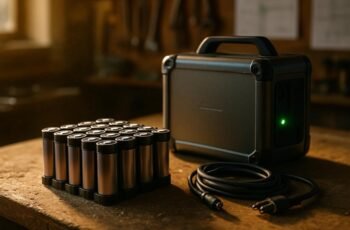
We picture a silent dawn on the road, panels catching the first light while our systems hum with steady promise. We’ll weigh LiFePO4’s longevity and temp tolerance against AGM/gel’s forgiving charging and lower upfront cost, sizing for daily use plus autonomy and inverter losses. We’ll map reliable solar, a smart three-stage charger, and a modest generator to cover cloudy days, with safe storage and protection. Ready to balance efficiency, safety, and real-world reliability—and keep pushing forward.
Key Takeaways
- Compare battery chemistries (lead-acid, AGM, gel, Li-ion, LiFePO4) by cycle life, DoD, weight, cost, charging compatibility for RV use.
- Start with baseline daily loads, convert Ah to watts, and size storage with autonomy, inverter losses, and peak power in mind.
- For 200 Ah LiFePO4, target 40–60 A solar in peak sun and handle 5–6 A on cloudy days; include 120–180 minutes generator for essentials.
- Size inverters for pure sine wave, ensure ventilation, and plan 1.5–2 days usable capacity with a 20–25% surge buffer.
- Include 3-stage smart charging, temperature considerations, strict protection (short-circuit, thermal, overvoltage), and clear documentation of efficiency and ratings.
Choosing the Right Battery Chemistry for Your RV Power System
Choosing the right battery chemistry starts with your power needs and how you’ll use the RV. We compare lead-acid, AGM, gel, lithium, and lithium iron phosphate (LiFePO4) by cycle life, depth of discharge, weight, cost, and charging compatibility. For frequent boondocking or long trips, LiFePO4 offers 3,000–5,000 cycles, 80% usable capacity, and lighter packs, but upfront cost is higher. AGM and gel are lower-cost, simpler, and forgiving, with 50–70% usable capacity and standard multi-stage chargers. We quantify tradeoffs: energy density, temperature tolerance, and maintenance. Beware camping myths and battery myths that promise instant, unlimited power. We favor a system matched to your actual consumption, charging sources, and warranty support, then verify with real-use tests before committing.
How to Size Your RV Power System: Estimate Needs and Autonomy
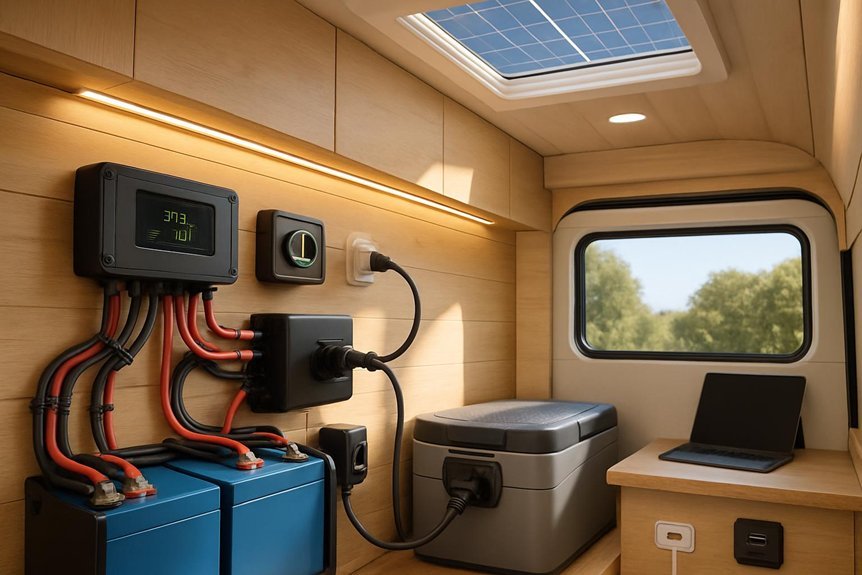
How do we size an RV power system to meet real needs without overbuilding? We start with a baseline load and add a buffer for autonomy planning. We quantify daily consumptions (A·h) per device, convert to watts, and sum for a 24 h cycle. Translate to required battery capacity with deeper-discharge limits in mind, then apply a safety margin and expected aging. Battery sizing, inverter losses, and usable capacity dictate system size; track peak power to select inverter rating. We’ll also estimate days of autonomy for cloudy weeks, guiding buffer size. Focus on practical numbers over guesses, not headlines.
| Item | Typical 24 h consumption (Ah) |
|---|---|
| Lighting, fans | 8–12 Ah |
| Fridge, electronics | 10–20 Ah |
| Other devices | 5–8 Ah |
Solar, Generators, and Alternatives: Practical RV Charging Plans
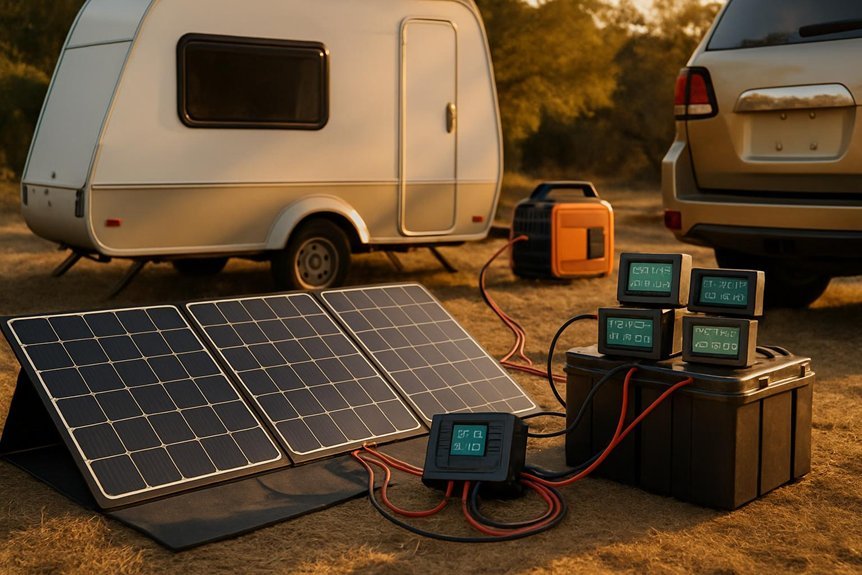
Do we have a clear, practical plan for charging a RV off-grid with solar, generators, or alternatives? We outline a balanced approach using solar charging as the baseline, supplemented by generator use only when needed. For a typical 200 Ah lifePO4 battery bank, aim for 40–60 A of solar input in peak sun to restore 50% in 2–3 hours, or 5–6 A continuous on cloudy days. Size a portable generator to deliver 120–180 minutes of run-time at essential loads, not full-house power, and prioritize low- idle consumption. Use a smart charger with 3-stage regulation, and set daytime charging to max sun hours. Include a backup plan: partial-grid or battery passthrough to extend autonomy during multi-day excursions. Track daily runtime, charging efficiency, and depletion tolerance to stay within targets. solar charging, generator use.
Storage and Inverters: Selecting Efficient, Safe Hardware
Storage and inverters are the backbone of a reliable off-grid system, so we zero in on efficient, safe hardware that we can trust daily. We prioritize proven battery chemistry with high cycle life and stable temperature performance, selecting modules rated for 2,000+ cycles at 80% DOD where possible. For inverters, we choose pure sine-wave units with nominal ratings equal to or above our continuous load, and we track inverter efficiency at typical operating currents to minimize heat and loss. We size storage for 1.5–2 days of usable capacity at peak draw, with a 20–25% buffer for surge. We verify protection: short-circuit, thermal, and overvoltage limits, plus proper ventilation. We document efficiency, temperature derating, and certification for repeatable, safe operation.
Battery Management and Safety Best Practices for RVs
We’ll cover clear battery safety protocols and ongoing management practices to keep RV systems reliable. Expect concrete steps: monitored voltage ranges, proper charging limits, temperature awareness, and regular inspection schedules. By sticking to these quantified guidelines, we reduce risk and extend battery life for our RV setups.
Battery Safety Protocols
What’s the baseline for safe RV battery use? We establish clear operating limits, inspection cadences, and documented procedures. Our protocol requires a labeled, dedicated battery space with 12 V–24 V ratings, ventilation, and temperature control to keep ambient under 40°C. We implement fault isolation by segmenting circuits with clearly rated fuses and disconnects, enabling immediate isolation of any suspect bank. Regular battery safety checks verify electrolyte levels, terminal cleanliness, and corrosion inhibition, recording results for trend analysis. Short circuit testing is constrained to approved benches and using calibrated equipment, never under load. We document fault logs, perform root-cause reviews, and rehearse isolation steps monthly. Our approach prioritizes battery safety, repeatable tests, and rapid shutdown to minimize risk during routine RV use and charging.
Management Best Practices
Effective battery management in RV setups hinges on disciplined monitoring, clear ownership, and repeatable routines that keep packs healthy and ready. We track state of charge, temperature, and voltage every 15 minutes, log results, and trigger alerts if thresholds are crossed. Ownership rotates weekly; maintenance cashes out as a fixed calendar task. We standardize charging profiles: AGM/lead acid renewal cycles, bulk absorption at 14.4 V, float at 13.2 V, with temperature compensation. We replace aging cells before capacity drops below 60%. We prioritize safety: vented spaces, proper PPE, and spill kits. Table below guides routine checks and actions.
| Checkpoint | Trigger | Action |
|---|---|---|
| SOC/Voltage/Temp | Anomalies >5% or ±0.3 V | Investigate, re-balance, log |
| Charging Profile | Mismatch vs. spec | Adjust charger, retest |
| Ventilation | Poor air flow | Increase ventilation |
| Lead acid renewal | End of lifecycle | Plan replacement |
| Battery disposal | End-of-life | Arrange disposal |
Real-World Setups: by Travel Style and Budget
What do real setups look like across travel styles and budgets, and how do owners balance range, load, and comfort? We chart them by daily mileage, shipped weight, and power needs, then match systems to roaming budgets and lifestyle. Our examples emphasize efficiency and predictability, not excess. Here are representative patterns:
- Minimalist setups: compact lithium, lightweight panels, 1–2 kWh storage, lean loads, fast recharges.
- Moderate budgets: 2–6 kWh packs, 200–400 W of solar, nightly AC occasionally, versatile inverters, timed usage.
- Comfort-first builds: 6–12 kWh, high-capacity panels, shore-power when available, robust cooling, prioritized autonomy.
We quantify efficiency: 4–6 kWh daily usage, 24–48 V systems, and tuneable loads to stay within roaming budgets and plan for extended travel.
Maintenance, Troubleshooting, and Long-Term Reliability
How do we guarantee long-term reliability from day one? We build a clear plan for maintenance efficiency and define troubleshooting routines that trap faults early. Regular checks target charge controllers, fuses, battery health, and wiring resistance, with quantified thresholds (voltage drop < 0.1 V, temperature rise < 15°C). We log every session, translate data into actionable steps, and revise schedules every six months. A disciplined approach minimizes downtime and extends battery life. Below is a quick reference table you can copy into your notebook.
| Component | Acceptance Criteria | Frequency |
|---|---|---|
| Battery health | capacity > 90% | monthly |
| Wiring integrity | resistance < 0.1 Ω | quarterly |
| Charge controller | correct voltage targets | monthly |
| Inverter efficiency | > 85% at rated load | biannually |
| Fuses & breakers | no nuisance trips | monthly |
Frequently Asked Questions
How to Plan Electrical Upgrades for Seasonal RV Storage?
We’ll plan seasonal storage upgrades by evaluating load, biasing for winter protection, and budgeting per amp-hour. We’ll schedule electrical planning steps: disconnects, battery sizing, inverter efficiency, and a 30–60 day maintenance check for safety.
Do Lithium Batteries Require Special Charging Equipment or Adapters?
Yes, lithium batteries need specialized charging gear; use chargers or BMS-integrated adaptors designed for lithium. We require compatible adapters and strict voltage/current limits for lithium charging to avoid damage. We’ll specify adapters requirements and charging specs precisely.
What Are Cost and Return Timelines for Power Upgrades?
We expect a cost timeline of about 6–18 months, with a return period typically 2–5 years depending on usage, efficiency gains, and energy prices; initial investment varies, but savings accrue as you upgrade and optimize.
How to Manage Power During Extreme Weather or Outages?
We prepare for extreme weather by prioritizing high wind resilience and wildfire prep, deploying battery backup, surge protection, and insulation, with a 48-hour autonomy target, 20% reserve capacity, and disaster-ready load shedding to maintain essential systems.
Which Safety Certifications Apply to RV Electrical Installations?
We follow certification requirements for RV electrical installs: NEC/CE compliance, NFPA 70 National Electrical Code basics, and local permits; we emphasize electrical safety, inspection, labeling, and documentation to ensure safe, reliable hookups and operation.
Conclusion
We, together with you, navigate this power journey like captains charting a harbor. Think of our system as a sturdy vessel: LiFePO4 offers long life and steady temp tolerance, but at a weight and price premium; AGM/gel are lighter on upfront cost and forgiving to rough charging. We size for daily needs, add autonomy, account for inverter losses, and plan cloudy days. With solar, a smart charger, and a modest generator, we reach safe shores—storage, ventilation, protections firmly in place. Bon voyage.