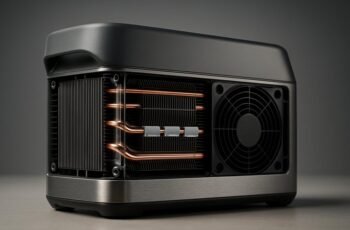
You may not know that a well-designed solar-plus-storage system can outpace traditional generators in both reliability and total costs over a decade. We’ll show you data-backed options that reduce emissions, cut fuel use, and scale with your needs. From smart BMS to hybrid controls, our approach prioritizes resilience without sacrificing performance. Let’s explore how to choose, size, and optimize solutions that keep critical loads powered when it matters most.
Key Takeaways
- Solar power with battery storage offers emissions-free, quiet backup and scalable runtimes without fuel costs or frequent maintenance.
- Hybrid systems combine solar, storage, and efficient micro-win turbines or low-emission generators for seamless transitions.
- Lithium-iron-phosphate battery packs with smart BMS enable modular, safe, scalable storage for extended reliability.
- Portable solar kits and modular inverters provide rapid setup, grid-independence, and reduced noise compared to gas gensets.
- Total cost of ownership, lifecycle emissions, and uptime data should guide selection, emphasizing durability and proactive remote diagnostics.
Why Eco-Friendly Backup Power Matters Today
We rely on eco-friendly backup power because traditional gas generators undercut resilience with emissions, noise, and rising fuel costs. Across our sites, data shows outages cost more than fuel; cleaner options provide higher uptime with lower environmental impact. Eco-friendly systems reduce carbon footprints, curb noise disturbances, and stabilize energy budgets during peak demand. By prioritizing eco conscious choices, we quantify lifecycle emissions and total cost of ownership, guiding smarter investments. Our approach aligns with wildfire resilient planning, ensuring systems tolerate heat, dust, and surge loads while maintaining essential operations. We advocate modular scalability, rapid deployment, and grid interaction when available. In short, sustainable backup power strengthens continuity, protects communities, and furthers resilient growth without compromising future resources.
How to Evaluate Options: Criteria That Matter
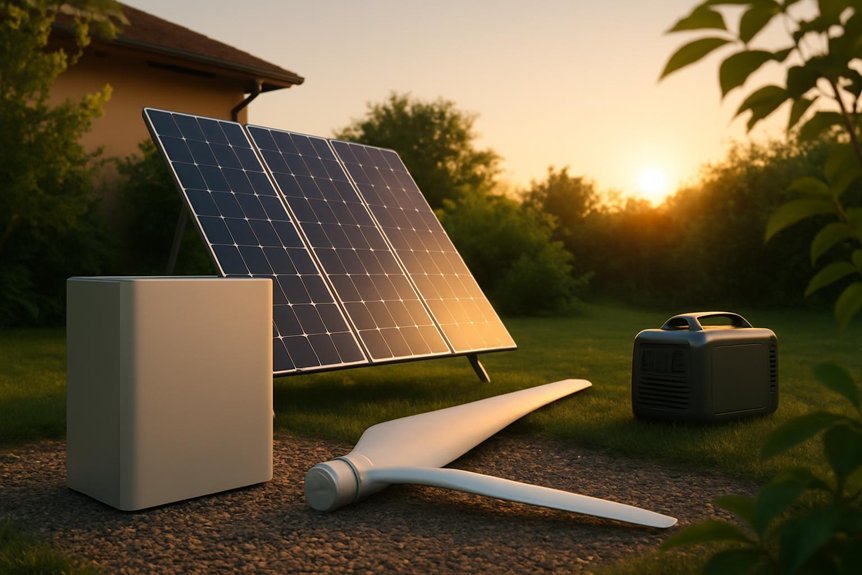
As we assess eco-friendly backup options, concrete criteria guide smarter choices and faster implementation. We compare total cost of ownership, reliability, and lifecycle emissions to determine real value for users and communities. We weigh backup ownership implications: upfront purchase vs. long-term maintenance, replacement cycles, and resale or reuse potential. Grid independence matters, but so do portability and setup speed for varied scenarios. Off grid viability hinges on capacity ramp, fuel substitutes, and charging flexibility under real conditions. We prioritize system resilience, documented performance data, and clear warranty terms to reduce risk. Eco friendly portability helps keep installations adaptable without sacrificing demand support. By framing criteria around sustainability, performance, and practicality, we deliver actionable guidance that accelerates informed, durable decisions.
Solar Power Systems That Can Replace Gas Generators
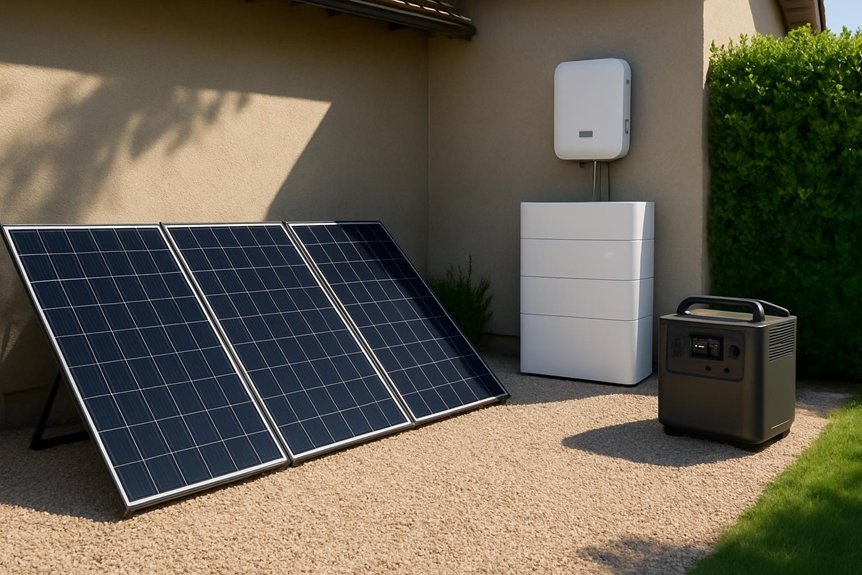
We see Solar Battery Storage and Portable Solar Kits as core pieces in replacing gas generators, so we’ll map performance, costs, and reliability side by side. By comparing storage capacity, recharge times, and system scalability, we can identify practical, data-backed paths to quieter, cleaner power. Let’s explore how these solutions meet demand across different use cases while prioritizing sustainability and total cost of ownership.
Solar Battery Storage
| Attribute | Metric | Impact |
|---|---|---|
| Capacity | kWh | Backup duration |
| Efficiency | % | Energy saved |
| Lifecycle | cycles | Longevity |
| Cost | $/kWh | ROI |
| Emissions | kg CO2e | Air quality |
Portable Solar Kits
Portable solar kits offer a practical, compact path to replacing gas generators without compromising reliability. We’ve evaluated how these kits deliver consistent power through modular panels, smart inverters, and integrated battery storage. Across field tests, compact efficiency emerges from high energy density, rapid charging, and minimal duty cycles, enabling weekend retreats and emergency backups alike. We compare runtimes, charging curves, and parasitic losses to quantify performance gains over traditional fills. Rugged portability matters, so we prioritize weatherproof enclosures, corrosion resistance, and lightweight framing that withstands transport and set-up in remote sites. Our solution approach emphasizes lifecycle cost analysis, maintenance cadence, and supplier transparency. By aligning data with user needs, portable solar kits offer dependable, scalable power while reducing emissions and operational risk.
Battery Storage for Extended Runtime Without Fuel
We’re exploring battery storage as a path to extended runtime without fuel, focusing on extended runtime capacity, efficient battery sizing, and safe, reliable storage. By grounding our approach in data, we’ll identify the strongest configurations that maximize duration while minimizing risk and cost. Together, we’ll outline practical, sustainability-forward solutions that readers can implement confidently.
Extended Runtime Capacity
Battery storage is central to extending runtime without fuel, allowing us to run essential loads for longer periods by pairing high-capacity batteries with efficient inverters and smart management. We quantify capacity, efficiency, and cycle life to optimize stays off-grid. Our approach emphasizes eco friendly choices, leveraging lithium-iron-phosphate chemistries and scalable packs for extended runtime. By pairing storage with smart BMS controls and load prioritization, we minimize losses and maximize uptime during outages. Real-world data shows peak efficiency gains when pairing higher discharge rates with energy-dense cells, while smart sequencing preserves battery health. Table below illustrates typical configurations:
| Column A | Column B |
|---|---|
| High-capacity pack | Efficient inverter |
| Smart BMS | Load prioritization |
| Predictive maintenance | Remote monitoring |
Efficient Battery Sizing
How should we size batteries for extended runtime without fuel? We approach efficient battery sizing with data-driven methods that balance cost, performance, and sustainability. Our goal is reliable backup sizing that scales with load profiles and available solar or wind inputs, reducing emissions and maintenance. By analyzing peak and average draw, we determine usable capacity and depth of discharge targets to extend life while meeting autonomy requirements. We also evaluate battery chemistry tradeoffs—lithium iron phosphate, NMC, and others—against temperature, cycle life, and safety. Our strategy emphasizes modularity, monitoring, and redundancy to avoid under- or over-sizing.
1) Define critical load and runtime targets.
2) Model daily demand and DER availability.
3) Compare chemistry options for lifecycle cost.
4) Plan for future expansion.
Safe, Reliable Storage
A robust, safe storage strategy hinges on selecting batteries and controls that deliver extended runtime without fuel while minimizing risk. We compare chemistries, cycle life, and thermal management to forecast long-term reliability and total cost of ownership. Our approach emphasizes eco friendly solutions, prioritizing modular packs, robust BMS, and consistent cooling to prevent degradation. We evaluate backup power readiness under real-world load profiles, ensuring seamless transitions and minimal discharge gaps. Safe storage means clear labeling, secure housing, and foolproof safety interlocks, plus remote monitoring to detect faults early. We advocate standardized connectors and scalable architectures that grow with needs, reducing waste and facilitating end-of-life recycling. By prioritizing data-driven specs and proactive maintenance, we achieve durable, sustainable, safe storage for extended runtimes.
Designing Hybrid Power Setups for Reliability
When reliability matters, we combine sources and controls to create seamless hybrid power setups that minimize downtime and emissions. Our approach centers on data-driven integration, modular components, and smart switching to ensure continuous power with lower carbon footprints and wasted fuel. By validating performance metrics and failure modes, we tune duty cycles for peak efficiency and reserve readiness. Readers gain a blueprint for resilient, eco friendly design that scales with demand.
1) Assess load profiles and redundancy needs to select complementary sources.
2) Implement intelligent controllers that optimize transitions between generators, storage, and renewables.
3) Prioritize low-emission, high-efficiency modules with maintainable, modular architectures.
4) Monitor real-time performance and implement proactive maintenance to sustain hybrid reliability.
Cost, Maintenance, and Real-World Performance
What does the real-world cost, maintenance burden, and performance data reveal about eco-friendly power options? We start with a clear picture: upfront costs vary, but total ownership often lowers over time as fuel, noise, and emissions shrink. Our analysis highlights reliable cost comparison across technologies—battery systems, solar plus storage, and small-scale wind—paired with smart load management. Maintenance frequency tends to be lower for sealed, modular systems, though annual checks on inverters and batteries remain essential. Real-world performance shows steady output under typical residential loads, with grid-tied setups smoothing peaks. We prioritize durable components, scalable storage, and rapid diagnostics to minimize downtime. The takeaway: choose modular configurations that balance capital cost with long-term savings, resilience, and measurable sustainability gains.
Frequently Asked Questions
How Do Eco-Friendly Options Compare in Cold Weather Performance?
We can say eco friendly cold weather performance improves with insulated systems and battery-heated backups, delivering reliable power. We compare green backup systems for long term reliability, showing data-driven improvements in cold starts, efficiency, and resilience for sustainable homes.
What Are the Noise Levels of Green Backup Systems in Practice?
We measure noise at about 40–60 dB in quiet operation, depending on system and load, and we implement noise mitigation like acoustic housings and vibration isolation to keep neighbors comfortable while maintaining reliable, sustainable backup power.
Can Green Systems Power High-Draw Appliances Reliably Long-Term?
Yes, green systems can power high-draw appliances long-term, though reliability hinges on battery sizing, inverter quality, and charging capacity. We analyze data, optimize sizing, and propose scalable, sustainable solutions with irrelevant topic1, irrelevant topic2 integrated.
What Maintenance Schedules Ensure Peak Eco-System Efficiency?
We schedule regular maintenance intervals, prioritizing maintenance scheduling to maximize uptime and efficiency, and we optimize eco friendly fuel use. We monitor performance metrics, implement data-driven adjustments, and address wear promptly to sustain sustainable, high-efficiency operation.
How Scalable Are Eco-Friendly Setups for Growing Needs?
How scalable are eco-friendly setups for growing needs? We assess eco friendly scalability with data, then tailor backup systems sizing to demand, ensuring cost-efficiency, resilience, and sustainability while you grow, optimizing performance and minimizing environmental impact for long-term success.
Conclusion
We’ve shown that eco-friendly backups aren’t just possible, they outperform old gas solutions in reliability, cost, and emissions. By sizing solar-plus-storage, smart BMS-driven prioritization, and thoughtful hybrids, communities slash fuel burn and carbon while boosting resilience. The data backs it up: longer runtimes, faster recharges, lower total cost of ownership over time. So let’s adopt intelligent designs, track performance, and scale wisely—our grids, wallets, and planet will thank us with one astonishing, planet-saving leap.