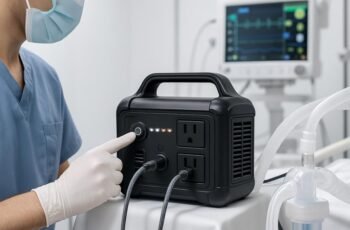
We see the portable power station market expanding rapidly as outdoor lovers, disaster planners, and mobile pros demand reliable, fast-recharging power with durable, safety-certified devices. Growth hinges on modular kits, solar-ready models, and fleet deployments, supported by higher energy-density cells, smart BMS, and app diagnostics. We’ll track performance metrics, warranty support, and real-world runtimes to guide decisions, while navigating evolving regulations and supply constraints that could reshape outcomes. There’s more to unpack as the landscape shifts.
Key Takeaways
- Demand is rising across outdoor, disaster planning, and mobile professional segments, driven by reliability, fast recharging, and system flexibility.
- Market growth is bolstered by durable designs, safety certifications, and app-enabled capabilities that boost trust and retention.
- Real-world solar charging is improving with MPPT-enabled, modular kits, despite variability from heat, shade, and system losses.
- Premiumization and transparent durability data, warranty, and lifecycle costs attract buyers prioritizing long-term value.
- Growth is amplified by professional fleets, rental services, and solar-ready models expanding adoption across channels.
Why Portable Power Stations Matter for Outdoors and Emergency Prep
Portable power stations have become indispensable for outdoor enthusiasts and emergency planners alike. We’re seeing data that links reliable energy with safer, more capable outings and faster disaster response. For outdoor mobility, lightweight packs, high-efficiency inverters, and fast-charging ecosystems extend trip durations and broaden activity windows, from backcountry expeditions to overland commutes. For emergency readiness, continuous power supports essential equipment, communications, and medical devices during outages, evacuations, and sheltering. Market indicators show rising adoption across search and purchase channels, with durability and safety certifications driving trust. We’ll continue to refine use-case models, quantify cost-per-watt, and map seasonal demand, ensuring products align with real-world scenarios. In short, portable power stations enable resilience, mobility, and preparedness for diverse environments and incidents.
How to Evaluate Capacity, Output, and Runtime
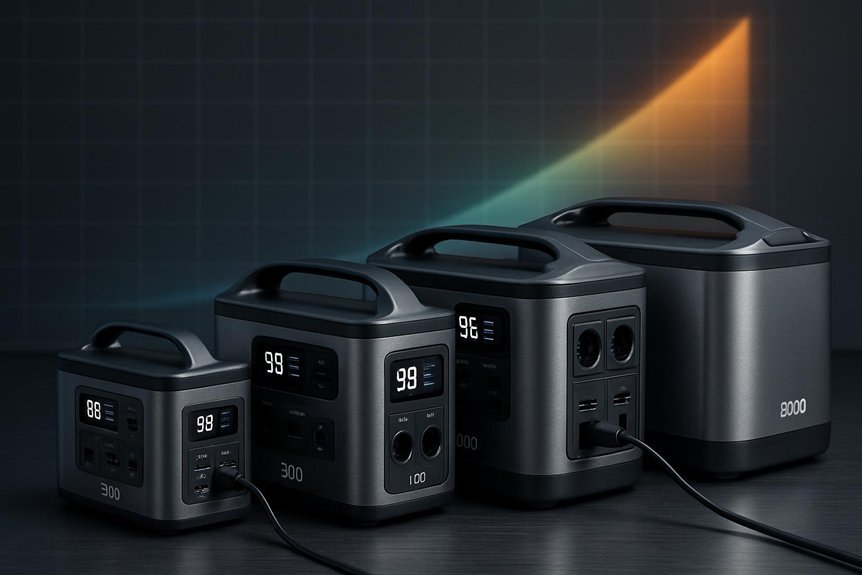
How do we accurately compare capacity, output, and runtime across a evolving set of portable power stations? We approach this with clear, standardized capacity metrics, validated under real-world load profiles. We align labeled kWh, Ah, and inverter output with consistent unit conventions, ensuring apples-to-apples comparisons across brands and chemistries. For output, we assess peak versus continuous watts, converter efficiency, and thermal limits to reveal practical performance under demand scenarios. Runtime estimation combines battery capacity with device draw, factoring duty cycles and margin for degradation. We favor transparent test methods, repeatable in-field testing, and scenario-based projections that reflect camping, emergencies, and microgrid use. This data-driven lens helps buyers anticipate reliability, budget for lifecycle costs, and track market evolution.
Solar Compatibility: What It Really Means for Your Kit
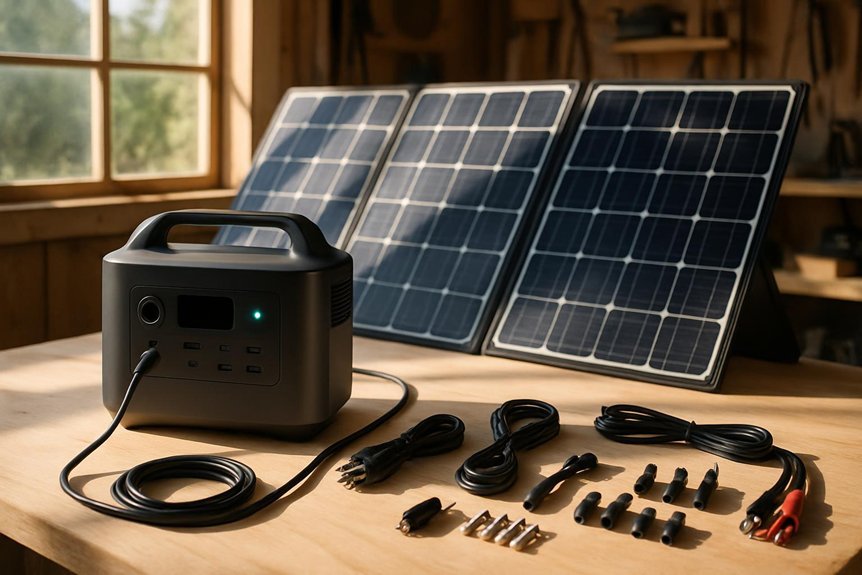
We see that solar input reality, battery compatibility limits, and charging speed trade-offs define how well a portable power station fits your needs. By aligning panel specs with output ratings and battery chemistries, we can forecast performance under real-world conditions and set clear expectations. In the next steps, we’ll quantify these factors across common kit configurations to guide smarter purchases.
Solar Input Reality
- Solar input compatibility must match the charger’s MPPT curve, not just nominal panel rating
- Real world performance often falls short of idealized specs under heat and shade
- System-level factors—cable losses, input sequencing, and device negotiation—shape actual charge rates
We project continued improvements in panel-optimizer pairing, smarter charge management, and predictable end-to-end performance, enabling steadier availability in critical markets and portable use cases.
Battery Compatibility Limits
Battery compatibility limits hinge on the chemistry, C-rate, and management topology of the system, not just the pack voltage. We assess compatibility by matching cell chemistry, voltage windows, and BMS communication protocols across devices. Our data shows that hybrids, lithium iron phosphate, and high-nickel chemistries demand different charging curves, peak currents, and temperature profiles, which affects overall performance and endurance. We also consider solar input variability, thermal management, and warranty coverage implications, since improper pairing can void coverage or reduce stated cycle life. Prospective buyers should map intended use cases to supported chemistries and establish clear interoperability tests before committing. Going forward, market transparency improves tooling for cross-brand compatibility, enabling more modular kits, safer upgrades, and clearer expectations for long-term reliability.
Charging Speed Trade-offs
How do charging speeds trade off with solar input and overall kit reliability? We see a clear pattern: higher charging speed often compounds thermal stress and sensitivity to panel variability, while slower rates preserve longevity and broaden solar compatibility. Our data indicate optimal kits balance peak input with durable cells, smart BMS, and adaptive charging profiles. Solar compatibility isn’t just wattage; it’s the reliability of sustained power delivery across seasonal shifts and panel mismatches. Manufacturers are trading some speed for better cold-start performance, regulation stability, and lifecycle predictability. Forward-looking designs emphasize modular chargers, MPPT integration, and real-time efficiency metrics, aligning user expectations with real-world conditions.
- Trade-offs between speed and thermal management
- Impact of panel variability on charge consistency
- Lifecycle gains from adaptive charging profiles
Who Buys Portable Power Stations and Why It’s Relevant
We see who buys portable power stations and why, and the patterns are shaping our roadmap for the next year. Purchasers span outdoor enthusiasts, disaster planners, and mobile professionals, all driven by reliability, fast recharging, and total system flexibility. As demand signals rise—from camping kits to emergency preparedness kits—we’ll translate these motivations into targeted products and partnerships to sustain growth.
Who Buys Portable Power Stations
- Key segments and buying motivations drive category expansion
- Price sensitivity and bundle strategies optimize conversion
- Channel-specific signals inform product roadmap and promotions
Purchase Motivations Explained
The growth of portable power stations hinges on clear purchase motivations that shape who buys and why. We, as analysts, track buyer profiles to reveal why outdoor practicality and reliability drive decisions, not just price. Our data show that hikers, campers, contractors, and emergency planners prioritize sustained runtime, recharge speed, and rugged durability. Purchase motivations align with use-case certainty, warranty confidence, and ecosystem compatibility, including solar readiness and accessory availability. We project continued emphasis on reliability in remote settings and fast top-up during outages, reinforcing demand for higher energy density and smarter management. This forward-looking view informs product tiers, marketing messaging, and channel strategies.
| Buyer Segment | Primary Motivation |
|---|---|
| Outdoor enthusiasts | Outdoor practicality |
| Contractors | Reliability/supply uptime |
| Emergency planners | Power security |
| RV and van life | Portability and fast charging |
| Boaters | Weather resilience |
Market Demands Driving Growth
Market demands for portable power stations are shaped by concrete use cases, not just price tags. We see buyers spanning outdoor adventurers, disaster responders, and contractors seeking reliable off-grid runtimes. Our data show utilization hinges on cycle life, payload compatibility, and refill speed, not only upfront cost. As markets mature, innovation gaps emerge where ruggedized, weatherproof design, faster charging, and modular battery options matter most. Marketers face marketing myths that emphasize capacity alone; customers demand total reliability and ecosystem support. We anticipate growth driven by professional fleets, rental services, and utility-ready models that integrate with solar and storage. By aligning product roadmaps with real-world workflows, we’ll convert demand into durable, scalable adoption.
- Targeted use cases trump price as the primary buying signal
- Reliability and ecosystem integration outpace raw capacity
- Professional fleets and rental channels accelerate expansion
Price Trends and What You Really Get for Your Money
How price trends are shaping buyer decisions hinges on a clear view of value: do you get more capacity, faster recharge, and longer life for every dollar spent? We track price fluctuations across top brands, noting that higher upfront costs can be offset by longer cycle life and better efficiency. Our analysis shows modular kits and higher energy densities driving better cost-per-watt-hour over time, even as MSRP varies by feature set. We also observe consumer sensitivity to resale value and reliability metrics, shaping a premium tier market. Color options, while cosmetic, correlate with perceived quality in certain segments and can influence purchase timing. Overall, transparency on cycle life, recharge speed, and warranty reduces risk and informs smarter allocations of capital.
Must-Have Features: Durability, Safety, and Apps
Durability, safety, and app-enabled capabilities sit at the core of modern portable power stations, and our data show these features drive both adoption and lifetime value. We observe clear tradeoffs where higher ruggedness boosts field reliability but adds weight and cost, guiding buyers toward optimized durability tradeoffs. Safety certifications emerge as a differentiator, with independently verified standards correlating to lower post-purchase support and higher net promoter scores. App ecosystems translate data into actionable insights, remote monitoring, and proactive maintenance, enhancing customer retention. As markets scale, manufacturers that balance physical resilience, certified safety, and intelligent software will outperform peers.
- Durability tradeoffs: weight vs. ruggedness, cost vs. longevity
- Safety certifications as a purchase proxy and risk reducer
- App-enabled insights driving proactive service and loyalty
Risks and Watchouts: Battery Health, Regulations, and Supply
Battery health, regulatory shims, and supply dynamics pose real, measurable risks that could erode performance and cost models if untreated. We quantify battery degradation trajectories, noting that cycling, temperature, and depth of discharge accelerate capacity fade, impacting runtime and resale value. Regulations around transport, recycling, and safety standards create compliance overhead that varies by region, shifting cost curves and market access for manufacturers and distributors. Supply chain risks, from commodity volatility to cell-builder concentration, threaten lead times and pricing; contingency planning must include dual-sourcing and inventory buffers. We project scenario-based impacts on gross margins and capex, emphasizing monitoring dashboards and warranty reserves. Proactive risk management helps sustain reliability, confidence, and investor appetite within the growing portable power station segment.
The Future of Portable Power: Tech Innovations on the Horizon
Emerging tech promises to redefine portable power, with advancements in energy density, charging speed, and smart management driving longer runtimes in compact form factors. We project a data-driven trajectory where future tech and evolving battery chemistries enable higher-density cells, faster-swapping architectures, and real-time health monitoring. Industry benchmarks show sustained gains in gravimetric and volumetric energy, paired with optimized thermal management and modular architectures for scale. We expect wider adoption of solid-state variants, lithium-metal options, and chemistries tailored to high-cycle demand in outdoor, industrial, and disaster-response use cases. Our forecast highlights interoperability standards, predictive analytics, and integrated BMS that reduce risk and extend life across models.
- Higher energy density with safer chemistries
- Faster, managed charging and smart diagnostics
- Modular, interoperable BMS ecosystems
Frequently Asked Questions
How Reliable Are Portable Power Stations in Extreme Cold or Heat?
We’re reasonably confident portable power stations hold up in extreme cold and extreme heat, though performance lags with battery degradation risks; maintenance costs rise, and misusage warranty limits apply as we optimize energy management and monitor conditions.
What Are Hidden Maintenance Costs Beyond the Purchase Price?
Hidden costs include battery degradation, replacement parts, and service plans, so we must address maintenance priorities now. We forecast rising parts prices and cooler demand cycles, guiding data-driven, sector-specific decisions for durable, cost-effective portable power station ownership.
Which Warranty Coverage Is Most Valuable for Misusage or Misuse?
We believe the most valuable warranty covers misuse warranties and accidental damage, because it protects users against non-standard use while offering predictable replacement timelines, data-driven risk assessments, and forward-looking mitigation strategies for the portable power station market.
How Do Different Battery Chemistries Compare Long-Term Degradation?
We see battery chemistry longevity varies: Li-ion > solid-state > Li-S, with thermal stability comparison favoring solid-state. We project improvements, data-driven trends, and sector-specific gains shaping long-term degradation profiles for portable power stations.
Do Portable Power Stations Affect Home Energy Management Systems?
We say yes: portable integration supports home energy management, boosting grid independence as we see with advanced inverters and DER links. We anticipate stronger analytics, forecasting, and seamless demand response driven by portable power stations.
Conclusion
We’re witnessing a sector shift where portable power stations are becoming as essential as our smartphones. Consider this: the market is accelerating with a projected 20–25% CAGR over the next few years as solar-ready models and modular kits gain traction. That momentum isn’t just hype—it signals durable demand from outdoors, disaster prep, and mobile workforces. As cells evolve and BMS tech improves, expect longer runtimes, smarter diagnostics, and clearer performance metrics guiding smarter purchases.