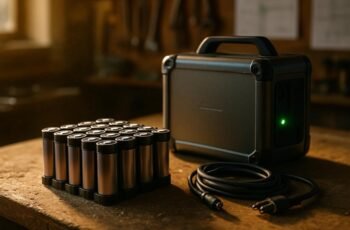
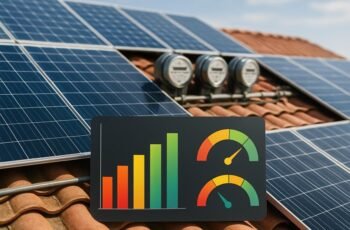
We’re unpacking portable power for filmmaking and photography with a practical, modular approach you can trust on set. We’ll map outlets, plan UPS-like protection, and track runtimes, balancing batteries, generators, and hybrids for reliability. We’ll prioritize high-watt USB-C banks and efficient solar charging for remote shoots, then stitch these elements into a single, coherent workflow. If you want a repeatable system that stays quiet, swappable, and ready, we’re just getting started.
Key Takeaways
- Plan on-location power with modular, hot-swappable packs, silent operation, and UPS-like protection; map outlets and run-drills before shoots.
- Evaluate batteries, generators, and hybrids for reliability, weight, and predictability; use hybrids for fast bursts and extended runtimes.
- Use high-watt USB-C banks (PD 3.0/4.0) and solar panels with MPPT to support remote, quiet setups and real-world runtimes.
- Budget power by estimating device draw, favor a single reliable charging workflow, and track runtimes, recharge windows, and health.
- Build a quick-start kit: portable power station, smart DC outputs, USB-C rails, surge protection, two charging sources, and clear run-lists.
Solve On-Location Havoc With Portable Power
On location, power reliability isn’t optional—it’s mission-critical. We design for the unexpected, mapping every outlet, surge, and failover path before cameras roll. Silent power isn’t a luxury; it’s a requirement for uninterrupted takes, so we choose systems that operate without fan noise and minimize heat signatures that draw attention in outdoor rigs. We prioritize modular, stackable components that balance load across devices, ensuring hot-swappable batteries and UPS-like protection keep critical CCUs, monitors, and wireless rigs live during long shoots. We document runtimes, charging windows, and ambient tolerance, then validate with real-world drills. Our setups emphasize cable management, weather sealing, and rapid field diagnostics, so crews stay focused, edits stay clean, and the entire production remains resilient under changing light, temperature, and terrain.
Portable Power: Batteries, Generators, or Hybrids
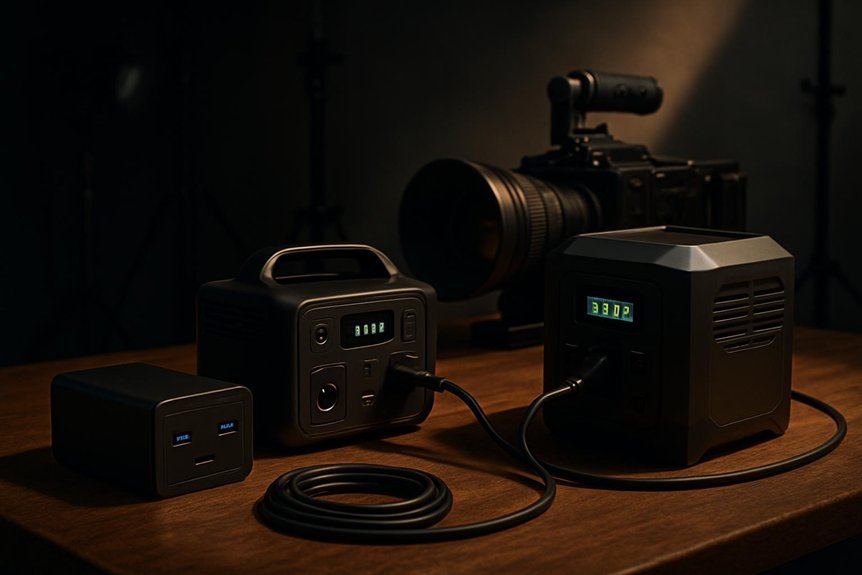
We’ve already mapped every outlet and failover for on-location reliability; now we compare power paths to keep rigs alive. We evaluate three paths: batteries, generators, and hybrids. Batteries offer instant bursts, quiet operation, and predictable draw, but rely on capacity and efficiency to sustain long shoots. We optimize for batteries efficiency by balancing cell chemistry, inverter efficiency, and temperature management; pack sizing considers peak load, duration, and recharge cycles. Generators provide raw energy and longer runtime but introduce noise, fumes, and logistics around fueling. When portability matters, we prioritize compact, brushless inverters and fuel-lean engines, then couple with silencers and remote start. Hybrids blend fast-response batteries with generator support, smoothing surges and extending runtime. Our guidance centers on reliability, weight, and predictability across scenarios.
USB-C Banks and Solar Chargers for Remote Setups
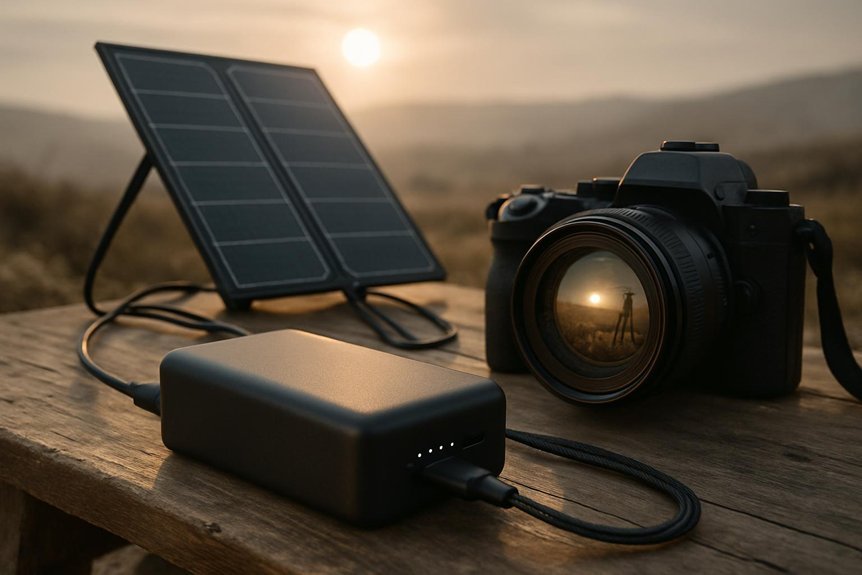
Can USB-C banks and solar chargers keep a remote shoot running without refueling or frequent power drops? We assess capacity, output, and port versatility for on-set demands. USB-C banks deliver 15 to 100+ watts per port, with PD 3.0 or 4.0 for fast device charging and daisy-chaining accessories. We prioritize higher wattage, efficient conversion, and cycle durability, plus real-world runtimes for cameras, monitors, and recorders. Solar chargers offer foldable panels, MPPT controllers, and shaded-site planning to sustain mid-day power or fill gaps. We compare panel efficiency, weather resilience, and battery management features like pass-through charging and battery health indicators. Our guidance emphasizes matching bank capacity to daily energy budgets and ensuring compatible cables, while documenting safety margins and thermal behavior.
Power Management Tactics to Save Time and Money
We can cut waste and save time by applying practical power-management tactics that align with real-world shoot rhythms. We begin with budgeting power: estimate device draw across sessions, then size packs to cover peak needs plus a safety margin. Prioritize one reliable charging workflow to reduce idle cycles and thermal stress. We select high-efficiency adapters and implement synchronized charging between cameras, monitors, and accessories to minimize unnecessary draws. Schedule downtime for battery health checks and firmware updates, avoiding frequent full discharges that shorten battery lifespan. Document run-lists with expected current draw and recharge windows to tighten cycles. Use hot-swap strategies where feasible to keep rigs live. Track battery lifespan trends to forecast replacements, avoiding downtime and budget shocks. This disciplined approach yields predictable power, lower costs, and steadier shoots.
Build Your Filmmaking Power Kit: A Quick-Start Checklist
Building a concise filiming power kit starts with standardizing core components and documenting expected loads, so we can assemble a reliable setup fast. We’re sharing a quick-start checklist to shape a compact, repeatable filmmaking kit. Begin with a modular power backbone: a robust portable power station, smart DC-outputs, and a dependable USB-C/5V rail. Define load priorities for essential gear—camera, monitor, wireless mic, and lights—and pair each with anticipated wattage. Add a compact power distribution hub, surge protection, and a physical case for quick transport. Include charging redundancy: two charging sources and spare batteries, calibrated to runtime needs. Document cable lengths, connector types, and safety notes. This portable power approach minimizes downtime, keeps rigs stable, and ensures the filmmaking kit stays ready for rapid shoots.
Frequently Asked Questions
How Do I Estimate Watt-Hours for My Gear?
We estimate watt hours by summing each device’s draw (W) times usage hours, add a safety margin, and round. We power budget by tracking peak loads and battery capacity to guarantee reliable operation—estimate watt hours, power budgeting, always.
Can I Safely Power AC Devices From USB-C Banks?
Yes, we can’t safely power AC devices from USB-C banks. We’ll adhere to inverter limits, voltage, and surge ratings, using true UPS-style converters. Two word discussion idea 1: inverter safety. Two word discussion idea 2: device compatibility.
Which Portable Power Option Is Best Outdoors?
We believe the best outdoors option is a portable battery with solar charging capability, giving reliability, recharging options, and long runtimes; we’ll test real-world runtimes, efficiency, and compatibility before recommending the setup you can trust.
What Maintenance Schedule Keeps Batteries Live Longest?
We keep batteries healthy with a strict maintenance schedule: avoid deep discharges, calibrate periodically, and store at partial charge. We debunk maintenance myths and charging myths by following manufacturer temps, cycles, and conditioning steps—consistency beats improvised charging.
How Do I Prioritize Power Usage on Set?
We prioritize power by allocating priority budgeting, charging cadence, and critical-load ramps, so we can keep essential shots fed while staging backups; we monitor meters, stagger recharges, and conserve energy, ensuring a smooth, uninterrupted on-set workflow.
Conclusion
We’ve mapped the grid, balanced the batt, and rehearsed the handoffs—so you can shoot without the power drama. Think of your setup as a living power plant: modular, hot-swappable, and quietly efficient. We’ve outlined outlets, UPS-like protection, and clear runtimes to keep you in the moment, not chasing juice. When a scene demands endurance, you’ll swap fast, draw smart, and recharge on the fly. Your workflow, powered, seamless, and ready for anything the set throws at you.