We question the idea that all inverters perform equally across portable power roles. As we compare topologies, we’ll weigh efficiency, startup behavior, and heat management to see how they shape runtime. We’ll keep our focus on real-world loads, from peak surges to continuous draw, and on how wiring and cooling influence losses. There’s more to uncover about matching a topology to expected use, and the implications for reliability, protection features, and total system cost.
Key Takeaways
- Inverter topologies (pure sine, modified sine, square) affect efficiency, heat, and compatibility with portable loads.
- Higher efficiency reduces heat and extends runtime, but oversized units waste energy and undersized units overheat.
- Startup surges and peak vs. continuous load determine protection needs and runtime reliability.
- Heat management (cooling, heatsinking, airflow) is critical to maintain performance under portable operating conditions.
- Match topology to expected load type and duty cycle for optimal efficiency and reliability.
Which Inverter Types Power Portable Units and Why They Matter
There are several inverter types used in portable power units, each chosen for efficiency, reliability, and compatibility with common loads. We evaluate how inverter topology governs performance, size, and heat management, guiding selection for specific applications. We prioritize efficiency across load scenarios, noting that certain topologies excel with resistive versus inductive loads. We also assess protection features, startup behavior, and noise characteristics, which influence integration with sensitive electronics. By matching topology to expected load type, we minimize losses and extend runtimes without overdesign. We communicate why modular, swappable topologies can reduce downtime and simplify maintenance. In practice, decision criteria include peak demand, continuous load, and startup surges, all shaping the ideal inverter topology for a given portable unit, with attention to load type impact.
Pure Sine, Modified Sine, and Square Wave: Practical Differences
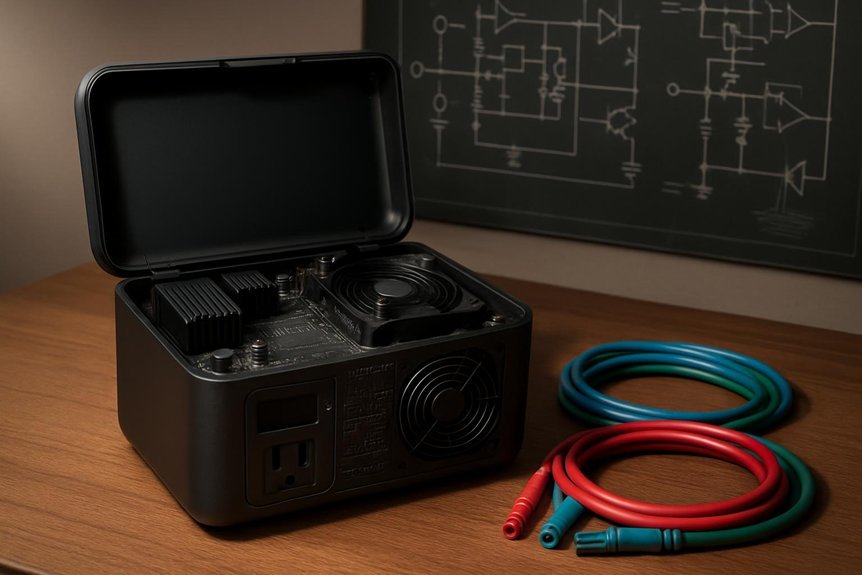
We’ll start from the inverter-topology lens and look at the practical waveforms that power portable units: pure sine, modified sine, and square wave. We define outputs by topology: pure sine closely matches utility AC, yielding lowest distortion and broad compatibility with sensitive electronics. Modified sine offers a stepped approximation, reducing complexity and cost while increasing harmonic content; some loads tolerate it, especially simple devices with linear or universal motors. Square wave, the simplest form, drives only very tolerant equipment and can cause inefficiency, arcing, or damage in modern electronics. In practice, compatibility and load shape drive choice: pure sine for precision electronics, audio gear, and chargers; modified sine for basic tools and appliances; square wave for legacy or budget-only scenarios. Clear expectations prevent equipment surprises and misbehavior.
How Efficiency Affects Runtime and Heat in Portable Inverters
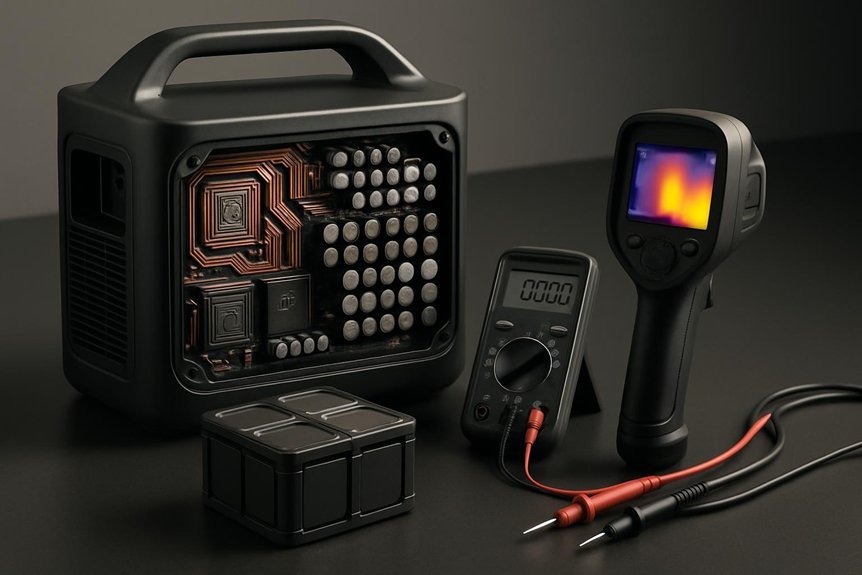
How does efficiency shape runtime and heat in portable inverters? We examine how efficiency translates to usable runtime and thermal behavior, guiding our approach to sizing and cooling. Higher efficiency means less input power wasted as heat, extending runtime for given loads and batteries. In practice, we balance inverter sizing with expected duty cycles to maintain acceptable temperatures and performance.
- Efficiency directly impacts runtime for a fixed load
- Heat generation scales with power loss, influencing heat management
- Oversized inverters can waste energy, counteracting gains in runtime
- Undersized units run hotter, risking throttling or failure
- Proper heat management enables sustained operation under peak demands
Reading Efficiency Ratings: Peak vs. Sustained Performance
Peak efficiency isn’t a single number—the rating you see on a label often reflects a best-case point rather than sustained performance. We, as readers, must interpret efficiency ratings with context. Inverter sizing influences how a unit meets real load profiles: peak figures describe short-duration capability, while sustained figures indicate ongoing performance under continuous demand. When evaluating portable power units, compare labeled peak efficiency to the operating duty cycle you expect, and examine thermal or duty-cycle limitations that cap sustained performance. Look for efficiency ratings at common loading points (e.g., 50% to 80%) to forecast real runtime. Clarify how ratings were derived—input voltage range, temperature, and design margins matter. By distinguishing peak from sustained, we choose equipment that genuinely matches our load and runtime goals.
Matching Inverter Type to Loads: Real-World Use Cases
What inverter type best suits a given load depends on the nature of the devices and how they draw power in operation. We focus on practical load matching to select an inverter topology that preserves efficiency and stability across use cases. Real-world loads vary from steady resistive heaters to pulsed motors and electronics with startup surges. Matching the topology to these patterns minimizes distortion, reduces heat, and improves runtime.
- Resistive vs. inductive profiles
- Surge tolerance and peak wattage
- Harmonic sensitivity of electronics
- Continuous vs. intermittent duty cycles
- System protection and fault responses
Other Influences on Efficiency: Cables, Losses, and Battery Chemistry
The efficiency of portable power units isn’t only about the inverter itself; cable sizing and routing, together with overall system losses, play a critical role. We’ll also examine how battery chemistry shapes charge/discharge behavior and heat generation, setting practical efficiency limits. By outlining these factors—Cable Losses and Battery Chemistry Impact—we aim to clarify how they interact with load profiles and inverter performance.
Cable Losses Explained
Cable losses are more than a minor nuisance; they directly affect overall efficiency by converting some delivered power into heat along the run. We quantify losses with resistance, current, and length, then optimize via gauge choices and routing. We assess connections, insulation, and contact quality to minimize parasitic heat. Careful cable pairing with components reduces impedance mismatch and stray inductance, improving regulation under load. We balance weight, flexibility, and durability against allowable resistance to avoid voltage drop on long runs. Proper sizing for anticipated current preserves efficiency without overbuild. Heat management and enclosure spacing matter, since ambient temperature influences copper resistance. Small optimizations compound, yielding meaningful gains.
- Cable sizing decisions
- Routing to minimize length
- Connection quality checks
- Impedance impact on regulation
- Battery pairing considerations
Battery Chemistry Impact
Battery chemistry directly shapes overall efficiency by governing internal losses, energy density, and how the cells interact with the inverter and cables. We assess how chemistry defines internal impedance, charge/discharge limits, and thermal behavior, all of which influence practical efficiency under load. Different chemistries exhibit distinct voltage depression, Coulombic efficiency, and resistance aging, affecting inverter loss profiles and heat generation. We also consider how energy density impacts sizing, weight, and parasitic losses in cables, busbars, and connectors. Inverter topology interacts with chemistry to determine optimal operating points, switching losses, and control strategies. Selecting the right battery chemistry aligns with load profiles and thermal management, yielding sustained efficiency. Our guidance emphasizes matching chemistry to inverter topology for realistic efficiency expectations.
Read Specs Quickly: a Practical 5-Point Quick-Check
We’ll outline a quick 5-point check to read specs fast and stay precise: Quick Specs Check, Key Performance Metrics, and a Practical Test Guide guide our discussion. We’ll keep each step concrete—identify input/output ranges, efficiency ratings, power limits, and test procedures—so you can verify real-world performance quickly. This short framework starts our practical, results-focused discussion without fluff.
Quick Specs Check
Ever wonder how to verify a portable inverter’s viability at a glance? We’ll keep this tight: a quick 5-point check that informs, not overloads. Our focus is on practical readouts you can rely on in the field.
- Input/output voltage compatibility
- Peak and continuous power ratings
- Efficiency and heat behavior
- Build quality and compact outlet design
- Protective features and certifications
We aim for compact outlet accessibility and portable durability, ensuring you can trust the unit without full teardown. By cross-checking these specs, we avoid overpromising and identify whether the inverter meets your immediate needs. Remember, this snapshot doesn’t replace full testing, but it delivers a clear, actionable verdict. If anything seems marginal, you’ll know to probe further before purchase or deployment.
Key Performance Metrics
From our quick-spec checks, the five-point framework for evaluating inverter performance translates directly into clear, at-a-glance metrics. We present Key Performance Metrics with precise targets and concise interpretation, focusing on inverter topology and heat management to ensure reliable operation in portable units.
| Metric | Target/Range | Why it matters |
|---|---|---|
| Efficiency | 85–95% | Lower losses boost runtime and reduce heat. |
| Startup Power | ≤ 2x rated, peak handling | Handles surge loads without shutdowns. |
| Heat Management | active cooling or heatsinking, temp < 85°C | Prevents thermal throttling and failure. |
| Size/Weight | Compact for portability | Correlates with cooling needs |
Practical Test Guide
A quick, practical 5-point quick-check helps us validate inverter specs at a glance: read each spec block, verify the numbers against targets, and confirm the test setup matches real-use conditions. We focus on inverter sizing and battery safety to assure real-world performance aligns with expectations.
- Confirm rated output matches load profile and peak demands
- Verify efficiency figures under typical and peak loads
- Check input voltage range and battery chemistry compatibility
- Inspect thermal margins and ambient condition assumptions
- Validate protection features and wiring for battery safety and fault isolation
Decide Smarter: a Quick Framework for Longer Runtimes and Cooler Operation
How can we choose smarter to extend runtimes and keep temps low? We present a compact decision framework focused on durability and efficiency. We begin with load profiling: map application duty cycles, identify peak and idle draws, and select an inverter with headroom above the maximum sustained load. Prioritize high-efficiency topologies and low quiescent current to minimize parasitic losses. Next, consider thermal management: ensure proper heatsinking, airflow, and compartment ventilation; track ambient temperature and runtime impact. For hardware layout, optimize inverter placement to minimize heat concentration and cable losses, while avoiding obstructed airflow. Finally, quantify fan noise contributions and select fans or passive cooling that meet system targets without compromising performance. This disciplined approach yields longer runtimes and cooler operation.
Frequently Asked Questions
Do Inverters Degrade Battery Life Over Time?
Yes, inverters can contribute to battery wear over time. We’ll explain how battery chemistry interacts with inverter aging, including heat, switching losses, and depth of discharge, and how these factors collectively impact capacity, cycle life, and overall system longevity.
Can Inverter Efficiency Vary With Altitude or Temperature?
“Where there’s a will, there’s a way.” We, readers, know inverter efficiency and altitude vary with air density, and temperature dependent efficiency matters; we explain that altitude and temperature affect performance, and we adapt accordingly.
Are There Safety Certifications for Portable Inverter Efficiency?
Yes, there are safety certifications for portable inverter efficiency. We verify inverter efficiency standards compliance, and discuss certification implications with you, ensuring test metrics, labeling, and risk assessments meet regulatory expectations for reliable, safe portable power deployments.
How Do Pure Sine Wave Inverters Perform With Power Tools?
Pure sinewave inverters handle power tools smoothly with steady voltage, reducing surges; battery life suffers minimally under light loads, but altitude can affect cooling and efficiency. We recommend monitoring current draw and staying within rated wattage.
Can Solar Charging Affect Inverter Performance and Heat?
We say yes: solar charging can influence inverter performance, and heat impact increases under higher input and load. We monitor temps closely, use proper venting, and avoid sustained high-draw tools to maintain efficiency and reliability.
Conclusion
We’ve seen how inverter topology, efficiency, and cooling shape real-world runtimes. As loads surge, our choices—pure sine tweaks, thermal paths, and swappable modules—decide what actually comes out of the battery. With careful matching to peak and continuous demands, the numbers translate into cooler operation and longer run times. So, we’ll pick deliberately, test relentlessly, and keep the system within safe limits—waiting, just enough, for that moment when performance finally reveals its true potential.