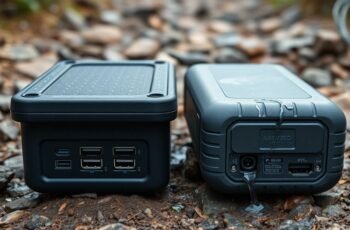
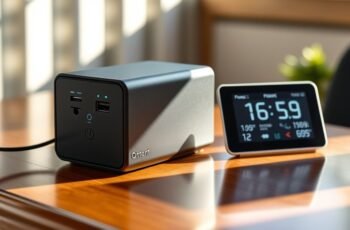
As the saying goes, “bigger isn’t always better,” and this holds particularly true when comparing high capacity and compact portable power stations. While larger units promise extended runtime and greater energy reserves, their weight and size can limit practicality. Conversely, smaller models emphasize portability and rapid deployment, often at the expense of capacity. Understanding these trade-offs is essential to selecting the right solution—one that aligns with your specific energy demands and operational context.
Key Takeaways
- High capacity stations provide longer runtimes and support demanding devices, while compact units excel in portability and quick setup.
- Larger units feature sophisticated battery management systems, whereas smaller models focus on fast charging and lightweight design.
- High capacity units are suitable for extended use scenarios; compact models are ideal for spontaneous outdoor activities.
- Heavier and less portable, high capacity stations are better for prolonged, high-energy applications; compact stations suit quick, low-energy tasks.
- Selecting between them depends on specific energy needs, portability requirements, and recharge logistics.
What Are the Main Differences Between High Capacity and Compact Power Stations?
While both high capacity and compact power stations serve to provide portable energy, they differ considerably in their design focus and performance metrics. High capacity units prioritize large energy storage, often utilizing advanced battery technology to maximize capacity, which supports extended usage durations. Conversely, compact stations emphasize portability and quick deployment, often sacrificing some capacity for reduced size and weight. Charging efficiency varies between these types; high capacity stations typically incorporate sophisticated battery management systems to optimize charging cycles, but their larger batteries may require more time to recharge fully. Compact models, with smaller batteries, often feature faster charging times and simpler designs that enhance mobility and ease of use. These differences fundamentally influence their suitability for different use scenarios based on energy demands and logistical considerations.
How Do Capacity and Size Impact Performance and Usage Scenarios?
Capacity and size directly influence a power station’s performance and suitability for specific usage scenarios. Larger capacity units, often utilizing advanced battery technology, deliver extended runtime, ideal for prolonged or high-demand applications. Conversely, compact models prioritize portability, making them suitable for quick, low-energy tasks. These differences impact energy efficiency, with high-capacity stations often optimizing energy flow for sustained output, while smaller units excel in rapid deployment and minimal energy loss. Visualize these scenarios:
Larger power stations offer longer runtimes, while compact models excel in portability and quick, low-energy tasks.
- Extended outdoor camping trips requiring sustained power
- Emergency backup for critical home appliances
- Lightweight devices for short-term, on-the-go use
Ultimately, capacity determines the station’s ability to handle load demands, while size influences deployment flexibility—both factors shaping performance outcomes across diverse usage scenarios.
What Are the Pros and Cons of High Capacity Portable Power Stations?
High capacity portable power stations offer significant advantages for users needing extended or heavy-duty power supply, but they also present specific challenges. Their larger batteries typically provide increased battery longevity, enabling longer usage times without frequent recharging. However, this comes with a trade-off in charging speed; higher capacity units often require more time to recharge fully, which can impact usability in emergency scenarios. Additionally, the substantial energy reserves can make these units heavier and less portable, complicating transport and setup. While they excel in powering multiple devices simultaneously, their size and weight may limit their practicality for casual or short-term use. Overall, high capacity models are ideal for demanding applications but demand careful consideration of charging logistics and portability limitations.
What Are the Advantages and Limitations of Compact Portable Power Stations?
Compact portable power stations are designed to prioritize portability and ease of use, making them ideal for users who need quick, convenient power solutions on the go. Their advantages include lightweight construction, simplified transport, and quick setup, aligning with portability considerations. However, limitations exist regarding battery longevity, which tends to be shorter due to smaller capacities. This restricts usage duration, especially for high-demand devices. Additionally, their limited output means they may not support larger appliances or extended use. Visualize a small device fitting into your backpack, ready for spontaneous outdoor adventures or emergency backup. Yet, the trade-off is reduced runtime and lower power output, which can constrain long-term or high-capacity applications. These factors underscore the importance of balancing convenience with performance needs in portable power solutions.
How to Choose the Right Portable Power Station for Your Needs?
Choosing the right portable power station requires a clear understanding of your specific energy needs and usage scenarios. We analyze battery technology to determine efficiency, lifespan, and recharge options, ensuring compatibility with your devices. Consider whether lithium-ion or advanced solid-state batteries best suit your requirements, as they influence capacity and durability. Renewable integration is also vital, especially if you plan to use solar panels or other sustainable sources; look for stations with compatible inputs and intelligent charge management systems. Additionally, assess power output levels, port variety, and portability features. By evaluating these technical factors—battery technology for longevity and renewable integration for sustainability—we can select a power station that balances capacity, convenience, and environmental impact tailored to your operational demands.
Frequently Asked Questions
How Long Do Portable Power Stations Typically Last on a Full Charge?
On a full charge, portable power stations generally last between several hours to over a day, depending on battery life and usage. Charging cycles impact overall longevity, with most units maintaining ideal performance after 500-2000 cycles.
Can High Capacity Power Stations Be Easily Transported for Outdoor Activities?
High capacity power stations are generally less portable due to heavier battery weight, but their faster charging speeds can offset this during outdoor use, making them suitable for extended activities despite reduced mobility.
Are There Any Safety Concerns With High Capacity Versus Compact Models?
We believe safety hazards like battery overheating are manageable with proper handling and ventilation, though high capacity models may require extra caution due to larger batteries. Compact units generally pose fewer risks, making them more straightforward for outdoor use.
What Maintenance Is Required for Different Types of Portable Power Stations?
We maintain portable power stations by monitoring battery longevity and following proper charging protocols, ensuring ideal performance and safety. Regularly inspecting connections, cleaning vents, and updating firmware also help prolong device lifespan and prevent issues.
How Do Price Differences Influence Long-Term Cost-Effectiveness?
Price differences considerably impact long-term cost efficiency and investment benefits; higher upfront costs often lead to more durable, reliable power stations, reducing maintenance and replacement expenses over time, making them a smarter, more economical choice for consistent energy needs.
Conclusion
Ultimately, choosing between high capacity and compact portable power stations depends on evaluating our specific energy demands and mobility needs. We must weigh the trade-offs carefully—more power often means added weight, while portability may limit capacity. By understanding these nuances, we can avoid biting off more than we can chew. With a clear picture of our priorities, we’re better equipped to select the station that truly fits the bill, ensuring ideal performance without overextending ourselves.