As we evaluate backup power options, understanding the distinct operational principles and suitability of portable power stations versus grid-tied systems becomes essential. Each offers unique advantages and limitations, influenced by factors like mobility, capacity, and installation complexity. To determine which solution aligns with specific needs, we must analyze technical performance, long-term costs, and integration potential—an assessment that can notably impact energy resilience and convenience.
Key Takeaways
- Portable power stations offer mobility and quick deployment but have limited capacity compared to fixed grid-tied systems.
- Grid-tied backup systems provide seamless, automatic power during outages with higher energy efficiency and renewable integration.
- Portable units are ideal for outdoor use and emergencies; grid systems suit continuous, large-scale household backup needs.
- Grid-tied systems generally require higher initial investment but offer longer lifespan and potential cost savings over time.
- Portable stations rely on battery health and charging methods; grid-tied systems depend on grid stability and renewable energy sources.
How Do Portable Power Stations Work and What Are Their Key Features
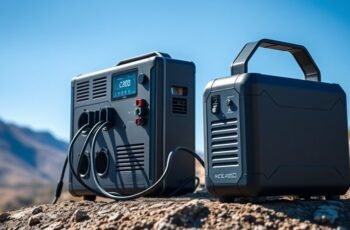
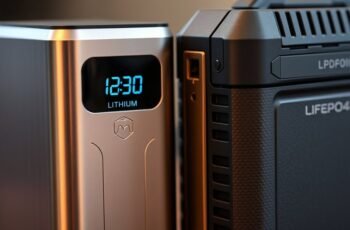
While portable power stations are often perceived as simple battery packs, their operation involves a sophisticated integration of energy storage, power conversion, and management systems. At their core, advanced battery technology—typically lithium-ion or lithium-polymer—enables high energy density and longevity. These stations use complex circuitry to convert stored DC energy into usable AC or DC outputs, guaranteeing compatibility with various devices. Their key features include multiple charging methods, such as AC wall outlets, car adapters, and solar panels, providing flexibility in different scenarios. State-of-the-art management systems regulate battery health, optimize charge cycles, and prevent over-discharge or thermal issues. This seamless integration guarantees reliable power delivery, making portable power stations versatile solutions for portable and emergency use, with intelligent control over energy flow and system diagnostics.
What Are Grid-Tied Backup Systems and How Do They Function?
Grid-tied backup systems function by integrating with the existing electrical grid to provide reliable power support during outages or fluctuations. They synchronize with grid frequency and voltage, allowing seamless switching between grid power and backup. These systems often incorporate renewable integration, enabling the use of solar or wind energy to offset grid dependence. However, regulatory challenges can complicate deployment, as local policies may restrict or require specific standards for grid connection. The system’s core components include inverters, transfer switches, and controls that manage power flow efficiently.
| Feature | Description |
|---|---|
| Renewable Integration | Incorporates solar/wind sources for cleaner energy |
| Regulatory Challenges | Managing local policies and grid code compliance |
| Synchronization | Maintains grid frequency and voltage consistency |
| Power Support | Provides backup during outages or fluctuations |
| Grid Interaction | Seamless switching and energy management |
Comparing Mobility and Installation: Which Backup Power Solution Fits Your Lifestyle
Selecting the appropriate backup power solution depends largely on your mobility needs and installation preferences, as each option offers distinct advantages and limitations. Portable power stations excel in emergency preparedness, providing lightweight, easily transportable energy sources that support outdoor activities or quick deployments. Conversely, grid-tied systems require more complex installation but offer seamless integration with existing infrastructure, ideal for long-term renewable energy strategies.
Consider these factors:
- Mobility for outdoor or remote applications
- Ease of installation for permanent setups
- Flexibility in emergency preparedness scenarios
- Compatibility with renewable energy sources
Ultimately, the choice hinges on whether you prioritize rapid deployment and portability or stability, efficiency, and integration for ongoing needs.
Cost, Maintenance, and Lifespan: Which Option Offers Better Long-Term Value
When evaluating backup power options for long-term use, analyzing costs, maintenance requirements, and lifespan becomes fundamental. Portable power stations generally involve higher upfront costs but offer flexible energy storage and renewable integration, reducing ongoing expenses. Their maintenance is minimal, mainly limited to battery health checks, but battery degradation impacts lifespan. Grid-tied systems often have higher initial installation costs, especially for infrastructure supporting renewable integration, yet benefit from lower operational expenses and longer lifespans due to their reliance on the grid. Maintenance is typically less intensive but requires system monitoring. Overall, grid-tied systems tend to deliver better long-term value through extended lifespan and integrated energy storage solutions, whereas portable units excel in mobility but may incur higher replacement costs over time.
Assessing Power Capacity and Output: Which System Meets Your Energy Needs
Understanding the power capacity and output of backup systems is essential to ensuring they meet your specific energy demands. Accurate assessment involves analyzing system specifications like continuous power, surge capacity, and energy storage. Key factors include:
- Battery technology, which influences efficiency, cycle life, and discharge rates
- Peak power output, critical for short-term high loads
- Renewable integration capabilities, affecting scalability and sustainability
- Overall energy capacity, determining runtime during outages
Grid-tied systems typically provide higher power output and seamless renewable integration, but may lack portability. Portable power stations offer flexibility with smaller capacities suited for critical devices. To choose effectively, evaluate your total energy needs, considering both current consumption and potential future demands, ensuring the system’s capacity aligns with your power profile.
Ease of Use and Convenience: Portable Power Stations vs. Grid-Tied Systems
While both portable power stations and grid-tied systems aim to provide reliable energy, their ease of use and convenience differ markedly due to design and operational requirements. Portable power stations offer mobility and rapid deployment, but face portability challenges like weight and size, affecting user handling. Battery longevity influences maintenance and replacement frequency, impacting long-term convenience. In contrast, grid-tied systems require minimal user intervention once installed, providing seamless operation but lack portability.
| Feature | Portable Power Stations | Grid-Tied Systems |
|---|---|---|
| Ease of Use | User-friendly, portable, requires charging and setup | Automated, minimal daily management |
| Portability Challenges | High weight, bulkiness affecting mobility | Not portable, fixed installation |
| Battery Longevity | Limited cycle life, impacts maintenance | Not applicable, fixed infrastructure |
| Deployment | Quick, flexible deployment | Long installation process |
| Maintenance | Regular charging, occasional repairs | Minimal, mostly system monitoring |
Pros and Cons: When Is a Portable Power Station the Best Choice?
Portable power stations are the ideal choice in scenarios that demand mobility, rapid deployment, and independence from fixed infrastructure. They excel where quick energy access is essential, such as outdoor events or remote work sites. Their benefits include flexible renewable integration, leveraging solar or wind sources, and advancements in battery technology that improve efficiency and longevity. However, their limitations involve lower overall capacity compared to grid-tied systems, reliance on battery technology that can degrade over time, and higher costs for large-scale applications. When portability, ease of setup, or off-grid operation outweigh the need for continuous, high-capacity power, a portable station is best suited. These systems are particularly advantageous for temporary needs, emergency preparedness, or environments where grid infrastructure is unreliable or nonexistent.
When Should You Opt for a Grid-Tied Backup System for Your Home?
We should consider upgrading to a grid-tied backup system when our energy needs exceed portable power solutions or when consistent, reliable supply is critical. The benefits of grid connection include seamless power delivery, reduced dependence on battery storage, and potential cost savings through net metering. Evaluating these factors helps determine if a grid-tied system aligns with our long-term energy resilience goals.
When to Upgrade Power Source
Deciding when to upgrade to a grid-tied backup system hinges on evaluating your household’s energy reliability needs and consumption patterns. Key indicators include increasing reliance on renewable energy sources, advances in battery technology, and the desire for seamless power integration. A grid-tied system becomes advantageous when your consumption exceeds what portable power stations or standalone generators can support, especially during prolonged outages. Additionally, improved battery technology allows for more effective energy storage, making grid connection more attractive. Consider upgrading if your household aims to maximize renewable integration, reduce reliance on fossil fuels, or achieve greater resilience. This shift is necessary when your current setup no longer meets demand or when technological improvements make grid-tied systems more cost-effective and sustainable.
Benefits of Grid Connection
When considering the switch to a grid-tied backup system, understanding its core benefits is essential for making an informed decision. Grid connection offers advantages like seamless power supply, enhanced renewable integration, and potential cost savings. It enables off grid independence during outages by utilizing grid energy or stored power efficiently. Additionally, grid-tied systems facilitate integration of renewable sources such as solar, reducing reliance on fossil fuels.
| Benefit | Description | Impact |
|---|---|---|
| Off grid independence | Maintains power during outages | Increased reliability |
| Renewable integration | Supports solar/wind energy input | Reduced energy costs |
| Cost efficiency | Lower operational costs over time | Faster ROI |
Frequently Asked Questions
Can Portable Power Stations Be Used for Outdoor Activities Like Camping?
Yes, portable power stations enhance camping convenience by providing reliable outdoor electricity, enabling us to power devices, lights, and small appliances efficiently during outdoor activities, making them essential tools for versatile, self-sufficient outdoor experiences.
Do Grid-Tied Systems Require Professional Installation or Permits?
Like steering through a complex maze, grid-tied systems require professional installation due to strict regulatory compliance and installation requirements. We recommend consulting certified electricians to guarantee safety, proper setup, and adherence to local codes for ideal, legal operation.
How Long Can a Portable Power Station Run During a Power Outage?
We find that a portable power station’s runtime during a power outage depends on its battery capacity and power management. Typically, it can run essential devices for several hours, but precise duration varies based on load and energy efficiency.
Are There Any Environmental Impacts Associated With Either System?
We analyze environmental impacts, noting portable power stations emit fewer carbon footprints and reduce resource depletion if powered by renewables, whereas grid-tied systems may involve higher emissions and resource use due to fossil fuel reliance and infrastructure demands.
Can Portable Power Stations Be Integrated With Renewable Energy Sources?
Yes, portable power stations can integrate renewable energy sources through advanced energy storage systems, enabling renewable integration. This approach enhances flexibility and efficiency, allowing us to store excess renewable energy for reliable, off-grid power supply during variable conditions.
Conclusion
Ultimately, choosing between portable power stations and grid-tied backup systems hinges on our priorities—mobility versus permanence. Like two sides of the same coin, each offers unique advantages tailored to specific needs. By analyzing capacity, cost, and convenience, we can determine which aligns best with our energy goals. Remember, in the domain of power solutions, understanding the nuanced differences empowers us to make informed, strategic decisions—because when it comes to reliable energy, knowledge truly is power.