We build modular, expandable portable power ecosystems to deliver scalable energy where and when it’s needed. By decomposing systems into interchangeable batteries, panels, inverters, and adapters, we ensure safe interoperability through standardized connectors and robust protection. We’ll test efficiency, reliability, and real-world endurance, balancing enclosure mass with expandability. Our approach debunks the oversized-unit myth while supporting diverse use cases and upgrade paths—yet the next steps reveal critical tradeoffs and practical milestones we’ll tackle together.
Key Takeaways
- Define modular layers across batteries, panels, inverters, and adapters to ensure scalable, predictable capacity and efficiency without rewiring.
- Use standardized connectors, thermal management, and BMS protections to enable safe stacking and fault isolation across modules.
- Map current load, growth, and constraints to upgrade paths, firmware interoperability, and documented risk mitigations.
- Evaluate expandability via energy scaling, redundancy, and failover within a defined budget while considering thermal and weight implications.
- Align use-case profiles (camping, home backup, travel) with validated runtimes, peaks, and charging windows for modular configurations.
What a Modular Portable Power Ecosystem Solves for You
A modular portable power ecosystem solves our day-to-day energy gaps by delivering scalable, reliable power where and when it’s needed. We frame challenges as measurable metrics: availability, runtime, and resilience, then map requirements to modular units that can be added or removed without system rewiring. We address predictable use cases—camping, work sites, emergency outages—by quantifying cycle life, efficiency, and thermal limits, ensuring predictable performance under varying loads. We acknowledge modular myths that oversized, heavy units imply better value; we demonstrate that smart topology, shared components, and intelligent charge management yield higher effective energy density. We confront the portability paradox by balancing enclosure mass with modular expandability, preserving portability without sacrificing robustness. Readiness hinges on data-driven assumptions, repeatable tests, and clear specifications we can verify together.
Core Components: Batteries, Panels, Inverters, and Connectors
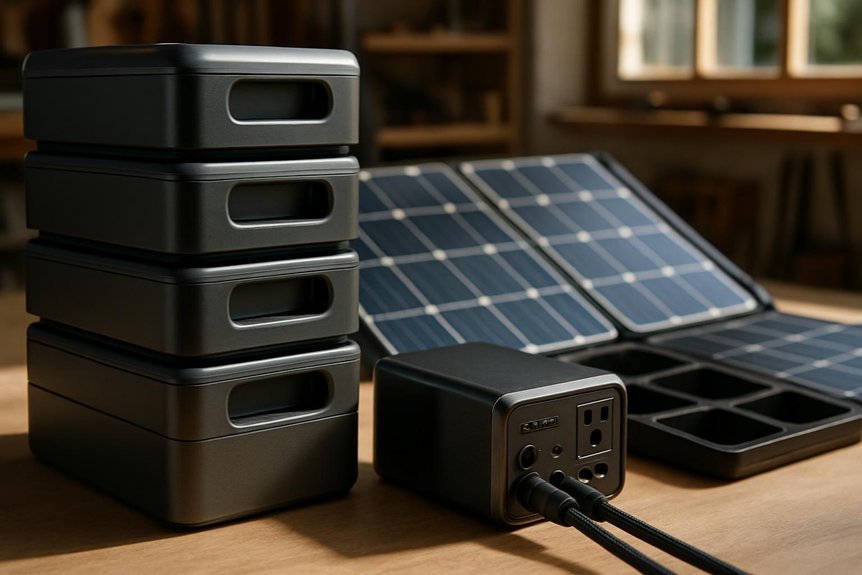
We’ll outline how battery configuration basics, panel compatibility standards, and connector interoperability guide the design of modular systems. By grounding choices in practical constraints—capacity, voltage, current, and matchups—we ensure reliable performance across configurations. This discussion sets a precise framework for evaluating components: batteries, panels, inverters, and connectors work together through defined standards and clear interoperability rules.
Battery Configuration Basics
How do we configure a modular portable power system so it reliably stores energy and delivers it when needed? We align cells and modules by type, balance capacity with discharge rating, and ensure scalable stacking without compromising safety. We emphasize battery chemistry choices and their implications for performance, lifespan, and maintenance, while designing for practical thermal management to prevent hotspots and degradation. Our approach pairs packs with appropriate BMS protection, optimized cabling, and controlled sequencing to minimize inrush. We document voltage/current limits, state-of-charge targets, and compatibility checks across modules, connectors, and inverters. This foundation supports reliable operation in real-world conditions and guides future expansion.
- Define chemistry, capacity, and voltage targets per module
- Implement balanced thermal management and BMS protections
- Verify wiring, safety, and sequencing across the system
Panel Compatibility Standards
Panel compatibility is the backbone of a robust modular power system, and we approach it with precise criteria for batteries, panels, inverters, and connectors. We align panel specifications with standardized voltages, current ratings, and temperature tolerances to ensure predictable behavior across modules. Our evaluation covers open-circuit voltage, maximum power point, and short-circuit protection, preventing mismatched loads and unexpected failure modes. We monitor solar arc risks by enforcing consistent polarity, connector geometry, and weatherproofing levels to minimize arc-induced degradation. We quantify charging drift between panels in series or parallel configurations, selecting configurations that keep voltage and current within tolerance bands under real-world irradiance. We document datasheets, perform repeatable tests, and require traceable tolerances, so system-wide interoperability remains reliable as we scale.
Connector Interoperability Guide
Are connectors truly the gatekeepers of modular compatibility, and if so, how do we guarantee their interoperability across batteries, panels, inverters, and other components? We approach this systematically, defining interface schemas, physical keys, electrical ratings, and communication protocols that align across all core components. We emphasize standardized connectors, verified voltage/current envelopes, and documented tolerances to minimize mis‑matches, while prioritizing energy density within safe operating envelopes and adherence to safety standards. Our method ensures predictable chain performance, facilitates safe hot-swapping, and enables scalable expansions without reengineering.
- Establish core interface profiles with explicit voltage, current, and communication specs, plus physical keying.
- Verify compatibility through controlled tests that measure energy density impact and thermal behavior.
- Document conformity to safety standards, update during platform evolution, and retire noncompliant parts.
How to Evaluate Expandability and Future-Proof Your System
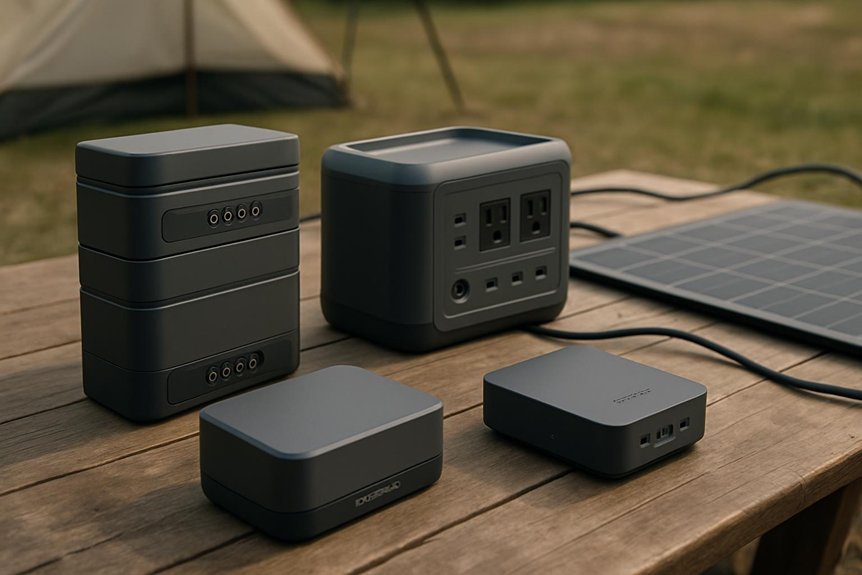
Evaluating expandability and future-proofing starts with a clear scope: identify current load, expected growth, and potential system constraints, then map them to modular architectures and communication standards. We assess plug-and-play upgrade paths, standardized interfaces, and firmware interoperability to ensure seamless integration. Our evaluation prioritizes modular interconnectivity, minimizing bottlenecks while preserving safety margins. We quantify energy scaling by projecting peak and average demand across use cases, then test redundancy and failover options within the defined budget. We examine thermal, weight, and volume implications of adding modules, ensuring controllers, BMS, and monitors remain compatible. We insist on documented upgrade trajectories, backward compatibility, and clear decommissioning steps. Informed choices balance performance, cost, and risk, guiding us toward a deliberately extendable, resilient portable power ecosystem.
Configure for Camping, Home Backup, and Travel: Use-Case Mappings
We map our modular power system to practical use cases—camping, home backup, and travel—by aligning load profiles, duty cycles, and environmental constraints with modular configurations. Our approach ensures predictable performance, minimizes overdesign, and preserves portability. We define representative scenarios, then select component tiers, battery chemistries, and interface options that satisfy each case without extraneous capacity. We document expected runtimes, peak draws, and charging windows to validate configurations before deployment. By integrating camping aesthetics into form factors and travel etiquette into packaging, we harmonize usability with practicality. This disciplined mapping reduces surprises and accelerates setup in the field.
- Camping, home backup, and travel profiles mapped to modular configurations
- Component selection aligned with duty cycles and environmental constraints
- Verification checks for runtimes, peaks, and charging windows
Power Management Fundamentals: Efficiency, Safety, and Smart Controls
Power management in modular systems hinges on efficiency, safety, and smart controls that work together seamlessly. We approach efficiency optimization by quantifying losses at each stage, from conversion to distribution, and selecting components with low idle and transient consumption. We implement controlled charging, temperature-aware regulation, and load shedding to maintain optimal operating points. Safety protocols govern interconnection integrity, short-circuit protection, and fault isolation, ensuring safe handoffs between modules during expansion or reconfiguration. Smart controls coordinate timing, state-of-charge targets, and adaptive pacing based on available input, demand, and environmental conditions. We emphasize robust monitoring, logging, and fail-safe defaults to prevent degradation and abuse. Our methodology remains rigorous: validate with measurements, document limits, and validate edge cases before deploying any modular upgrade.
Layering Modules: Batteries, Panels, Inverters, and Adapters
We’ll outline how Battery Stacking can maximize capacity and resilience while preserving safety margins, then examine Panel Compatibility to ensure consistent voltage, current, and connector standards. Next, we’ll assess Inverter and Adapter Flexibility to support varied loads and input sources without compromising efficiency or protection features. By anchoring these decisions to concrete specs and use cases, we set a precise framework for modular layering across diverse environments.
Battery Stacking Strategies
To optimize performance and reliability, we approach battery stacking as a deliberate layering of modular components—batteries, panels, inverters, and adapters—so that each unit contributes predictable capacity, voltage, and efficiency. We organize stacks by voltage compatibility, state-of-charge alignment, and thermal management, ensuring safe, repeatable operation. Our method emphasizes modular interchangeability, fault isolation, and scalable capacity growth, supporting diverse use cases from short trips to extended deployments. We evaluate economics efficiency and safety compliance at every step, documenting performance deltas and risk mitigations. This disciplined approach minimizes cascading failures and simplifies maintenance, while preserving flexibility for future upgrades.
- Check voltage and SOC alignment across modules.
- Implement standardized connectors, cooling, and protection.
- Validate real-world efficiency and safety compliance through tests.
Panel Compatibility Considerations
Have you confirmed that panel specifications align with our stacking framework to guarantee predictable performance? We approach panel compatibility methodically, validating electrical and mechanical interfaces before integration. We examine panel efficiency in relation to framing rails and mounting geometry to prevent shading and ensure consistent fill factor. Temperature drift expectations drive selection of components, as inverter heat and battery chemistry respond to ambient changes. We assess cabling gauge and connector durability to sustain charge rates without voltage drop or wear. MPPT tuning is scheduled to match panel current and voltage ranges, with attention to solar shading scenarios. We verify mechanical tolerances, mounting points, and fastener access to maintain long-term reliability. This disciplined approach minimizes power losses and supports modular expandability.
Inverter and Adapter Flexibility
- Validate input/output ratings and protective features before integration
- Ensure adapter standards preserve inverter efficiency and minimize losses
- Verify panel durability through compatible mounting, cabling, and weatherproofing
Real-World Setups: Step-by-Step Guides and Verification
How do real-world setups come together, step by step, and how do we verify each stage for reliability? We present a disciplined sequence, with paired checks at each node. We begin with component selection, confirming compatibility, ratings, and enclosure fit. Next, we assemble modules, document connection topology, and perform immediate continuity tests. We then power-up with low load, monitor voltage, current, and temperature, recording data for validation. Verification proceeds through functional tests, load ramping, and environmental emulation to reveal edge conditions. We address two word discussion ideas: security vulnerabilities and data logging, ensuring firmware integrity and access controls are audited. Finally, we execute a controlled shutdown, archive the log set, and review results against acceptance criteria, enabling repeatable replication and traceable proof of reliability.
Maintenance, Upgrades, and Troubleshooting Pathways
- Catalog and schedule maintenance tasks with predefined intervals.
- Execute troubleshooting steps using documented decision trees and checks.
- Validate post-repair performance against target metrics.
Frequently Asked Questions
How Does Scalability Impact Total Cost Over Time?
Scalability cost grows gradually as capacity expands, while time to expand shortens with modular upgrades. We project total cost by cumulative hardware, integration, and maintenance, noting diminishing per-unit expenses over iterations as our system scales efficiently.
Can Modules Be Swapped Without System Downtime?
We can swap modules without downtime, provided hot-swapping is supported and power sequencing is correctly managed. Our approach guarantees brand compatibility, minimizes risk, and documents swap procedures for repeatable, reliable maintenance with clear downtime avoidance.
Are There Any Compatibility Gaps Between Brands?
Are there compatibility gaps between brands? Yes, we see potential compatibility gaps and mixed brand interoperability. We methodically assess, communicate clearly, and confirm compatibility before integrating modules, ensuring consistent performance, safety, and predictable behavior across all components.
What Are the Hidden Safety Concerns During Expansion?
We think hidden hazards during expansion include hidden electrical faults and improper desaturation; we mitigate heat risks with disciplined cooling checks. Our approach emphasizes modular safety, deliberate commissioning, and clear warnings to readers while avoiding overlooked risks.
How Do Warranties Apply to Mixed-Module Systems?
We’d say 78% of users report mixed-module setups trigger warranty nuances due to interoperability gaps; warranties vary by vendor. We’ll outline warranty nuances and guarantee modular interoperability is documented, tested, and clearly aligned with your system’s power architecture.
Conclusion
We’ve built this modular system so your power isn’t a one-off purchase but a living toolkit. Imagine two friends at a campsite, coincidentally packing the same compact module set, each finding a perfect balance of shade and sun through interchangeable panels. When a storm hits, our layered design angles you toward safe, scalable backups without rewiring. Together, we test, tweak, and validate—so your energy stays dependable, expandable, and precisely aligned with your evolving needs.