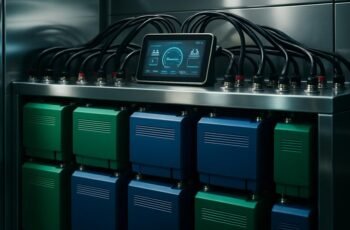
Maintaining the ideal performance of portable generators hinges on proper battery calibration, a process that guarantees accurate voltage and capacity measurements. By regularly calibrating, we can identify potential issues early and extend battery lifespan, especially in demanding environments. Understanding the correct procedures and timing is critical, but many overlook these details, risking diminished reliability. To fully grasp the benefits and best practices, it’s essential to explore the technical nuances behind effective calibration methods and their impact on generator dependability.
Key Takeaways
- Regular calibration ensures accurate battery charge reporting, optimizing generator performance and extending battery lifespan.
- Use proper procedures, including full charging, controlled discharge, and voltage/current recording, to calibrate generator batteries effectively.
- Signs like fluctuating voltage or slow recharge indicate the need for calibration to prevent capacity loss.
- Calibrate every 3 to 6 months, or monthly in demanding environments, using voltage-based or capacity-based methods depending on battery chemistry.
- Store batteries in stable conditions, keep them partially charged, and perform maintenance to maintain calibration accuracy and battery health.
How Does Battery Calibration Improve Portable Generator Performance?
While battery calibration might seem like a minor maintenance task, it plays a crucial role in enhancing the overall performance of portable generators. Calibration directly influences battery efficiency by ensuring that the battery accurately reports its true state of charge. This process fine-tunes the battery management system, optimizing charge cycles and preventing over- or under-charging. As a result, power consistency improves because the generator can deliver a stable output without abrupt voltage drops or fluctuations caused by inaccurate battery readings. Proper calibration minimizes capacity loss over time and maintains the integrity of the battery’s performance. Ultimately, it guarantees that the generator operates reliably under load, providing sustained power while extending battery lifespan through precise control of charging and discharging cycles.
Signs Your Generator’s Battery Needs Calibration
Despite proper maintenance, batteries can exhibit signs indicating they need calibration to maintain ideal performance. Deviations in battery lifespan, inconsistent starting power, or frequent false alarms suggest calibration issues. Poorly calibrated batteries may also show irregular charge acceptance, despite adherence to best charging routines. Recognizing these signs helps prevent premature battery failure and extends overall lifespan. The following table summarizes key indicators:
| Sign | Explanation | Impact on Performance |
|---|---|---|
| Inconsistent Voltage | Fluctuations during operation | Reduced reliability |
| Shortened Battery Life | Unexpected depletion | Increased replacement costs |
| Delayed Charging Response | Slow recharge times | Inefficient power management |
| Erratic Starting Power | Unpredictable engine starts | Operational delays |
Monitoring these signs ensures timely calibration, maximizing battery performance and lifespan.
Step-by-Step Guide to Calibrating Your Portable Generator Battery
To guarantee accurate calibration, we first need to prepare the necessary equipment, including a multimeter and the generator’s manual. Next, we follow precise calibration steps to reset the battery’s state of charge readings. Careful execution of each step assures ideal battery performance and longevity.
Prepare Your Equipment
Before initiating the calibration process, it’s essential to gather all necessary tools and guarantee the generator is in ideal working condition. Ensuring voltage stability and understanding the battery chemistry are critical, as these factors influence calibration accuracy. Proper preparation minimizes risks of miscalibration due to voltage fluctuations or incompatible battery types.
Key preparations include:
- Multimeter for voltage measurement
- Manufacturer-specific tools for battery access
- Firmware update (if applicable)
- Calibration guidelines based on battery chemistry
Verifying the generator’s overall health and confirming the battery’s voltage levels help establish a baseline, ensuring the calibration process is precise. Proper preparation directly impacts calibration success, especially when accounting for different battery chemistries and their voltage stability characteristics.
Perform Calibration Steps
Initiating the calibration process requires a systematic approach to guarantee accuracy and safety. We begin by verifying the battery is fully charged, maximizing charging efficiency before calibration. If the battery shows signs of diminished capacity or inconsistent performance, a battery replacement might be necessary to achieve reliable results. Next, disconnect the battery and allow it to rest for at least an hour, preventing residual charge from skewing readings. Reconnect and run a controlled discharge cycle, recording voltage and current levels at specified intervals. Recharging the battery to full capacity then completes the cycle, allowing calibration software or manual checks to compare the charge state with actual capacity. This process ensures the battery’s displayed charge aligns with its true state, optimizing performance and prolonging lifespan.
Common Mistakes to Avoid During Battery Calibration
While calibrating the battery of a portable generator, it’s essential to recognize and avoid common pitfalls that can compromise the process. Incorrect charging techniques, such as rapid charging without proper monitoring, can lead to inaccurate calibration results. Similarly, neglecting essential battery replacement protocols may cause outdated or faulty cells to skew the process. Overlooking proper discharge procedures can result in inconsistent voltage readings. Ultimately, failing to verify the battery’s health before calibration risks basing adjustments on compromised components. To maintain accuracy, always follow precise charging techniques, ensure timely battery replacement when necessary, and conduct thorough pre-calibration assessments. Avoiding these mistakes ensures reliable calibration, prolongs battery life, and optimizes generator performance.
How Often Should You Calibrate Your Generator’s Battery?
Regular calibration of your generator’s battery is essential for maintaining peak performance and extending its lifespan. Typically, calibration should be performed every three to six months, depending on usage frequency and operating conditions. Consistent calibration helps enhance battery longevity and preserves charging efficiency by ensuring the battery accurately reports its state of charge. Infrequent calibration can lead to inaccurate voltage readings, reducing overall battery health and causing unnecessary strain during charging cycles. For generators used in demanding environments or with high usage, more frequent calibration—perhaps monthly—may be necessary to prevent performance degradation. Monitoring the battery’s performance and scheduling calibration proactively ensures consistent power output, maximizes battery lifespan, and maintains ideal charging efficiency over time.
Tools and Equipment Needed for Accurate Battery Calibration
To guarantee accurate battery calibration, it’s essential to use the appropriate tools and equipment designed for precise measurement and testing. Understanding battery chemistry and the effects of charging cycles informs the calibration process, securing peak performance. Essential tools include:
- Digital Multimeter – for measuring voltage and current precisely during calibration.
- Battery Analyzer – to assess capacity, internal resistance, and state of charge.
- Load Tester – to simulate operational conditions and verify battery response.
- Temperature Sensor – since battery chemistry is temperature-dependent, securing accurate readings.
These tools enable us to monitor charging cycles and maintain calibration accuracy, preventing misdiagnosis of battery health. Proper equipment ensures calibration reflects true battery capacity and state, which is critical for portable generator reliability.
Troubleshooting Battery Calibration Issues in Portable Generators
When a portable generator’s battery fails to calibrate correctly, it can lead to inaccurate charge level readings and reduced performance. Troubleshooting begins with voltage testing, which helps identify if the battery is holding a proper charge. If voltage readings are consistently below manufacturer specifications, it indicates a compromised battery, necessitating battery replacement. Poor calibration may also stem from voltage fluctuations caused by faulty connections or aging components. Confirming all terminals are clean and secure is essential before testing. If issues persist after voltage testing and cleaning, replacing the battery becomes necessary to restore accurate calibration. Proper diagnostics prevent unnecessary replacements and ensure the generator operates reliably. Addressing calibration problems promptly maintains accurate charge assessments and peak performance.
How Proper Calibration Extends Your Generator’s Battery Life
Proper calibration guarantees the battery’s voltage readings are accurate, preventing misinterpretation of its state of charge. This accuracy helps avoid overcharging, which can cause damage and reduce battery lifespan. Ultimately, consistent calibration fosters peak performance and extends the overall longevity of your generator’s battery.
Ensures Accurate Battery Readings
Accurate battery readings are essential for effectively managing your portable generator’s performance and longevity. Precise calibration ensures reliable data, which is critical given the complexities of battery chemistry and the impact of charging cycles. Incorrect readings can lead to improper maintenance, shortening battery lifespan. Proper calibration aligns the voltage and capacity metrics with the actual state of charge, accounting for battery chemistry variations that influence discharge behavior. It also helps identify deviations caused by accumulated charge cycles, which gradually diminish capacity. To optimize calibration, consider these key factors:
- Regularly recalibrate after a set number of charging cycles
- Use manufacturer-recommended procedures tailored to battery chemistry
- Monitor voltage and capacity metrics for anomalies
- Employ precise measurement tools for calibration accuracy
Prevents Overcharging Damage
Maintaining correct calibration of your portable generator’s battery directly impacts its protection against overcharging. Proper calibration aligns the battery chemistry with the charging system, ensuring the battery receives appropriate voltage and current levels during charging cycles. Without calibration, the battery may be overcharged, leading to excessive heat and stress that degrade internal components. Overcharging accelerates capacity loss by damaging the electrochemical structures within the cells, shortening overall lifespan. Precise calibration helps the system recognize ideal charge thresholds, preventing the charger from pushing beyond safe limits. This control preserves battery integrity across multiple charging cycles, reducing the risk of capacity fade and failure. Ultimately, consistent calibration safeguards your generator’s battery from overcharge-induced damage, extending its operational life and maintaining reliable power output.
Promotes Optimal Battery Performance
When a portable generator’s battery is calibrated correctly, it operates within ideal electrochemical parameters, which directly enhances its overall lifespan and performance. Proper calibration optimizes battery technology by ensuring accurate State of Charge (SoC) readings, minimizing unnecessary cycling. It also manages charging cycles more effectively, reducing stress on battery components and preventing capacity fade. Additionally, calibration aligns voltage and current levels during charge and discharge, maintaining consistent performance. Finally, calibrated batteries facilitate precise monitoring and maintenance, enabling early detection of potential issues. This process ultimately prolongs battery life, improves reliability, and maximizes operational efficiency by ensuring the battery functions within its best electrochemical window, thereby extending the utility and reducing long-term replacement costs.
Comparing Calibration Methods: Which Is Best for Your Generator?
Choosing the appropriate calibration method for your portable generator is essential to guarantee its fuel efficiency and accurate performance readings. Different methods, such as voltage-based calibration or capacity-based calibration, suit various battery chemistries and charging cycles. Voltage calibration is quick but less precise for lithium-ion batteries, which require detailed capacity assessments. Capacity calibration, involving controlled charging cycles, provides more precise data but is time-consuming.
| Calibration Method | Best suited for | Pros | Cons |
|---|---|---|---|
| Voltage-based | Lead-acid batteries | Fast, simple | Less accurate for lithium-ion |
| Capacity-based | Lithium-ion batteries | Precise, accounts for battery chemistry | Time-consuming |
Tips for Maintaining Battery Health Between Calibrations
Maintaining ideal battery health requires adherence to a consistent charging schedule to prevent capacity loss. Additionally, storing batteries in controlled environments with stable temperatures reduces degradation over time. Implementing these practices guarantees more accurate calibrations and prolongs overall battery lifespan.
Regular Battery Charging Schedule
How often should we charge the battery to guarantee ideal performance? Regular charging is essential for maximizing battery lifespan and enhancing charging cycles. Consistent maintenance prevents capacity degradation and reduces the risk of deep discharge, which can shorten the lifespan.
To ensure peak health, consider these guidelines:
- Charge the battery after every use, especially if it’s been stored for extended periods.
- Avoid letting the battery discharge below 20%, as deep discharges accelerate capacity loss.
- Use a compatible charger that supplies steady, regulated current to prevent overcharging.
- Monitor charge cycles; aim to stay within manufacturer-recommended limits to prolong overall battery durability.
Adhering to a disciplined schedule minimizes wear and maintains reliable performance over time.
Store in Proper Conditions
Proper storage conditions are crucial for preserving battery health during periods of inactivity or between calibration sessions. Effective battery storage involves maintaining stable environmental conditions to prevent capacity loss and degradation. Temperature control is critical; storing batteries in a cool, dry environment minimizes chemical stress and reduces self-discharge rates. Extremes in temperature—either excessive heat or cold—accelerate aging and impair performance. We recommend storing portable generator batteries at a consistent, moderate temperature, ideally between 50°F and 77°F (10°C to 25°C). Additionally, ensure the battery is partially charged—around 50-70%—to prevent over-discharge or overcharge during storage. Regular inspections for corrosion or leaks are essential, as these issues compromise battery integrity and overall lifespan. Proper battery storage with temperature control is fundamental for maintaining peak calibration readiness and extending battery longevity.
Frequently Asked Questions
Can Battery Calibration Be Done Without Professional Tools?
We believe battery calibration can be done without professional tools by carefully executing full charging cycles and discharging, which helps optimize battery lifespan. Monitoring voltage and capacity during these cycles provides a technical, analytical approach to calibration.
How Long Does the Calibration Process Typically Take?
Calibration usually takes about 1-2 hours, acting as a crucial tune-up for your battery’s lifespan. Regular calibration every 3-6 months guarantees ideal performance, preventing premature battery failure and keeping your portable generator running smoothly.
Is Battery Calibration Necessary for All Portable Generator Models?
We believe battery calibration isn’t necessary for all portable generator models, but it can optimize battery lifespan and charging cycles in some cases. Regular calibration helps maintain consistent performance, especially for batteries prone to capacity loss over time.
What Are the Risks of Improper Battery Calibration?
Improper battery calibration risks shortening battery lifespan and compromising safety precautions, potentially causing unpredictable power failures or damage. We emphasize precise calibration to maintain generator reliability, guarantee safety, and extend battery life through accurate, technical procedures.
Can Calibration Fix a Completely Dead or Damaged Battery?
A completely dead or damaged battery is like a broken compass; calibration can’t restore its true direction. While calibration techniques can optimize battery lifespan, they can’t revive severely compromised batteries, which often need replacement for reliable operation.
Conclusion
In summary, proper battery calibration is essential for maintaining our portable generator’s reliability and performance. Regular calibration guarantees accurate readings, prevents unexpected failures, and extends battery life—saving us time and money. Remember, an ounce of prevention is worth a pound of cure; proactive maintenance safeguards our operations against costly breakdowns. By adhering to recommended practices, we optimize efficiency and longevity, reaffirming that diligent care today secures dependable power tomorrow.