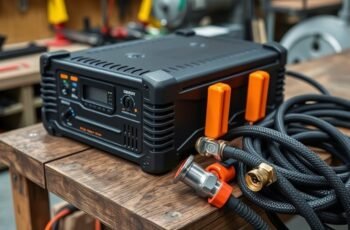
We’re looking at battery health because a portable generator only starts reliably if the battery isn’t fighting us with sulfation, loose terminals, or parasitic losses. We’ll outline how to verify charge, prevent overdischarge, and use the correct charger with auto cut-off, then pinpoint when a battery should be refreshed or replaced. If we can keep connections clean and levels correct, we’ll reduce cold-start failures and keep the unit ready, but a few warning signs can change the outcome—let’s see what they are.
Key Takeaways
- Use the correct charger with manufacturer settings to avoid overcharging and gas buildup in portable generator batteries.
- Regularly check resting voltage (12.6–12.8V for 12V lead-acid) after rest and log readings for consistency.
- Prevent sulfation by keeping terminals clean, electrolyte levels proper, and avoiding prolonged high-drain starts.
- Inspect connections, cables, and starter draw; repair or replace sulfated cells and recondition when needed.
- Store batteries with charge preserved, clean terminals, and protected from extreme temperatures; refresh charge before seasonal use.
How Battery Health Keeps Your Portable Generator Ready to Start
Maintaining battery health is essential to guarantee your portable generator starts reliably. We examine how healthy cells ensure immediate cranking, minimal voltage sag, and consistent ignition. Properly maintained batteries preserve battery lifespan by minimizing sulfation, moisture loss, and dendrite formation, which can degrade cold-cranking amps and overall reliability. Our approach emphasizes discharge depth control, avoiding prolonged high-drain events that accelerate degradation. We monitor voltage, specific gravity where applicable, and terminal cleanliness to prevent resistance increases. Safe handling and storage procedures reduce corrosion and thermal stress, preserving readiness after long idle periods. We prioritize charging safety, using correct charger settings, avoidance of overcharging, and adherence to manufacturer recommendations to prevent gas buildup and safety hazards. In short, robust health translates to dependable starts and predictable performance.
How to Check Your Battery’s Charge and Health (Step by Step)
We’ll start by checking the battery voltage to confirm it sits within the acceptable range, then examine charge levels to assure full readiness. Next, we’ll test health indicators to verify capacity and susceptibility to failure. This stepwise approach keeps maintenance precise and actionable for reliable generator starts.
Check Battery Voltage
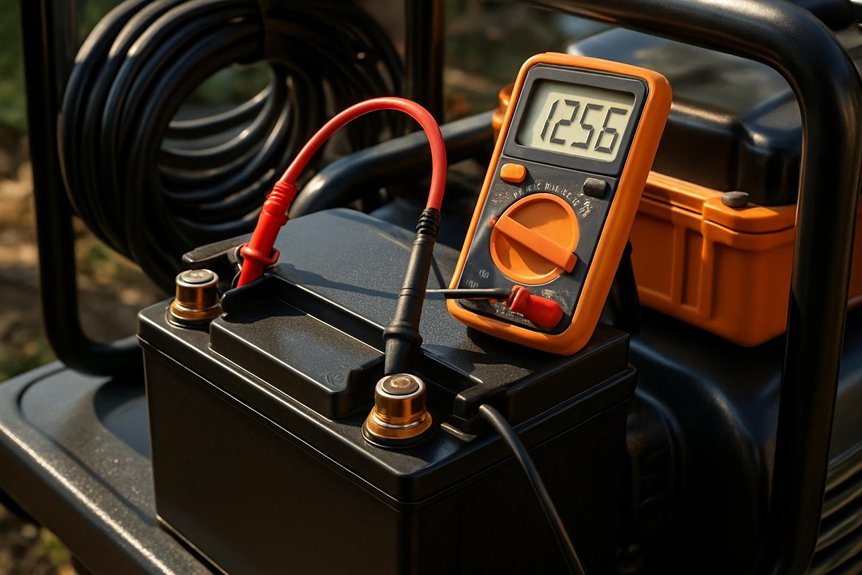
How can you quickly verify your generator’s battery health? We begin with a precise voltage check, using the right tools and reference values. We disconnect any load, set the multimeter to DC volts, and place probes on the battery terminals without shorting them. A healthy 12-volt lead-acid batte ry typically reads around 12.6 to 12.8 volts at rest; a resting reading below 12.4 volts indicates a discharged state, while under 12.0 volts suggests a sulfation risk or failure. For AGM or gel cells, consult manufacturer specs but expect similar thresholds. Record voltage after a 15-minute rest to avoid surface charge errors. Use these readings to inform battery lifespan expectations and debunk charging myths: voltage alone isn’t a full health metric, but it guides further testing. Routine checks prevent surprise outages.
Examine Charge Levels
So, how do we verify a battery’s charge and overall health in one step? We inspect charge levels by measuring steady-state battery voltage with a calibrated multimeter after a rest period, then compare to the manufacturer’s spec. Record values, note deviations, and confirm consistency across cells. If voltage sits below spec, recharge before use; if it drifts, consider charging method or battery capacity. We avoid load testing here to prevent undue wear.
| Step | Action |
|---|---|
| 1 | Allow rest, disconnect loads |
| 2 | Measure battery voltage with meter |
| 3 | Compare to spec, log results |
| 4 | Assess stability over minutes |
| 5 | Decide on recharge or replacement if out of range |
Test Battery Health
To validate battery health, we extend the charge check by examining both resting voltage and short-term response, then interpret the results against manufacturer specifications. We assess capacity indicators, safety margins, and aging signs to determine remaining life. Our approach emphasizes battery safety and reliable performance, with precise steps to minimize risk during testing and handling. We document results and apply storage tips to preserve longevity, avoiding deep discharges and exposure to extreme temperatures.
- Verify resting voltage against spec sheet
- Apply a controlled load for a short interval and note recovery
- Compare observed delta voltage to tolerance bands
- Record date, temperature, and any anomalies for trend tracking
Best Practices for Trickle Charging Without Overcharging
Best practices for trickle charging without overcharging center on using a charger and timer that match your generator’s battery specification. We verify compatibility before connecting any power source and set the timer to terminate flow once the recommended voltage is reached. Use a charger with automatic cut-off and a current limit appropriate for the battery type, capacity, and age. Maintain a clean, tight connection to prevent parasitic losses that could trigger overcharging. Monitor resting voltage after charging to confirm stability, and avoid continuous high-current exposure. Schedule periodic checks for electrolyte level (where applicable) and surface charge indicators. This approach supports trickle charging, reduces heat buildup, and strengthens overcharging prevention without disrupting readiness for use.
When to Replace a Battery (Signs It’s Failing)
We monitor battery health indicators such as cranking amps, voltage under load, and charge retention to determine when a replacement is warranted. If you notice rapid voltage drop, excessive self-discharge, or persistent failure to start the generator, these are clear signs the battery is failing. We’ll walk you through concrete thresholds and timing to help you decide when replacement is more cost-effective than continued testing.
Battery Health Indicators
Have you ever wondered when a generator battery is really failing? We’ll outline clear battery health indicators to help you decide on battery replacement and power optimization. Rely on objective measurements over guesswork.
- Voltage under load drops consistently below standard spec, even after charging.
- Capacity loss shows as shorter runtime under typical load.
- Visible swelling, leaks, or corrosion around terminals.
- Rapid, repeated hard starts or cyclic restarts despite proper maintenance.
Interpretation: minor fluctuations are normal; persistent or escalating signs warrant action. We assess under load tests, resting voltage, and terminal integrity to avoid unnecessary replacements. Prioritize accurate diagnostics to maximize uptime and minimize waste. When replacement is needed, document cycle counts and age for accurate forecasting. Our goal is reliable performance with minimal downtime, using precise tests to guide battery replacement and power optimization strategies.
Signs Of Failure
A battery is failing when repeated indicators align, not just single anomalies. We, however, assess failure through concrete failure indicators rather than isolated quirks. Aging symptoms manifest as consistently lower cranking amps, longer rest periods before starting, or noticeable voltage sag under load. We look for rapid voltage drop after charging, frequent recharging cycles, and shortened service life across cycles. Temperature rise during normal operation signals stress, as does electrolyte loss or visible bulging in sealed cells. Corrosion at terminals, sulfation deposits, or persistent low electrolyte levels point to degraded internal chemistry. If multiple failure indicators appear together, replacement is prudent rather than continued usage. We prioritize safety, document measurements, and follow manufacturer guidelines for replacement thresholds.
Smart Off-Season Storage for Generator Batteries
Smart off-season storage keeps generator batteries healthy and ready. We outline precise steps to preserve capacity and readiness during idle periods, focusing on both summer and cold weather protection.
1) Inspect and clean terminals; remove corrosion and ensure tight connections.
2) Charge to a recommended resting voltage, avoiding full discharge and overcharging.
3) Maintain appropriate temperature and humidity; store in a cool, dry place to minimize self-discharge.
4) Use a protective routine: periodic top-offs, dry ice-free insulation, and clear labeling for seasonal rotation.
Summer storage requires ventilation and sun protection, while cold weather protection emphasizes insulation and heater options if ambient temperatures drop significantly. By following these practices, we reduce sulfation risk, extend cycle life, and ensure ready-start reliability when you need portable power again.
Battery Troubleshooting for Quick Starts: Common Issues and Fixes
If your generator’s battery won’t crank, quick diagnosis and targeted fixes save time and fuel. We pinpoint common causes, then apply precise remedies for fast starts. Battery sulfation often reduces cranking amps; we test voltage and load, then recondition or replace as needed. Cold start issues usually stem from improper electrolyte, weak CCA, or parasitic drains; we verify connections, clean terminals, and reload fresh charge. By isolating faults, we minimize wear and maximize reliability.
| Issue | Fix |
|---|---|
| Battery sulfation | Slow charging, recondition or replace; ensure proper electrolyte and solid connections |
| Cold start issues | Check voltage under load, repair cables, verify starter draw, confirm battery health |
We stay concise, technical, and present actionable steps for quick starts.
Frequently Asked Questions
How Long Do Portable Generator Batteries Typically Last?
We estimate portable generator batteries typically last 2–5 years, depending on usage; battery lifespan hinges on charging habits, maintenance schedule, and storage. Follow proper battery disposal guidelines, perform regular inspections, and replace aged cells to avoid failures.
Can Battery Maintenance Affect Generator Warranty Terms?
Battery warranty implications depend on adherence to maintenance best practices; we protect our promises by pursuing precise preventative care. We’ll prioritize proactive checks, correct charging, and documented service to preserve warranty coverage and clarify any maintenance-related limits.
Are There Eco-Friendly Charging Options for Generator Batteries?
Yes, there are eco friendly charging options for generator batteries. We support solar assisted options and eco friendly charging methods, combining efficiency with reliability for extended battery life and reduced emissions while maintaining performance for demanding loads.
Do Solar Panels Help With Maintaining Generator Batteries?
Yes, solar panels help with maintaining generator batteries. We monitor solar panel maintenance to sustain battery health, charge steadily, and reduce sulfation; we treat the setup like a precision instrument, and we keep connectors clean, ratings matched, and temps controlled.
What Safety Gear Should I Use When Handling Batteries?
We recommend safety gear: gloves, eye protection, and a face shield, plus insulated tools, and non-slip footwear for proper battery handling. We’ll follow these battery handling protocols to minimize shocks, leaks, and burns during maintenance and transport.
Conclusion
We’ve seen how proper battery care aligns every generator prayer with performance. Think of your charge as a quiet clockwork: clean terminals spark a clear start, cables hum with intact insulation, and a resting voltage nudges sulfation away. When we store with a full or resting charge, the cyclic weather of seasons mirrors our maintenance cadence. Coincidence guides results—tiny checks now prevent big failures later, ensuring readiness for the next cold start, every time.