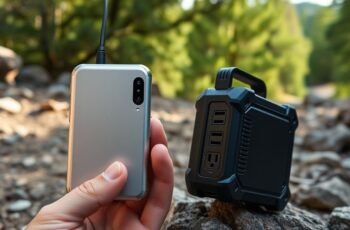
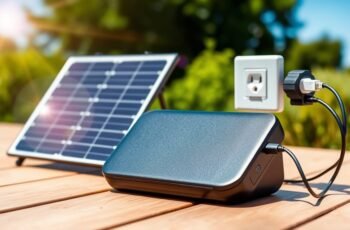
Studies show that fast charging stations can replenish up to 80% of a battery’s capacity in just 30 minutes, a stark contrast to standard chargers that require several hours. While the speed is appealing, this raises questions about long-term battery health and cost implications. As technology evolves, understanding the trade-offs between these options becomes essential for optimizing device longevity and charging efficiency—considerations that are critical for both consumers and industry professionals alike.
Key Takeaways
- Fast chargers deliver higher power levels, reducing charging time but potentially increasing battery wear over time.
- Standard chargers provide lower power output, promoting longer battery health with longer charging durations.
- Fast charging is ideal for quick top-ups during long trips, while standard charging favors long-term battery longevity.
- Infrastructure costs for fast stations are higher due to advanced technology and power requirements.
- Compatibility and safety protocols are crucial for both station types to ensure device support and user safety.
What Are Fast Charging and Standard Charging Power Stations?
While both fast charging and standard charging power stations serve the fundamental purpose of replenishing electric vehicle batteries, they differ markedly in their design and performance characteristics. Fast chargers deliver higher power levels, markedly reducing charging times but potentially accelerating battery degradation over time. Conversely, standard chargers provide lower power outputs, promoting longer battery lifespan but requiring more time to reach full capacity. From a user convenience perspective, fast charging stations are advantageous for rapid top-ups, especially during long trips, though they may induce thermal stress that affects long-term battery health. Standard stations, while slower, offer a more gradual charge that preserves battery integrity. Understanding these distinctions helps optimize charging strategies, balancing user convenience with long-term battery performance.
How Do Fast Charging Power Stations Work?
Fast charging power stations operate by delivering high levels of electrical power directly to an electric vehicle’s battery through specialized charging protocols and hardware. This process involves managing increased current flow to enable rapid energy transfer while minimizing thermal stress. Key features include advanced cooling systems and communication protocols that optimize charging rates and protect battery longevity. To guarantee consistent performance, regular charging station maintenance is essential, preventing hardware degradation that could impact safety or efficiency. Critical considerations include:
Fast charging stations deliver high power safely, optimizing battery health with advanced cooling and communication systems.
- Precise control of charging current to avoid overheating
- Compatibility with various battery chemistries to extend battery life
- Monitoring systems that detect faults and optimize charging parameters
These factors ensure fast charging stations deliver efficient, safe, and reliable power without compromising the battery’s lifespan.
The Mechanics Behind Standard Charging Stations
Standard charging stations operate by delivering a steady, lower level of electrical power to an electric vehicle’s battery through conventional charging protocols. This controlled, consistent current minimizes thermal stress, helping to preserve battery longevity over time. By avoiding rapid voltage fluctuations, these stations reduce the risk of battery degradation and extend overall lifespan. From an environmental perspective, slower charging processes typically result in lower energy loss and less heat generation, consequently decreasing the environmental impact. Additionally, the reduced strain on electrical infrastructure supports sustainable energy use. While slower, this method emphasizes safety and durability, making it suitable for regular, long-term use. Understanding these mechanics highlights how standard charging balances battery health with environmental considerations, contrasting with faster, more intensive charging methods.
Comparing Charging Speeds and Time Savings
Charging speeds markedly influence how quickly an electric vehicle can be ready for use, impacting both convenience and operational efficiency. Fast chargers notably reduce charging times, often delivering 80% charge within 30 minutes, whereas standard chargers may take several hours. This difference directly affects user convenience, especially in commercial or time-sensitive contexts. However, rapid charging can accelerate battery wear, impacting battery lifespan over time.
Key considerations include:
- *Fast chargers optimize time savings but may stress the battery*
- *Standard chargers promote battery longevity but require longer downtime*
- *Charging speed impacts operational scheduling and vehicle availability*
Cost Differences Between Fast and Standard Charging Options
How do the costs associated with fast charging compare to those of standard charging options? Generally, fast charging incurs higher initial infrastructure investments due to advanced power electronics and upgraded grid connections, impacting overall installation costs. Additionally, battery technology influences operational expenses, as rapid charge cycles accelerate degradation, increasing maintenance and replacement costs.
| Aspect | Fast Charging | Standard Charging |
|---|---|---|
| Infrastructure Cost | Higher due to power demands | Lower, simpler setup |
| Battery Impact | Increased wear risk | Less strain on batteries |
| Operational Expense | Elevated, due to energy use | More economical |
| Long-term Investment | Higher, but faster ROI | Lower, slower ROI |
While fast charging demands more significant upfront investment, the efficiency gained can offset costs over time, especially with evolving battery tech and improved charging infrastructure.
Safety Considerations for High-Speed Charging
Effective ventilation is critical during high-speed charging to prevent heat buildup and reduce the risk of thermal hazards. Handling high voltage requires strict adherence to safety protocols to avoid electrical shock and equipment damage. Ensuring these safety measures are in place is essential for reliable and secure fast charging operations.
Proper Ventilation Importance
Proper ventilation is essential when deploying high-speed charging stations because it dissipates heat generated during rapid energy transfer, preventing equipment overheating and potential failures. Effective ventilation guarantees ideal ventilation efficiency by maintaining consistent air circulation, which directly influences cooling performance. Without adequate airflow, temperature build-up could compromise hardware integrity and safety protocols. To maximize ventilation effectiveness, consider these factors:
- Strategic placement of vents to promote uniform air circulation
- Use of high-capacity fans to enhance airflow rates
- Regular maintenance to prevent dust and debris accumulation
These measures help sustain stable operating temperatures and safeguard sensitive components. In high-speed charging environments, understanding and optimizing ventilation efficiency is critical for ensuring safety, reliability, and consistent performance.
Handling High Voltage
Handling high voltage safely is crucial when deploying high-speed charging stations because the risks associated with electrical faults can be severe. Proper insulation, grounding, and protective shutdown mechanisms are essential to prevent faults that could compromise battery longevity or cause safety hazards. High-voltage components must be designed to minimize arcing and accidental contact, ensuring user convenience without sacrificing safety. Implementing redundant safety systems, like circuit breakers and real-time monitoring, helps detect anomalies early, reducing the chance of damage to the vehicle’s battery or the station itself. By maintaining rigorous safety standards, we protect both infrastructure and users, facilitating reliable high-speed charging while preserving battery health. This approach guarantees that high-voltage handling remains safe, efficient, and user-friendly.
Compatibility and Device Support for Different Charging Stations
We need to take into account the compatibility range of devices with various charging stations, as not all support the same protocols or power levels. Charging speed variations also influence how efficiently different devices can utilize fast versus standard stations. Understanding these technical nuances helps optimize device support and prevents potential damage or performance issues.
Device Compatibility Range
The compatibility range of charging stations determines which devices they can effectively support, directly impacting their versatility and user convenience. A broader compatibility spectrum ensures that various device types—smartphones, tablets, laptops—are supported without requiring multiple chargers. This impacts battery longevity, as incompatible or suboptimal charging protocols may accelerate degradation. Key factors include charging port standards (USB-C, Lightning, proprietary connectors), power delivery protocols, and device-specific fast charging compatibilities.
- Compatibility with multiple device brands and models
- Support for universal charging standards
- Adaptability to different power delivery protocols
A wide device compatibility range simplifies user experience, reduces the need for additional adapters, and enhances overall convenience, especially in environments with diverse device ecosystems. This technical capacity is vital for maximizing both device longevity and user satisfaction.
Charging Speed Variations
Charging speed variations across different stations are primarily influenced by their compatibility with device-specific fast charging protocols and power delivery standards. Variations in voltage, current, and communication protocols determine how effectively a device can utilize rapid charging. Compatibility issues can lead to suboptimal charging speeds, which may impact battery longevity due to increased heat and stress. Additionally, higher charging speeds can accelerate battery degradation if not properly managed, affecting long-term device health. From an environmental perspective, faster chargers might reduce energy consumption during charging sessions, but frequent fast charging can generate more heat, increasing the environmental impact of battery manufacturing and disposal. Consequently, understanding a station’s support for specific standards is vital for optimizing charging efficiency, device health, and minimizing environmental footprint.
Which Charging Station Is Better for Your Needs?
Determining which charging station best suits your needs depends on analyzing your driving patterns and priorities. For those prioritizing battery longevity, standard charging stations may be preferable, as they typically generate less heat and reduce battery stress over time. Conversely, fast charging offers unrivaled user convenience, allowing rapid top-ups during short stops but potentially accelerating battery degradation. Consider these points:
Choosing between standard and fast chargers depends on your driving habits and battery longevity priorities.
- Battery longevity: Standard chargers minimize thermal stress, extending battery life.
- User convenience: Fast chargers reduce downtime, ideal for busy schedules.
- Long-term costs: Frequent fast charging may lead to higher replacement or maintenance expenses.
Ultimately, the choice hinges on balancing your need for quick recharges against the importance of maintaining battery health over the vehicle’s lifespan.
Practical Tips for Choosing the Right Power Station
Selecting the appropriate power station requires evaluating your typical usage patterns and prioritizing key factors such as charging speed, portability, and compatibility. It’s crucial to consider battery longevity, as frequent fast charging can accelerate battery degradation, affecting long-term performance. Opt for models with intelligent power management systems that balance rapid charging with preserving battery health. User convenience also hinges on interface simplicity, connection options, and portability features, especially if you’ll travel or move frequently. Compatibility with your devices ensures seamless operation, so verify supported charging standards and connector types. Analyzing these elements allows us to choose a power station that offers ideal charging efficiency without compromising battery longevity or user convenience, ultimately aligning with our specific needs and usage scenarios.
Future Trends in Charging Technology and Power Station Innovation
Advancements in wireless charging technology are enabling faster, more seamless power transfer, which could considerably enhance user convenience and system efficiency. Integration with renewable energy sources promises to reduce carbon footprints and optimize energy management across power stations. Additionally, the development of smart charging infrastructure is facilitating adaptive, data-driven control that improves reliability and grid integration.
Wireless Charging Advancements
As wireless charging technology continues to evolve, innovative developments are poised to considerably enhance power station capabilities and user convenience. Advances in wireless power transfer efficiency are reducing energy loss, enabling faster, more reliable charging while minimizing heat generation. These improvements directly impact battery longevity by decreasing thermal stress and extending lifespan. Importantly, emerging resonant inductive coupling techniques allow for greater spatial freedom, making charging stations more flexible and accessible.
- Increased power transfer rates for quicker charging
- Enhanced alignment tolerance to improve user experience
- Integration of smart diagnostics for real-time performance monitoring
These advancements promise a future where wireless power seamlessly integrates into daily life, optimizing both device longevity and energy efficiency without compromising convenience.
Integration With Renewable Energy
The integration of renewable energy sources into charging infrastructure is set to reshape the landscape of power station innovation. Renewable integration allows charging stations to leverage solar, wind, or other sustainable sources, markedly reducing reliance on fossil fuels. This shift enhances environmental impact by minimizing carbon emissions and lowering overall lifecycle emissions of electric vehicle charging. Technically, integrating renewables requires advanced energy management systems capable of balancing supply and demand, ensuring grid stability, and optimizing energy storage. As grid decarbonization advances, these stations can become more autonomous, less dependent on conventional power grids, and more aligned with sustainable energy goals. This evolution not only promotes eco-friendly charging but also positions renewable integration as a critical component in future-proofing charging infrastructure.
Smart Charging Infrastructure
Emerging trends in smart charging infrastructure are transforming how power stations optimize energy usage and enhance user experience. Advanced systems leverage real-time data and AI algorithms to balance load, prevent battery degradation, and improve user convenience. These infrastructures enable dynamic charging rates, adapting to grid demands and user habits, consequently reducing stress on batteries and extending lifespan. Key features include predictive maintenance, integrated energy management, and seamless user interfaces.
- Adaptive charging schedules minimize battery wear
- Grid-responsive stations optimize renewable energy use
- User-centric apps provide real-time status updates and control
Frequently Asked Questions
Are There Any Environmental Impacts of Fast Charging Stations?
Fast charging stations impact the environment through increased energy demand, but renewable energy integration and charging infrastructure expansion help mitigate these effects, promoting sustainable development. We analyze these factors to understand and reduce environmental impacts effectively.
How Do Charging Stations Affect Electric Vehicle Battery Longevity?
Charging stations act as the heartbeat of EV life, but rapid charging can accelerate battery degradation, stressing the importance of robust charging infrastructure that balances speed with longevity, ensuring our electric journeys remain resilient and sustainable over time.
Can Fast Chargers Be Used for Non-Electric Devices?
We find that fast chargers typically aren’t compatible with non-electric devices due to specialized voltage and current requirements, even with portable adapters. Charging compatibility remains limited, emphasizing the importance of using appropriate power sources for each device type.
What Maintenance Is Required for Fast Charging Stations?
We perform regular maintenance schedules, including inspecting electrical components, cooling systems, and connectors, to guarantee peak performance. Additionally, we prioritize equipment upgrades to incorporate the latest technology, minimizing downtime and maximizing charging efficiency and safety.
Are There Regional Differences in Charging Station Availability?
Regional disparities markedly impact charging infrastructure availability, creating a frustrating landscape where urban areas boast extensive stations, while rural zones struggle with sparse options. This uneven distribution challenges our efforts to build a truly accessible, reliable charging network nationwide.
Conclusion
In the landscape of charging options, choosing between fast and standard stations is akin to selecting a race car or a trusty sedan—each has its purpose. Fast chargers are like lightning bolts, delivering rapid power but risking long-term battery health. Standard chargers are our steady, slow-burning allies, ensuring longevity and safety. Ultimately, understanding your usage patterns and priorities helps you navigate this technological terrain, ensuring your device’s performance remains a well-orchestrated symphony of efficiency and care.