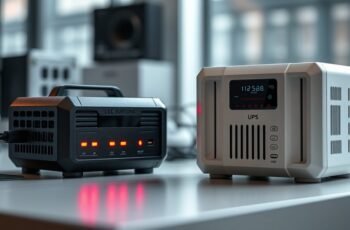
When considering home backup solutions, we recognize that both portable power stations and gas generators offer distinct advantages and limitations. Each option’s technical specifications, operational nuances, and environmental impacts substantially influence their suitability for various needs. To make an informed choice, it’s essential to analyze these factors closely, understanding how they align with your specific power requirements and safety considerations. The decision isn’t straightforward, and exploring these differences can help identify the most suitable solution for your circumstances.
Key Takeaways
- Portable power stations offer silent, emission-free, stable power ideal for small appliances and eco-conscious homeowners.
- Gas generators provide higher wattage, supporting larger appliances but produce noise and emissions.
- Power stations have longer runtimes with renewable energy options; generators depend on fuel supply and short-term use.
- Portable power stations require minimal maintenance; gas generators need regular servicing and fuel management.
- Consider capacity, runtime, environmental impact, and noise levels to choose the best backup solution for specific home needs.
How Do Portable Power Stations and Gas Generators Work?
While both portable power stations and gas generators serve to provide backup electricity, they operate through fundamentally different mechanisms. Portable power stations rely on advanced battery technology, typically lithium-ion or lithium-polymer cells, to store electrical energy. These batteries are charged via external power sources and deliver direct current (DC) output through inverters. Their fuel efficiency is high because they convert stored chemical energy directly into usable electricity with minimal losses, and they produce no emissions during operation. Conversely, gas generators operate by combusting fuel—usually gasoline or diesel—to drive an internal combustion engine that powers an alternator. This process involves continuous fuel consumption and introduces greater inefficiencies and emissions. Understanding these fundamental differences helps clarify how each system provides reliable backup power.
Comparing Power Output and Runtime for Home Backup
When comparing power output, portable power stations typically offer lower continuous wattage but longer runtimes, whereas gas generators provide higher immediate power with shorter durations. Runtime variability depends on factors like load demand, fuel efficiency, and battery capacity. During outages, consistent power delivery depends on the system’s ability to maintain stable output under fluctuating loads.
Power Capacity Differences
Power capacity is a critical factor when comparing portable power stations and gas generators for home backup, as it directly determines the energy available during outages. Portable power stations typically feature advanced battery technology, offering steady, reliable power but with limited total capacity. Gas generators, fueled by internal combustion engines, often provide higher maximum wattage but rely on fuel efficiency for runtime.
For example:
- Power stations usually deliver 1-3 kW, suitable for essential electronics.
- Gas generators can produce 3-10 kW, supporting larger appliances.
- Battery technology constrains power station runtime, regardless of capacity.
- Gas generator runtime depends on fuel tank size and fuel efficiency.
This comparison highlights how capacity impacts overall backup ability, balancing power output with energy sustainability.
Runtime Variability Factors
The runtime of portable power sources varies considerably based on both their power output and energy management systems. Battery efficiency directly impacts how long a power station can sustain a load, as higher efficiency reduces energy waste. For gas generators, fuel consumption rates determine runtime, with more efficient units consuming less fuel per hour. Variability in output levels also affects overall runtime, as higher loads drain energy faster. Below is a comparison table illustrating these factors:
| Factor | Impact on Runtime |
|---|---|
| Battery efficiency | Higher efficiency extends runtime at a given load |
| Fuel consumption | Lower consumption prolongs generator operation |
| Power output fluctuations | Increased fluctuations can reduce effective runtime |
| Energy management system | Advanced systems optimize runtime by balancing load |
Understanding these factors helps in selecting the best backup solution.
Consistency During Outages
During outages, maintaining consistent power output is essential for protecting sensitive electronics and ensuring household stability. Portable power stations typically deliver a stable, sine-wave output with minimal fluctuation, supporting delicate devices safely. Gas generators, however, may experience power variability due to engine load fluctuations, affecting performance. Key factors influencing consistency include:
- Battery durability, which maintains voltage stability over prolonged use in power stations.
- Fuel efficiency, impacting runtime and the ability to sustain power without interruption.
- Engine response time in gas generators, influencing the steadiness of power delivery.
- Power regulation systems, which determine how well the device compensates for load changes.
Ease of Use and Portability: Which Is More Convenient?
While both portable power stations and gas generators are designed to provide backup energy, their ease of use and portability differ considerably. Portable power stations are lightweight, compact, and simple to operate, making them ideal for emergency preparedness and integrating with renewable energy sources. Gas generators, however, are bulkier, require manual fuel handling, and need more maintenance, reducing convenience during outages.
| Feature | Portable Power Station | Gas Generator |
|---|---|---|
| Portability | High, lightweight, easy to carry | Low, bulky, difficult to move |
| Ease of Use | Plug-and-play, minimal setup | Requires fueling, startup procedures |
| Maintenance | Minimal, battery management | Regular oil/fuel maintenance |
This comparison highlights the practical advantages of portable power stations for quick, convenient backup.
Environmental Impact and Noise Levels of Each Option
Considering their differences in portability and ease of use, evaluating the environmental impact and noise levels of portable power stations versus gas generators reveals significant disparities. Portable power stations typically feature solar compatibility, enabling clean energy input, and operate with high fuel efficiency, producing minimal emissions. In contrast, gas generators generate substantial emissions and particulate matter, impacting air quality. Regarding noise levels:
- Portable power stations operate silently or with minimal noise, ideal for residential areas.
- Gas generators produce noise levels exceeding 60 dB, often disruptive.
- Fuel efficiency favors portable stations, reducing fuel consumption and emissions.
- Environmental impact assessments show portable power stations contribute less to pollution due to cleaner energy sources. Overall, portable power stations offer a more environmentally friendly and quieter solution, aligning with sustainability goals and community comfort.
Cost Considerations: Initial Investment and Long-Term Expenses
When evaluating cost considerations, we compare the initial purchase prices of portable power stations and gas generators, which vary considerably. Operating costs, including fuel and electricity consumption, impact long-term expenses, while maintenance and replacement requirements influence ongoing investments. Analyzing these factors helps determine the most cost-effective option for home backup needs.
Purchase Price Differences
Have you evaluated the initial costs and long-term expenses associated with portable power stations versus gas generators? The purchase price considerably impacts total cost, influenced by factors such as energy storage capacity and fuel efficiency.
- Portable power stations typically have higher upfront prices, ranging from $500 to $3,000, due to advanced battery technology.
- Gas generators often cost between $300 and $1,500 but require ongoing fuel purchases.
- Energy storage in power stations reduces the need for fuel, impacting long-term operational costs.
- Gas generators may have a lower initial investment but incur higher operational expenses due to fuel consumption and maintenance.
Ultimately, the initial purchase price reflects the balance between energy storage capabilities and fuel efficiency, shaping long-term cost considerations.
Operating Cost Variations
Operating costs for portable power stations and gas generators differ markedly over time, primarily due to fuel consumption, maintenance requirements, and efficiency. Gas generators rely on fossil fuels, incurring ongoing fuel expenses that fluctuate with usage and fuel prices, which impacts long-term costs. In contrast, portable power stations often utilize batteries with renewable sources like solar input, reducing operational expenses. Battery longevity profoundly influences cost savings, as longer-lasting batteries diminish replacement frequency and associated costs. While initial investments may favor gas generators, the lower operational expenses of portable power stations, driven by renewable sources and improved battery durability, can lead to reduced long-term costs. Overall, understanding these variations helps in selecting a backup power system that balances upfront investment with ongoing expenses.
Maintenance and Replacement
How do maintenance and replacement costs influence the overall investment in portable power stations versus gas generators? Portable power stations generally require lower ongoing maintenance, primarily involving periodic battery checks and potential replacement due to limited battery lifespan. In contrast, gas generators demand regular oil changes, spark plug replacements, and fuel system maintenance, impacting long-term expenses. The key factors include:
- Battery lifespan: Portable stations typically need battery replacements every 3-5 years, influencing initial and replacement costs.
- Fuel efficiency: Gas generators consume fuel continuously, increasing operational costs over time.
- Maintenance frequency: Gas units demand more frequent servicing, raising long-term expenses.
- Replacement parts availability: Portable batteries may be costly but are often more accessible than specialized generator components.
Safety and Maintenance Requirements for Portable Power and Gas Generators
While both portable power stations and gas generators require regular safety precautions and maintenance, their specific requirements differ considerably. Portable power stations demand careful attention to battery longevity, ensuring batteries are stored properly and not discharged excessively to prolong lifespan. They also require periodic inspection of internal components to prevent corrosion. Gas generators, on the other hand, require vigilant monitoring of fuel stability; stale or contaminated fuel can cause operational issues or damage. Regular oil changes and spark plug inspections are essential for safe operation. Ventilation is vital for both devices to prevent overheating and the buildup of toxic fumes. Proper handling, storage, and adherence to manufacturer guidelines are essential to maintain safety and optimize performance over time.
Which Backup Power Solution Is Better for Different Home Needs?
Choosing the appropriate backup power solution depends on a home’s specific energy needs, usage patterns, and infrastructure. For households prioritizing portability and quick deployment, portable power stations are ideal, especially for outdoor camping or temporary outages. In contrast, gas generators provide higher power output for continuous, heavy-duty needs. Consider these factors:
Selecting the right backup power depends on your home’s energy demands and infrastructure.
- Power demand: Small homes with minimal appliances benefit from portable power stations, while larger households require the sustained output of gas generators.
- Renewable energy integration: Portable stations often support solar charging, aligning with eco-friendly goals.
- Usage frequency: Frequent outages favor gas generators for durability; occasional use favors portable solutions.
- Infrastructure compatibility: Homes with limited fuel access may prefer renewable energy-powered portable stations over gas generators reliant on gasoline or diesel.
Making the Right Choice: Key Factors to Consider Before Buying
Selecting the right backup power solution requires a careful evaluation of several critical factors to guarantee it meets your specific needs. Key considerations include battery longevity, which determines the lifespan and reliability of portable power stations, and fuel efficiency, essential for gas generators’ operational costs and environmental impact. We need to assess the power capacity required for essential appliances and the expected duration of outages. Noise levels and portability influence usability, especially in residential settings. Cost analysis should encompass initial investment, maintenance, and operational expenses. Additionally, safety features, ease of refueling or recharging, and compatibility with your existing infrastructure are indispensable. By thoroughly analyzing these factors, you can make an informed decision that balances efficiency, longevity, and practicality for your home backup needs.
Frequently Asked Questions
How Long Do Portable Power Stations Typically Last on a Single Charge?
On a single charge, portable power stations last between 4 to 12 hours, depending on battery capacity and device load. Recharge time varies from 4 to 8 hours, influenced by the charging method and power source.
Can Gas Generators Be Used Indoors Safely?
They say, “Safety first,” and gas generators aren’t meant for indoor use due to emissions concerns and indoor safety risks. They produce dangerous fumes, making proper ventilation essential; otherwise, health hazards and carbon monoxide poisoning become real threats.
Are There Any Government Rebates for Eco-Friendly Backup Power Options?
Government incentives and eco-friendly rebates exist for backup power options, encouraging cleaner energy solutions. We recommend researching local programs offering financial benefits for adopting eco-friendly backup power systems, such as advanced portable power stations, to maximize savings.
How Do Weather Conditions Affect the Performance of Each Backup Power Type?
Like a knight’s armor, weather impacts performance; rain and cold reduce solar efficiency and battery life, while gas generators produce more noise in extreme conditions, affecting both reliability and noise levels during backup scenarios.
What Are the Best Maintenance Practices to Extend the Lifespan of These Devices?
We regularly perform battery calibration and fuel stabilization to extend device lifespan, ensuring ideal performance. Proper storage, routine inspections, and following manufacturer guidelines are essential maintenance practices for both portable power stations and gas generators.
Conclusion
Choosing between a portable power station and a gas generator hinges on your specific needs. While a power station offers quiet, eco-friendly, and reliable backup for essential electronics, a gas generator can handle larger loads during prolonged outages. Assess your power requirements, budget, and safety preferences carefully—because making the right choice can be as pivotal as choosing the engine that powers your entire home. Ultimately, informed decisions ensure your home remains resilient against any outage.