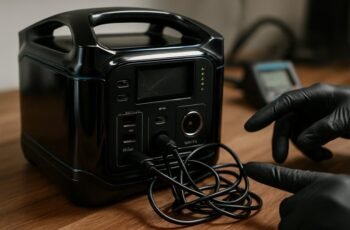
Nearly 40% of battery health issues go unnoticed until a failure, so we schedule checks to catch drift early. We’ll outline a data-driven cadence that matches usage, environment, and manufacturer guidance, starting with baseline full-cycle diagnostics. Our aim is to establish a repeatable, loggable protocol that flags accelerated aging or impedance rise before capacity loss becomes critical, then adjusts the cadence as conditions change. Keep following for practical tests and decision points that keep your power station reliable.
Key Takeaways
- Set baseline checks per manufacturer guidance and field data, then schedule follow-ups based on observed drift and usage.
- Increase testing frequency with high-discharge cycles, frequent cycling, extreme temperatures, or harsh environments.
- Use temperature, voltage, impedance, and state-of-charge trends to drive proactive maintenance and cadence adjustments.
- Implement quick at-home assessments monthly, with deeper full-cycle diagnostics periodically for end-of-life forecasting.
- Maintain standardized logs and data-driven maintenance plans to detect drift and prevent failures before outages.
Why Battery Health Matters for Your Power Station
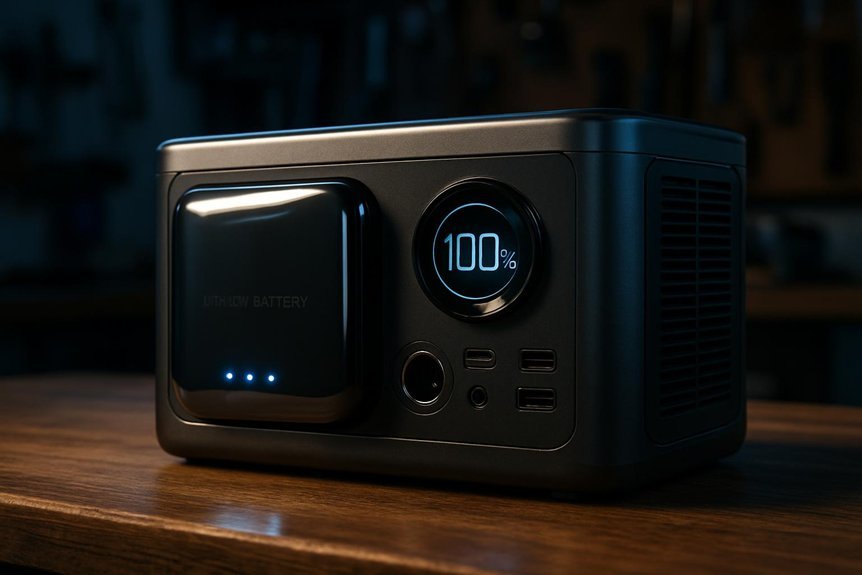
Battery health directly influences your power station’s reliability, efficiency, and lifespan. We assess battery health to predict runtime, maintain charge stability, and prevent premature failures. Battery aging reduces capacity and increases internal resistance, diminishing usable energy and heat tolerance. By monitoring voltage, impedance, and temperature trends, we quantify degradation and forecast end-of-life timelines. Consistent health checks enable proactive maintenance, scheduling cell balancing, and avoiding sudden outages during critical usage. Understanding charging myths helps us avoid safeguards that limit performance or misinterpret capacity readings. We distinguish between chemical aging, calendar wear, and depth-of-discharge effects to tailor maintenance intervals. Our approach emphasizes data-driven decisions, transparency in spec limits, and validation against real-world duty cycles, ensuring the power station remains safe, efficient, and ready for demand spikes.
Baseline Battery Health Checks: How Often to Test
How often should we baseline test a power station’s battery health? We establish baseline testing frequency from manufacturer guidance, regulatory standards, and our field data. We perform initial full-cycle diagnostics to capture capacity, internal resistance, and state of health, then schedule follow-ups aligned with observed drift and usage profiles. Our approach emphasizes repeatable procedures, documented results, and trend analysis to detect gradual degradation early. We factor cost considerations by weighing test duration, equipment wear, and downtime against actionable insights, avoiding over-testing. Tester maintenance and calibration concerns drive accuracy; we align calibration intervals with the criticality of measurements and ensure reference cells and meters stay within tolerance. The goal is a defensible, data-driven cadence that maintains reliable performance without unnecessary burden.
What Factors Change How Often You Test
We see that how often you test hinges on usage frequency and environmental conditions. Higher discharge rates and more frequent cycling generally necessitate more frequent checks, while low usage may extend intervals. Environmental factors like temperature, humidity, and storage conditions can also shift the optimal testing cadence.
Usage Frequency Variations
Usage frequency varies with how you use the power station and the surrounding conditions. We quantify checks by cycles, load, and charging patterns to manage battery aging and accuracy. Monitoring cadence should reflect observed degradation rates, temperature exposure, and user expectations for availability. Short, high-load events demand more frequent checks than steady, moderate usage, while prolonged idle periods can allow longer intervals if health indicators remain stable. Below, we illustrate the relationship between usage frequency, load profile, and aging risk with a compact reference.
| Usage pattern | Expected check cadence | Risk note |
|---|---|---|
| High daily load | Weekly | Higher battery aging risk |
| Moderate load | Biweekly | Balanced aging |
| Idle or minimal load | Monthly | Low aging concern |
Environmental Impact Factors
Environmental factors directly influence measurement frequency by altering battery aging and performance dynamics. We, as testers, track how ambient temperature, humidity, and altitude affect internal impedance and capacity loss, then adjust test cadence accordingly. High temperatures accelerate chemical degradation, increasing drift in state-of-health estimates; cold starts can mask capacity and skew voltage readings. We compare usage patterns, charging regimes, and load profiles to determine if more frequent checks are warranted during extreme conditions. Environmental impact also guides maintenance windows and data review intervals, ensuring reliable operation without over-testing. Recycling considerations factor in when degradation accelerates, influencing replacement timelines and end‑of‑life planning. Integrating environmental data improves precision, reduces false alarms, and aligns testing with real-world service conditions.
Quick At-A-Glance Tests You Can Run at Home
We’ll outline quick, at-a-glance checks you can perform at home to gauge battery health. We’ll cover a rapid Quick Battery Health Check and how an At-Home Load Test can reveal capacity and voltage stability under load. These tests provide data-driven benchmarks you can compare against spec sheets to decide when full testing is warranted.
Quick Battery Health Check
Curious how your battery is really performing right now? We perform a quick battery health check using baseline measurements and direct readings from our power station’s diagnostics. We verify voltage under no-load and steady-state load, record full-charge capacity versus design spec, and note self-discharge rate over a brief interval. We confirm cell balance indicators, monitor temperature drift, and compare cycle count to manufacturer guidelines. We document health monitoring results with timestamped data, highlighting any deviations beyond tolerance bands. We assess health trajectory: stable, improving, or declining, and note potential causes such as aging cells or excessive draw. This rapid snapshot informs maintenance timing, alerts, and future charging strategies, ensuring safe operation and consistent performance without delaying deeper diagnostics.
At-Home Load Test
At-home load testing gives a quick, data-driven snapshot of your power station’s performance under real-world demand. We perform these tests to uncover how the system handles sustained load, reveal efficiency limits, and flag anomalies early. Our focus is on repeatability, accuracy, and clear pass/fail criteria. We consider battery chemistry profiles and potential manufacturing defects that may influence voltage sag, thermal response, and runtime expectations. When done correctly, the test yields actionable metrics you can compare over time.
- Initialize a controlled load step to a defined percentage of rated output and track voltage, current, and temperature.
- Record runtime until cutoff, then calculate energy delivered and efficiency against spec sheets.
- Compare results month-to-month to identify drift, anomalies, or degradation patterns.
Key Tests Beyond Voltage: Capacity, Impedance, and Health Indicators
Key tests beyond voltage—capacity, impedance, and health indicators—reveal a battery’s true state more reliably than open-circuit voltage alone. We measure capacity to quantify usable energy and detect capacity fade, which drives usable runtime reductions. Impedance tracking exposes internal resistance changes that precede performance loss, enabling early intervention. Health indicators synthesize capacity, impedance, temperature, and cycle data into a concise reliability metric, guiding maintenance windows and replacement timing. We rely on controlled load profiles and impedance tests to separate aging from transient effects, ensuring repeatable comparisons over time. Battery degradation becomes visible when capacity fade accelerates or impedance climbs above threshold. Together, these tests provide objective, actionable trends, letting us forecast remaining useful life and optimize service plans with data-driven rigor.
How to Interpret Test Results and When to Act
Interpreting test results hinges on clear thresholds and timely actions. We, as a team, translate measurements into concrete steps, prioritizing safety and reliability. When results show elevated impedance or reduced capacity beyond baseline, we act promptly to prevent failures and document drift patterns. Battery degradation trends guide replacement and operational adjustments, while safety protocols govern immediate responses to abnormal readings. We validate data against manufacturer specs and historical runs to avoid overreacting to single outliers.
- Compare current metrics to established thresholds and prior baselines.
- Trigger predefined actions for degradation signals and implement corrective steps per safety protocols.
- Schedule follow-up tests to confirm stabilization or progression and update maintenance plans accordingly.
Maintenance Habits to Extend Battery Health
To extend battery health, we implement a disciplined maintenance routine that emphasizes routine inspections, clean power connections, and disciplined charging practices. Our approach targets consistent performance metrics across the battery lifecycle, minimizing degradation pathways and preserving capacity over time. Regular inspections verify connector integrity, cable impedance, and corrosion resistance, while cleaning removes dielectric contaminants that can raise resistance and heat. We codify charging protocols to avoid deep discharges and excessive fast-charging stress, aligning charge currents with the cell chemistry and manufacturer specifications. Data logs capture voltage, current, and temperature trends to detect drift before failure. We standardize cycle counting, state-of-charge tracking, and calendar aging controls, ensuring proactive intervention. This disciplined framework yields measurable longevity gains while maintaining safe, predictable operation aligned with performance targets.
Temperature and Seasonal Effects on Health Checks
Temperature and seasonal conditions directly influence battery health checks, so we must adapt our maintenance cadence to ambient and operating temperatures. We, as a team, summarize how environment shapes diagnostic timing and interpretation, focusing on precise, data-driven thresholds. Temperature resilience varies with chemistry, so baseline checks adjust for heat stress, cold soak, and cycling rates. Seasonal drift can alter self-discharge, calibration baselines, and capacity estimates, demanding recalibration at season transitions. Our approach remains consistent: measure, compare, and update schedules based on observed drift and resilience.
Temperature-aware checks: recalibrate with seasons, align cadence to drift and resilience.
- Align check intervals with ambient temperature bands and observed temperature resilience.
- Reassess baselines during seasonal transitions to account for seasonal drift.
- Document deviations and adjust future cadence to maintain accuracy and reliability.
Tools and Resources to Simplify Ongoing Health Monitoring
What tools and resources simplify ongoing health monitoring keep our cadence precise and repeatable? We rely on integrated diagnostic apps, calibration kits, and data vaults to normalize readings across sessions. Automated alerts flag drift, while charted trends reveal subtle degradation. We prioritize battery chemistry insights and fault isolation cues to distinguish capacity loss from impedance changes. Remote monitoring reduces onsite checks, yet keeps verification tight through periodic validation cycles. For power stations, a lightweight testing protocol paired with a secure log ensures reproducibility and rapid incident response.
| Tool | Purpose | Benefit |
|---|---|---|
| OBD/telemetry | Real-time data | Immediate anomaly detection |
| Calibration kit | Standardized baselines | Consistent measurements |
| Cloud analytics | Longitudinal trends | Data-driven upkeep |
Frequently Asked Questions
How Often Should I Calibrate the Battery Gauge on My Power Station?
We calibrate the gauge annually; this calibration cadence guarantees gauge accuracy. We monitor variance from real load tests and adjust as needed, keeping calibration cadence consistent for reliable readings and data-driven maintenance planning.
Do Battery Health Checks Differ for Indoor vs. Outdoor Use?
We see battery health checks, like weathered ships, differ: indoor durability emphasizes controlled conditions; outdoor safety requires rugged testing. We systematically compare cycles, temperatures, and insulation for indoor durability and outdoor safety, ensuring reliable performance wherever you deploy.
What Alarms Indicate Imminent Battery Failure in a Power Station?
We’ll tell you that alarm indicators include rapid voltage drops, rising temperature, and audible alerts; calibration frequency should be logged, and we verify alarms after each cycle to guarantee prompt detection and reliable shutoff when limits are exceeded.
Can I Rely on Smartphone Apps for Accurate Health Readings?
We can’t rely on smartphone apps for precise health readings; unrelated topic sensor accuracy varies. We trust dedicated diagnostics for battery health, comparing metrics with manufacturer specs, real-time data, and calibrated tools to ensure data-driven accuracy and safety.
Should I Test Health After Firmware Updates or Only Hardware Changes?
Yes, we should test health after firmware updates and hardware changes. Firmware impact can alter readings, so we verify post-update baselines, then rebaseline after hardware changes to ensure accurate, data-driven health metrics.
Conclusion
We’ve covered how to approach battery health for your power station with data-driven cadence and careful logging. By establishing baseline tests, we chart degradation and adjust checks for drift, temperature, and usage. Think of it like a medical checkup for your setup: regular, precise, and actionable. When readings diverge beyond predefined thresholds, act promptly to prevent failures. With disciplined intervals and clear criteria, you’ll keep performance steady, like a metronome guiding reliable power delivery.