Studies show that properly oriented solar panels can increase energy output by up to 30%. Ensuring your panels are correctly positioned, maintained, and monitored is critical for maximizing efficiency and extending system lifespan. As we explore key practices—from ideal placement and cleaning routines to advanced tracking technologies—you’ll gain insights that can considerably improve your solar energy harvest, making your investment more effective and sustainable. Let’s examine how you can implement these strategies for better results.
Key Takeaways
- Ensure solar panels are properly oriented, facing south in the northern hemisphere, with optimal tilt angles for seasonal sunlight capture.
- Regularly clean panels and remove shading obstructions to maximize sunlight absorption and efficiency.
- Use real-time system monitoring and diagnostics to detect and troubleshoot performance issues promptly.
- Incorporate advanced technologies like MPPT in inverters and consider solar trackers for enhanced energy harvesting.
- Manage battery storage effectively, balancing capacity and charge cycles to extend lifespan and ensure reliable power supply.
How Solar Panels Generate Power Effectively
Solar panels generate power through the photovoltaic effect, where sunlight is converted directly into electricity. The efficiency of this process depends heavily on solar panel materials and the underlying photovoltaic technology. Modern solar panels typically use silicon-based photovoltaic cells, with monocrystalline and polycrystalline silicon being the most common. These materials are chosen for their high semiconductor quality and ability to efficiently convert sunlight into electrical energy. Advances in photovoltaic technology, such as passivated emitter and rear contact (PERC) cells and tandem cell designs, further enhance energy conversion rates. By selecting high-quality solar panel materials and leveraging cutting-edge photovoltaic technology, we maximize power output and guarantee the system’s long-term performance and reliability.
Positioning Your Solar Panels for Maximum Sunlight Exposure
To maximize energy production, we must carefully position your solar panels to capture the most favorable amount of sunlight throughout the day. Effective shade management is critical; even minor shading can considerably reduce output, so we identify and eliminate obstructions during the most advantageous sun hours. Panel orientation is equally essential, with south-facing panels in the northern hemisphere providing the highest exposure. We consider tilt angles based on your geographic location to enhance seasonal sunlight capture. Properly orienting and shading your panels ensures maximum efficiency, minimizing energy loss. Precise positioning helps harness the full potential of sunlight while reducing the impact of shading and suboptimal angles. This strategic setup guarantees your system performs reliably and consistently at peak capacity.
Keeping Your Solar System Clean and Well-Maintained
Regularly cleaning and maintaining your solar system is essential to guarantee peak performance and longevity. Dust accumulation on panels reduces their efficiency by blocking sunlight, so periodic cleaning with non-abrasive tools is critical. We recommend inspecting panels for dirt, bird droppings, and debris, especially after storms or dust storms. Additionally, panel shading caused by nearby objects or overgrown vegetation can substantially diminish energy output. Ensuring that trees or structures do not cast shadows during peak sunlight hours is imperative. Routine maintenance also involves checking for loose connections, corrosion, and damage to mounting hardware. By proactively addressing dust accumulation and panel shading, you maximize energy harvest and extend the lifespan of your solar system, maintaining ideal performance over its operational life.
Using Solar Trackers to Enhance Energy Harvesting
Using solar trackers substantially improves sun exposure, increasing energy yield throughout the day. However, we must carefully evaluate the upfront costs and ongoing maintenance requirements to guarantee the technology remains cost-effective. Proper implementation allows us to maximize efficiency while managing operational expenses effectively.
Maximizing Sun Exposure
Have you considered how solar trackers can greatly boost energy output by aligning solar panels precisely with the sun’s position? Proper utilization of solar trackers maximizes sun exposure, which is essential for peak energy harvest. Effective shade management is critical, as even minor shading can considerably reduce efficiency; trackers should be programmed to avoid shadowed areas throughout the day. Seasonal adjustments are equally important, ensuring panels tilt and orientation adapt to the sun’s changing path across the sky. Automated trackers excel here, continuously optimizing angles to maintain maximum exposure regardless of season. By integrating these strategies, solar systems can achieve higher energy yields and improved reliability, making advanced tracking technology a crucial component for maximizing sun exposure and overall system performance.
Cost and Maintenance
Implementing solar trackers to enhance energy harvesting involves careful consideration of both initial costs and ongoing maintenance requirements. A thorough cost analysis reveals that while trackers increase upfront investment, they can substantially boost energy output and long-term savings. Maintenance schedules are vital for peak performance, requiring regular inspections, lubrication, and calibration to prevent mechanical failures. The initial purchase price of solar trackers varies based on complexity and durability, impacting overall project budgets. Operational costs tend to be minimal but escalate if components like motors or sensors malfunction. Proper planning ensures that maintenance is streamlined and predictable. Ultimately, integrating trackers demands a balance between higher capital expenditure and the potential for increased energy yields, making understanding these aspects essential for maximizing return on investment in solar energy systems.
Optimizing Your Inverter Settings for Better Performance
To maximize the efficiency of your solar energy system, carefully configuring your inverter settings is vital. Proper adjustments directly impact inverter efficiency and overall power enhancement. Begin by calibrating the maximum power point tracking (MPPT) parameters to match your panel specifications, guaranteeing the inverter extracts the highest possible energy. Set voltage and current thresholds accurately to prevent energy loss and maintain ideal operation under varying conditions. Enable any available dynamic power management features to adapt to fluctuating sunlight, boosting efficiency during partial shading or cloud cover. Regularly update firmware to benefit from performance improvements and bug fixes. Precise inverter configuration minimizes energy dissipation, maximizes power output, and ensures your system operates at peak efficiency, delivering the maximum return on your investment.
Monitoring Your Solar Energy Production in Real-Time
Effective real-time monitoring of your solar system requires utilizing advanced tools to gather accurate production data continuously. By analyzing this data, we can identify performance patterns and detect potential issues early. When output drops unexpectedly, troubleshooting becomes more straightforward, ensuring peak energy harvest at all times.
Using Monitoring Tools Effectively
Monitoring your solar energy production in real-time is essential for optimizing system performance and identifying issues promptly. Effective use of monitoring tools allows us to track key metrics such as solar panel efficiency and energy consumption accurately. To maximize benefits, we focus on:
- Regularly reviewing system dashboards for anomalies
- Comparing current output against historical data
- Setting alerts for sudden drops in production
- Analyzing inverter and module performance metrics
- Correlating energy consumption patterns with production data
Interpreting Production Data
Interpreting production data in real-time is essential for understanding how well your solar system is performing and identifying potential issues promptly. Accurate analysis involves examining factors like solar panel orientation, which greatly impacts energy output; ideal tilt and azimuth ensure maximum sunlight absorption. Regular shading analysis is also critical, as even minor obstructions can cause substantial drops in efficiency. Monitoring tools provide detailed metrics such as kilowatt-hours generated and system performance ratios, enabling us to detect deviations from expected output. By systematically reviewing this data, we can verify if the panels are correctly oriented and free of shading interference. This proactive approach helps maintain peak performance and informs necessary adjustments, guaranteeing your solar investment continues to deliver reliable, maximum energy production.
Troubleshooting Low Output
When you notice a decline in your solar system’s energy output, promptly troubleshooting becomes essential to identify and resolve underlying issues. Real-time monitoring allows us to evaluate factors impacting performance, particularly energy storage and system diagnostics. Key steps include:
- Checking inverter readings for error codes
- Inspecting solar panels for shading or dirt buildup
- Verifying connections and wiring integrity
- Analyzing energy storage system performance
- Running diagnostic tests to detect faults or inefficiencies
Understanding Battery Storage for Solar Energy
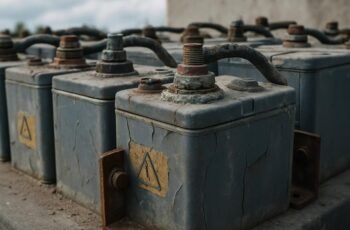
Have you ever wondered how solar energy systems store power for later use? Battery storage plays a vital role in this process, with battery capacity determining how much energy can be stored at once. Higher capacity batteries enable longer periods of energy availability during low sunlight or nighttime. Equally important are charge cycles, which define how many complete charge and discharge cycles a battery can endure before its capacity degrades considerably. Understanding these factors helps us select batteries optimized for longevity and efficiency. Proper management of charge cycles guarantees the system maintains performance over time, preventing premature failure. By considering battery capacity and charge cycles, we can design resilient storage solutions that maximize solar energy utilization and guarantee reliable power supply.
Troubleshooting Common Solar Harvesting Issues
Despite careful installation and maintenance, solar harvesting systems can encounter performance issues that hinder energy collection. Common problems often relate to suboptimal solar panel materials, shading, or wiring faults. To troubleshoot effectively, consider these factors:
- Inspect for shading and implement shade mitigation strategies to prevent reduced output.
- Verify wiring connections for corrosion or loose contacts, ensuring optimal conductivity.
- Assess solar panel materials for degradation or damage that may impair efficiency.
- Check inverter functionality to confirm proper signal conversion.
- Clean panels regularly to remove dirt and debris that obstruct sunlight absorption.
Addressing these issues systematically ensures maximum energy harvesting. Prioritizing shade mitigation and using high-quality solar panel materials are essential for maintaining peak system performance and longevity.
Frequently Asked Questions
How Do Weather Conditions Affect Solar Energy Efficiency?
Weather patterns and cloud cover considerably impact solar energy efficiency; dense clouds reduce sunlight exposure, lowering power output, while clear weather enhances energy harvest. We recommend monitoring weather conditions closely to optimize solar panel performance and energy planning.
What Financial Incentives Are Available for Solar Energy Installation?
We discover that tax credits and rebate programs considerably cut installation costs, making solar energy more accessible. These financial incentives, often substantial, can dramatically improve your return on investment, ensuring ideal system performance and long-term savings.
Can Solar Panels Be Installed on Shaded Roofs?
Yes, solar panels can be installed on shaded roofs with optimized panel placement, such as adjusting angles and using micro-inverters, to maximize efficiency despite shading. Proper assessment guarantees effective energy harvesting even from shaded roof areas.
How Long Do Solar Panels Typically Last?
Solar panels usually last over 25 years, making them incredibly durable—like a superhero’s shield. Their lifespan depends on quality and maintenance, but advanced solar panel durability guarantees peak performance for decades, maximizing your investment’s longevity and efficiency.
What Maintenance Is Required for Solar Energy Systems?
We perform routine system cleaning to remove debris and dirt, and inverter checks to guarantee peak performance. Regular maintenance like this maximizes efficiency, prolongs lifespan, and prevents costly repairs of your solar energy system.
Conclusion
By following these best practices, we can maximize our solar energy harvesting and guarantee system longevity. Proper orientation, regular maintenance, and advanced technologies like solar trackers all play essential roles. Monitoring performance allows us to catch issues early and optimize output. Ultimately, isn’t investing in strategic placement and upkeep the most effective way to harness the sun’s full potential? Staying proactive ensures we get the most sustainable, efficient energy for years to come.