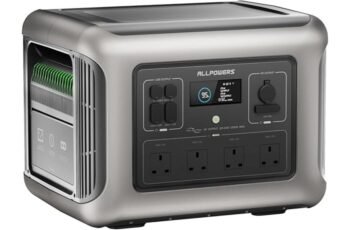
We’re evaluating the EF ECOFLOW RIVER 2 MAX as a compact, sustainability-focused power station built around a 512Wh LiFePO4 battery. Its 3,000-plus-cycle lifespan, 1,000W output, rapid charging, and solar compatibility suggest practical value for camping, RV use, and emergency backup. However, limited capacity and appliance compatibility still matter. We’ll examine its features, strengths, and trade-offs to determine whether this durable design delivers dependable power where it counts.
Key Takeaways
- The EF ECOFLOW RIVER 2 MAX offers a 512Wh LiFePO4 battery rated for over 3,000 charge cycles.
- Its 1,000W continuous output can power up to nine devices, though high-draw appliances reduce runtime quickly.
- Rapid AC charging fully replenishes the battery in approximately 60 minutes.
- Car, USB-C, and 160W solar charging provide flexible off-grid recharge options, with solar taking roughly four hours.
- Weighing about six kilograms, it suits camping, RV travel, and short-term backup, but capacity and warranty length are limitations.
512Wh LiFePO4 Battery
The RIVER 2 MAX’s 512Wh LiFePO4 battery combines dependable capacity with long-term durability, supporting more than 3,000 charge cycles and potentially nearly a decade of use. For us, that chemistry strengthens the sustainability case by extending Battery lifespan and reducing replacement-related material consumption.
Its stable performance also supports predictable energy storage for repeated daily or emergency use. Although LiFePO4 typically offers lower Energy density than some lithium-ion alternatives, this trade-off favors thermal stability, safety, and service longevity.
We can thus view the battery as a practical balance between usable capacity, dependable cycle performance, and reduced lifecycle impact for portable power needs.
Detailed features
Beyond its durable battery foundation, the RIVER 2 MAX combines practical output, portability, and flexible recharging in a compact design. Its Battery technology supports 512Wh of storage, 3,000-plus cycles, and dependable operation in demanding conditions.
We can run up to nine devices through its 1,000W output, while electronic control helps maintain stable delivery. AC charging reaches full capacity in about 60 minutes; car, USB-C, and solar inputs add flexibility.
With 160W solar input and efficient conversion, we can replenish it outdoors in roughly four hours. Its six-kilogram build and compact dimensions improve transport without sacrificing useful capacity.
Pros and Cons
We’ll weigh the RIVER 2 MAX’s long-cycle LiFePO4 battery, rapid charging, portability, and solar compatibility against its limitations.
You’ll see how its 1,000W output and nine-device capacity support practical off-grid use, while its 512Wh storage and one-year warranty constrain some applications.
This comparison will clarify its sustainability and value for camping, travel, and backup power.
Pros
Why does the EF ECOFLOW RIVER 2 MAX stand out? We get an efficient, flexible energy platform rather than a basic battery pack. Its 512Wh LiFePO4 chemistry supports more than 3,000 cycles, strengthening Battery longevity and reducing replacement-related waste.
A 1,000W continuous output runs up to nine devices, while 60-minute AC charging minimizes downtime. We can also recharge through car, USB-C, or solar input, with efficient 160W solar acceptance supporting lower-carbon, off-grid use.
At roughly six kilograms, its compact build delivers meaningful portability benefits for camping, RV travel, and emergency preparedness. Stable power delivery and IP68 construction further support dependable outdoor operation.
Cons
Although the EF ECOFLOW RIVER 2 MAX offers strong portability, its 512Wh capacity and 1,000W output limit how long it can run high-draw appliances; kettles, heaters, and refrigerators may quickly exhaust the battery. We should also recognize its Power limitations when starting motors or operating multiple demanding loads simultaneously. Although LiFePO4 chemistry supports an impressive Battery lifespan, frequent deep discharges and heat can still accelerate degradation. Solar charging remains weather-dependent, while the 160W input extends recovery time compared with AC charging. Its one-year warranty feels brief for a long-term sustainability investment, and the compact design sacrifices expansion capacity.
| Concern | Practical impact |
|---|---|
| Capacity | Shorter runtime |
| Charging | Weather-dependent recovery |
Concluding thoughts
The EF ECOFLOW RIVER 2 MAX is a capable portable power station for camping, RV use, and short-term home backup, combining a 512Wh LiFePO₄ battery with up to 1,000W of continuous output.
We found its 3,000-cycle Battery lifespan compelling, reducing replacement demand and improving long-term sustainability.
Solar efficiency is also strong, with up to 160W input and roughly four-hour recharging under suitable conditions.
Its 60-minute AC recharge, multiple outputs, and six-kilogram design increase practical flexibility.
However, its capacity won’t support high-draw appliances for long, and solar performance depends on weather.
We’d recommend it for users prioritizing portability, durability, and cleaner supplementary power.
Frequently Asked Questions
What Devices Are Included With the EF ECOFLOW RIVER 2 MAX?
We receive the RIVER 2 MAX power station, AC charging cable, and car-charging cable; compatible solar panels are optional. Its 512Wh battery capacity and port variety support phones, laptops, appliances, and other devices.
Can the RIVER 2 MAX Be Monitored and Controlled Through a Mobile App?
Yes, we can monitor and control the River 2 Max remotely through EcoFlow’s app. Device compatibility and App connectivity let us track battery status, manage charging, and optimize sustainable solar-powered operation efficiently.
How Noisy Is the RIVER 2 MAX During Operation?
We’ll find the RIVER 2 MAX relatively quiet during typical operation, though its cooling fan becomes audible under heavy loads. We can reduce noise levels through ventilation, light loading, and practical noise mitigation, preserving efficiency without compromising safety.
Does the RIVER 2 MAX Support Pass-Through Charging?
Yes, we can use pass-through charging, powering connected devices while replenishing the battery. Its 512Wh battery capacity and rapid charging speed support practical continuity, though heavy loads may slow replenishment and increase battery wear over time.
What Safety Protections Does the RIVER 2 MAX Include?
We get stable power through LFP chemistry, electronic engine control, and high-temperature safety. Its Battery capacity supports durable cycling, while Port versatility enables controlled charging across AC, car, USB-C, and solar inputs.
Conclusion
Overall, we find the EF ECOFLOW RIVER 2 MAX a capable, durable companion for camping, RV travel, and emergency backup. Its 512Wh LiFePO4 battery, rapid charging, and 1,000W output deliver practical flexibility, while efficient solar compatibility supports lower-impact energy use. We should note that demanding appliances may require a larger system, so capacity planning matters. Still, its compact build and long cycle life make occasional power limitations a modest compromise for dependable, cleaner portable electricity.