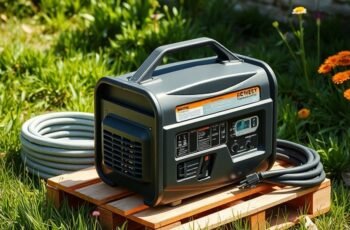
Properly storing a power station is essential to guarantee safety and longevity, but it requires specific steps and precautions. We recognize the importance of maintaining the device’s integrity over time, which involves more than just placing it out of use. To do this effectively, we must consider factors like discharge levels, environmental conditions, and handling procedures. Let’s explore the critical aspects that will help you keep your power station in ideal condition during extended storage.
Key Takeaways
- Fully discharge the battery to around 50% before storage to reduce stress.
- Store in a cool, dry, well-ventilated area away from heat and flammable materials.
- Keep the power station elevated and in an airtight, non-conductive container for protection.
- Regularly monitor battery voltage and perform periodic top-offs every 3–6 months.
- Handle with care during transportation, using secure handles and protective containers.
How to Prepare Your Power Station for Safe Storage
Before storing your power station, it’s essential to perform a thorough preparation process to prevent damage and guarantee safety. Proper preparation minimizes battery degradation, which accelerates if the power station is left at high or low storage temperatures. We recommend fully discharging the battery to around 50%, reducing stress on the cells. Ensure the device is clean and dry, removing dust and moisture that could cause corrosion or short circuits. Store it in a controlled environment where temperature remains between 15°C and 25°C, avoiding extremes that can accelerate battery degradation. Consistent, moderate storage temperature preserves battery health and prolongs lifespan. Proper preparation helps maintain your power station’s functionality and safety during long-term storage, preventing potential hazards and reducing the risk of damage.
Choosing the Right Storage Location for Your Power Station
Selecting an ideal storage location is essential for maintaining your power station’s longevity and safety. Proper power station placement minimizes exposure to extreme temperatures, humidity, and direct sunlight, which can degrade internal components. We recommend choosing a cool, dry, and well-ventilated area, ideally indoors, to prevent moisture accumulation and thermal stress. Storage container options should include sturdy, airtight, and non-conductive containers that protect against dust and accidental impacts. Elevating the power station off the ground reduces the risk of water damage from flooding or spills. Avoid areas near flammable materials or sources of heat. Precise placement ensures maximum safety, preserves battery health, and prolongs operational lifespan, making it a critical step in effective storage protocol.
Properly Maintaining and Charging Your Power Station During Storage
To guarantee peak performance and longevity during storage, we must regularly maintain and carefully manage the charging of your power station. Proper maintenance involves monitoring battery voltage and avoiding deep discharges, which can impair battery longevity. During storage, it’s essential to keep the battery charge level between 40-60%, minimizing the number of full charging cycles that can accelerate capacity degradation. Periodic top-offs prevent the battery from falling into a state of deep discharge, which can cause irreversible damage. We recommend charging the power station every three to six months, depending on storage conditions, to sustain optimal battery health. This disciplined approach ensures the device remains ready for use, extends its lifespan, and maintains consistent performance over time.
Safe Handling and Transportation of Your Power Station
Handling and transporting your power station safely is vital to prevent damage and guarantee user safety. Proper procedures help maintain the battery lifespan by avoiding physical shocks and exposure to extreme temperatures. Use designated carrying handles and secure the unit in a stable position during transit to prevent accidental drops or impacts. Make sure the power station is fully charged or stored at recommended charge levels prior to transportation, as improper handling can compromise battery health. Additionally, consider emergency preparedness by keeping the device in a readily accessible, protective container during transit. Avoid stacking heavy objects on top of the power station and shield it from moisture and extreme conditions. These measures ensure safe handling, preserve battery integrity, and prepare you for emergency situations effectively.
Troubleshooting Common Storage Issues and Safety Tips
Even with proper storage practices, issues can arise that compromise your power station’s safety and functionality. Common problems include battery degradation, temperature fluctuations, and improper handling. To troubleshoot effectively:
- Monitor battery health regularly to detect early signs of degradation, which can reduce capacity and safety risks.
- Maintain ideal temperature management by storing the power station in a cool, dry environment, avoiding extreme heat or cold.
- Check for physical damage or corrosion, especially around connection points, to prevent short circuits.
- Ensure proper ventilation to prevent heat buildup that accelerates battery degradation and compromises safety.
Addressing these issues promptly helps preserve performance and safety, extending the lifespan of your power station and minimizing hazards during storage.
Frequently Asked Questions
Can I Store My Power Station Outdoors Safely?
Yes, you can store your power station outdoors if it’s protected from weather and direct sunlight, ensuring outdoor protection. Regular battery maintenance, including checking for corrosion and proper charging, is essential for safety and longevity.
How Long Can I Store a Power Station Without Use?
We can store our power station for several months, maintaining ideal battery calibration and perfect storage temperature (around 15-25°C). Regularly check and recharge to prevent capacity loss, ensuring readiness when needed, like a well-tuned instrument.
Is It Safe to Store Multiple Power Stations Together?
Yes, storing multiple power stations together is safe if we guarantee proper battery maintenance and a controlled storage environment. We keep them in a cool, dry place, avoiding direct sunlight and temperature fluctuations to prevent potential hazards.
What Are the Signs of a Damaged Power Station After Storage?
Signs of a damaged power station include battery degradation, evident through reduced capacity or failure to hold charge, and corrosion risks, visible as rust or corrosion around terminals, indicating potential internal damage and compromised safety.
Do Power Stations Require Special Disposal After Long-Term Storage?
We advise following disposal guidelines due to potential battery degradation in power stations after long-term storage. Proper disposal guarantees environmental safety and compliance, preventing hazardous waste issues associated with residual battery chemicals and electronic components.
Conclusion
Certainly! Here’s the modified text with relevant alternatives:
In summary, proper storage of your power station is essential for safety and longevity. For example, consider a scenario where neglecting moisture control led to corrosion and operational failure after six months. By following our guidelines—discharging to 50%, choosing a dry, ventilated space, and regular maintenance—you can prevent such issues. Consistent adherence ensures your power station remains reliable and safe, ready for use when needed, minimizing risks and maximizing lifespan through disciplined storage practices.