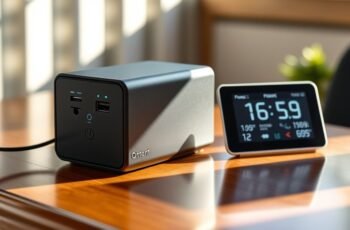
When it comes to ensuring reliable power supply, understanding the fundamental differences between portable power stations and UPS battery backups is essential. Both serve distinct roles, yet their technical features and ideal use cases often blur the lines for consumers. As we examine their designs, capabilities, and cost-effectiveness, you’ll discover that choosing the right solution depends on specific needs—whether for outdoor adventures, emergency preparedness, or secure indoor operations. The decision hinges on more than just price; it involves a nuanced analysis of performance and application.
Key Takeaways
- Portable power stations offer extended outdoor use and support high-wattage devices, while UPS backups provide instant, seamless indoor power for sensitive electronics.
- UPS systems switch rapidly during power outages, ensuring continuous operation; portable stations may require manual switchovers.
- Portable power stations are more expensive and designed for mobility; UPS units are generally affordable and stationary for indoor use.
- Both systems need regular maintenance; battery lifespan depends on usage patterns, environment, and proper charging practices.
- Portable stations support renewable energy integration (solar), whereas UPS backups are primarily powered from mains electricity.
What Are Portable Power Stations and UPS Battery Backups?
While both portable power stations and UPS battery backups serve to provide electrical power during outages or in remote locations, they differ markedly in design and functionality. Portable power stations typically utilize lithium-ion or lithium-polymer batteries, chosen for their high energy density and longevity, which influence their overall battery chemistry. These stations employ various charging methods, including AC wall outlets, solar panels, or vehicle adapters, allowing flexibility in recharging. UPS backups, on the other hand, often use sealed lead-acid batteries or lithium-ion cells, optimized for rapid response and short-term power. Their charging methods are primarily limited to mains power, designed for quick, automatic recharging during normal operation. Understanding these differences in battery chemistry and charging methods helps clarify their distinct roles in power management.
How Do Portable Power Stations and UPS Backups Differ in Design and Components?
The fundamental differences between portable power stations and UPS backups become evident when examining their design architecture and core components. Portable power stations feature large lithium-ion or lithium-polymer batteries, with diverse battery chemistries optimized for energy density and longevity. Their circuit design emphasizes scalability, with multiple outputs and integrated inverter systems to convert DC to AC power efficiently. Conversely, UPS backups typically utilize smaller, specialized batteries like sealed lead-acid or lithium-ion chemistries, integrated into a compact form factor. The circuit design in UPS units prioritizes rapid switching and surge protection, ensuring immediate power delivery during outages. These distinctions reflect their respective roles: portable power stations are designed for extended use and flexibility, while UPS backups focus on instant, reliable power with streamlined components.
Which Option Is Better for Emergency Power During Outages?
When evaluating emergency power options during outages, the choice between portable power stations and UPS backups hinges on their specific strengths and operational capabilities. Portable power stations often feature solar compatibility, enabling recharging via solar panels, and are suitable for outdoor or semi-permanent use. They provide longer-lasting power and can handle higher loads, making them ideal for extended outages. Conversely, UPS backups excel in indoor usability, offering instant, seamless power transfer for critical devices, and are typically compact and silent.
Portable power stations offer longer runtime and outdoor flexibility, while UPS backups provide instant, silent power for critical indoor devices.
Key distinctions include:
- Instant power transfer in UPS systems minimizes device disruption.
- Solar compatibility enhances portable power station sustainability.
- Indoor usability favors UPS due to size and noise considerations.
- Extended runtime favors portable power stations for prolonged outages.
Are Portable Power Stations More Suitable for Outdoor Activities and Travel?
Portable power stations are increasingly favored for outdoor activities and travel due to their portability and versatile power options. They provide reliable energy sources for essential applications like indoor lighting and home security systems, which are critical when away from main power supplies. Their ability to output multiple types of power—AC, USB, and DC—enables users to operate a variety of devices simultaneously, making them ideal for camping, remote work, or emergency scenarios. Unlike traditional batteries, portable stations often feature built-in displays for real-time monitoring of power consumption and battery health, enhancing safety and efficiency. Their rugged design ensures durability in outdoor conditions, while their rechargeability via solar panels or vehicle adapters adds to their convenience. Overall, these qualities make portable power stations more suitable for outdoor activities and travel compared to static backup solutions.
How Do Cost and Portability Compare Between the Two Power Solutions?
When comparing cost and portability, we observe that portable power stations generally have higher upfront prices but offer greater mobility and ease of use. Conversely, UPS battery backups tend to be more cost-effective initially but are less portable for outdoor or travel applications. Analyzing long-term costs, each solution’s efficiency and maintenance requirements considerably influence overall value.
Purchase Price Differences
The purchase price of portable power stations and UPS battery backups varies considerably, reflecting differences in design, capacity, and intended use. Portable power stations typically have higher initial costs due to advanced energy storage systems, larger capacity, and enhanced features. Conversely, UPS backups are generally more affordable, designed for localized, short-term power stabilization.
- Portable power stations often include high-capacity lithium-ion batteries, increasing energy storage costs.
- UPS units tend to use smaller, less expensive batteries focused on immediate backup needs.
- Environmental impact influences pricing, with longer-lasting, eco-friendly batteries costing more.
- Capacity and intended application notably affect cost, with larger, more versatile models demanding higher investments.
Understanding these factors helps in evaluating total cost of ownership and the environmental implications of each solution.
Mobility and Ease of Use
Mobility and ease of use considerably influence the practicality of portable power stations and UPS battery backups, especially when considering their cost and design. Portable power stations typically offer higher battery capacity, making them suitable for extended use in diverse environments, and they support multiple charging methods, such as AC adapters, car chargers, or solar panels, enhancing versatility. Conversely, UPS systems are generally more compact and designed for stationary deployment, limiting mobility but simplifying integration into existing setups. The charging methods for UPS units are usually limited to standard power outlets, which restricts their portability. Consequently, while portable power stations excel in mobility due to their larger capacity and flexible charging options, UPS backups prioritize ease of use within fixed locations, impacting overall practicality depending on user needs.
Long-Term Cost Efficiency
Over time, the total cost of ownership for portable power stations and UPS battery backups diverges markedly, primarily due to differences in initial investment, maintenance, and replacement expenses. Portable power stations often require higher upfront costs but offer benefits in renewable integration and reduced environmental impact, potentially lowering long-term operational expenses. Conversely, UPS systems tend to have lower initial costs but incur ongoing maintenance and replacement costs, especially for batteries.
- Portable power stations support renewable energy sources, reducing reliance on grid power.
- UPS batteries need periodic replacements, impacting long-term costs.
- Maintenance complexity varies, with UPS systems demanding more frequent attention.
- Environmental considerations, like recyclability and energy efficiency, influence overall cost efficiency. Ultimately, while portable stations may cost more initially, their environmental benefits and renewable integration can lead to better long-term cost efficiency.
What Types of Devices Can Each Power Source Support Effectively?
While both portable power stations and UPS battery backups can provide essential energy, their effectiveness varies depending on the device types they support. Device compatibility largely hinges on power output capacity and input requirements. Portable power stations excel with high-wattage devices and appliances demanding sustained energy, such as laptops, small refrigerators, or power tools. Conversely, UPS backups are optimized for sensitive electronics, like computers or servers, offering immediate surge protection and stable power delivery.
| Device Type | Suitable Power Source |
|---|---|
| High-wattage devices | Portable Power Station |
| Sensitive electronics | UPS Battery Backup |
| Low-power devices | Both, depending on specs |
How Do Maintenance and Battery Lifespan Vary for Portable Power Stations and UPS Backups?
Maintenance requirements and battery longevity differ considerably between portable power stations and UPS backups. Portable units generally require less frequent upkeep but may experience faster battery degradation over time, influenced by usage and environmental factors. Conversely, UPS systems demand regular maintenance to guarantee ideal performance and often have longer battery lifespans when properly maintained.
Maintenance Frequency Differences
How often do portable power stations and UPS backups require maintenance, and how does this impact their overall battery lifespan? Maintenance frequency varies markedly between the two, affecting longevity and performance. Portable power stations, especially those with solar integration, demand periodic checks of battery health, inverter function, and solar panel connections. UPS backups, designed for grid compatibility, typically require less frequent inspection but need regular testing of their internal batteries and circuitry to ensure readiness.
- Portable power stations often need monthly or quarterly maintenance, especially if used with solar panels.
- UPS units benefit from biannual or annual testing, with emphasis on battery calibration.
- Regular inspections help identify capacity degradation early.
- Proper maintenance ensures consistent performance and maximizes battery lifespan, regardless of system type.
Battery Longevity Factors
The lifespan of batteries in portable power stations and UPS backups is primarily influenced by their design, usage patterns, and maintenance routines. Factors such as energy storage methods and initial battery capacity determine how long they perform effectively. Proper maintenance, including avoiding deep discharges and maintaining ideal charge levels, can extend their lifespan. Conversely, frequent overcharging and high temperature exposure accelerate capacity loss. The table below summarizes key differences:
| Factor | Impact on Battery Longevity |
|---|---|
| Usage Patterns | Cycles, depth of discharge, and load variation |
| Maintenance Routine | Proper charging and temperature control |
| Energy Storage Method | Lithium-ion vs. lead-acid differences |
| Battery Capacity | Higher capacity extends usable lifespan |
| Design Quality | Better design enhances durability |
Which Power Solution Meets Your Needs: Key Factors to Consider
Choosing the right power solution depends on a clear understanding of your specific needs and operational context. For decision-making, consider factors like scalability, application scope, and energy sources. A portable power station excels in renewable energy integration and energy storage, suitable for outdoor or remote use. Conversely, UPS battery backups are designed for immediate, reliable power stabilization during outages. Key considerations include:
- Power capacity and runtime requirements
- Portability versus fixed installation needs
- Compatibility with renewable energy sources
- Long-term energy storage efficiency
Analyzing these factors helps determine whether a portable power station or UPS backup aligns with your operational demands, especially when integrating renewable energy or prioritizing energy storage solutions. This strategic approach ensures maximum reliability and efficiency tailored to your specific environment.
Frequently Asked Questions
Can Portable Power Stations Be Charged via Solar Panels?
Yes, portable power stations can be charged via solar panels, enabling solar charging and supporting renewable energy integration. This method offers a sustainable, eco-friendly way to maintain power supply, especially in off-grid or emergency scenarios.
How Long Do UPS Batteries Typically Last Before Replacement?
UPS batteries typically last 3 to 5 years, depending on usage and maintenance. The replacement frequency hinges on factors like battery lifespan, temperature, and cycle depth, so regular testing guarantees ideal performance and timely replacements.
Is There a Significant Difference in Noise Levels Between the Two?
We find that noise comparison shows UPS battery backups are generally quieter, producing minimal sound levels during operation. In contrast, portable power stations may emit more noticeable sounds, especially during high power output, impacting quiet environments.
Are Portable Power Stations More Environmentally Friendly Than UPS Backups?
We find portable power stations generally more eco-friendly, akin to replanting a tree after harvesting. They often follow better battery recycling practices, reducing environmental impact, unlike traditional UPS backups with limited recycling options and higher disposal concerns.
Which Option Offers Better Surge Protection for Sensitive Devices?
We believe UPS backups generally offer better surge resilience, ensuring stable power delivery for sensitive devices. Their design prioritizes power stability during surges, reducing risks of damage, whereas portable power stations may lack advanced surge protection features.
Conclusion
Ultimately, choosing between a portable power station and a UPS backup hinges on your specific needs. Think of it as selecting the right tool for a precise job—each designed for a different terrain. Whether you’re steering outdoor adventures or safeguarding sensitive indoor electronics, understanding their unique strengths helps you make an informed decision. Like a lighthouse guiding ships through fog, our insights illuminate the path to reliable power tailored to your environment.